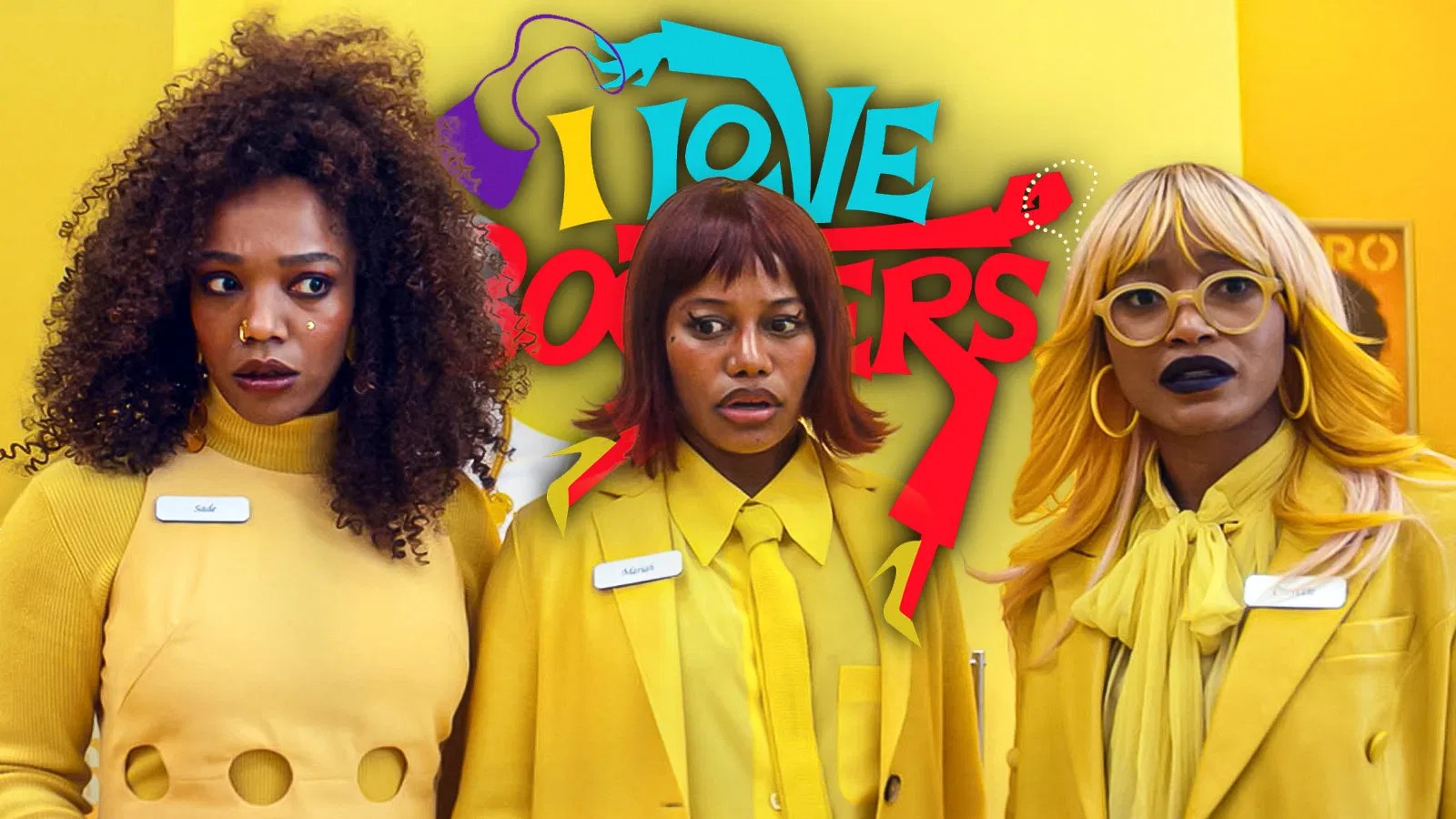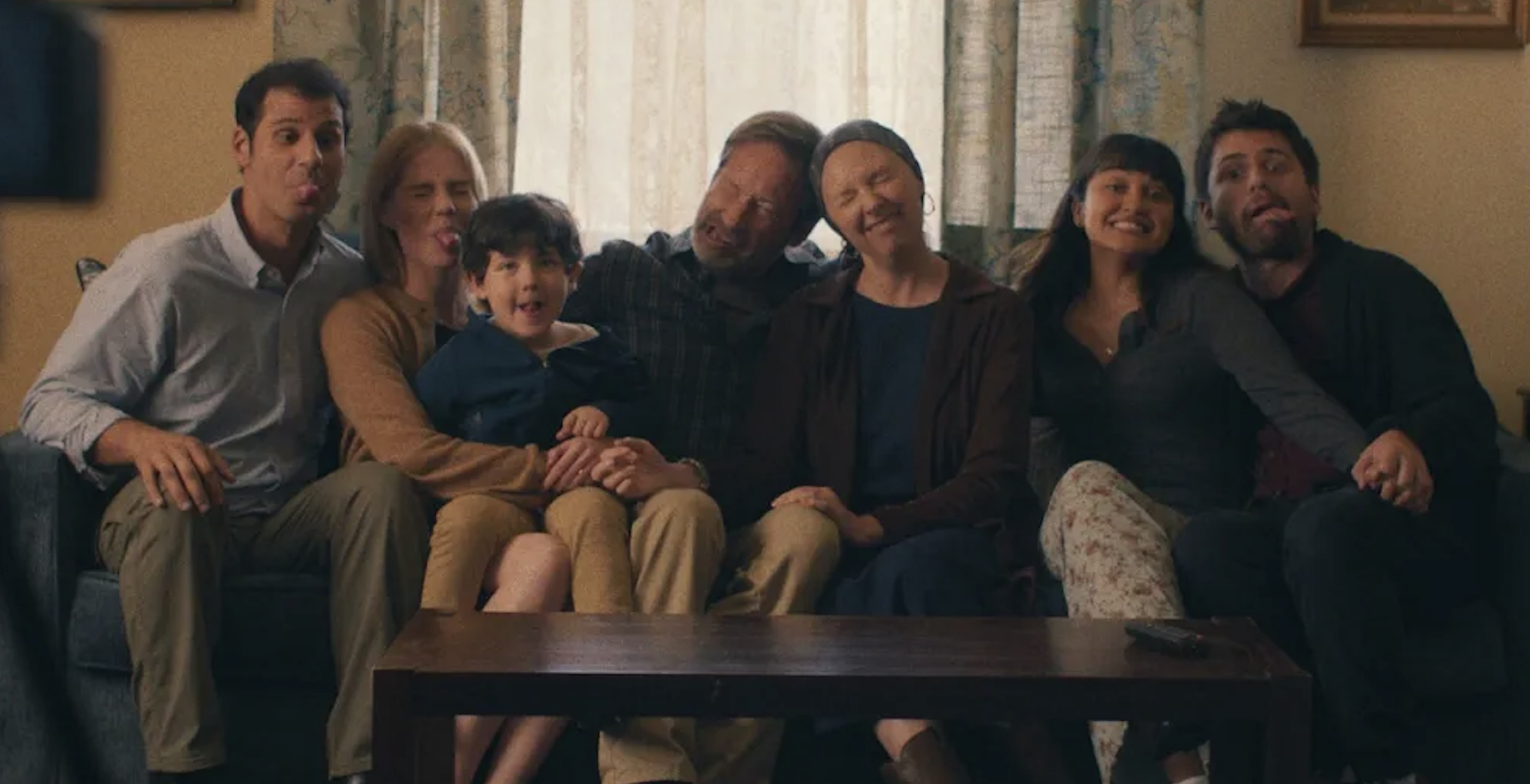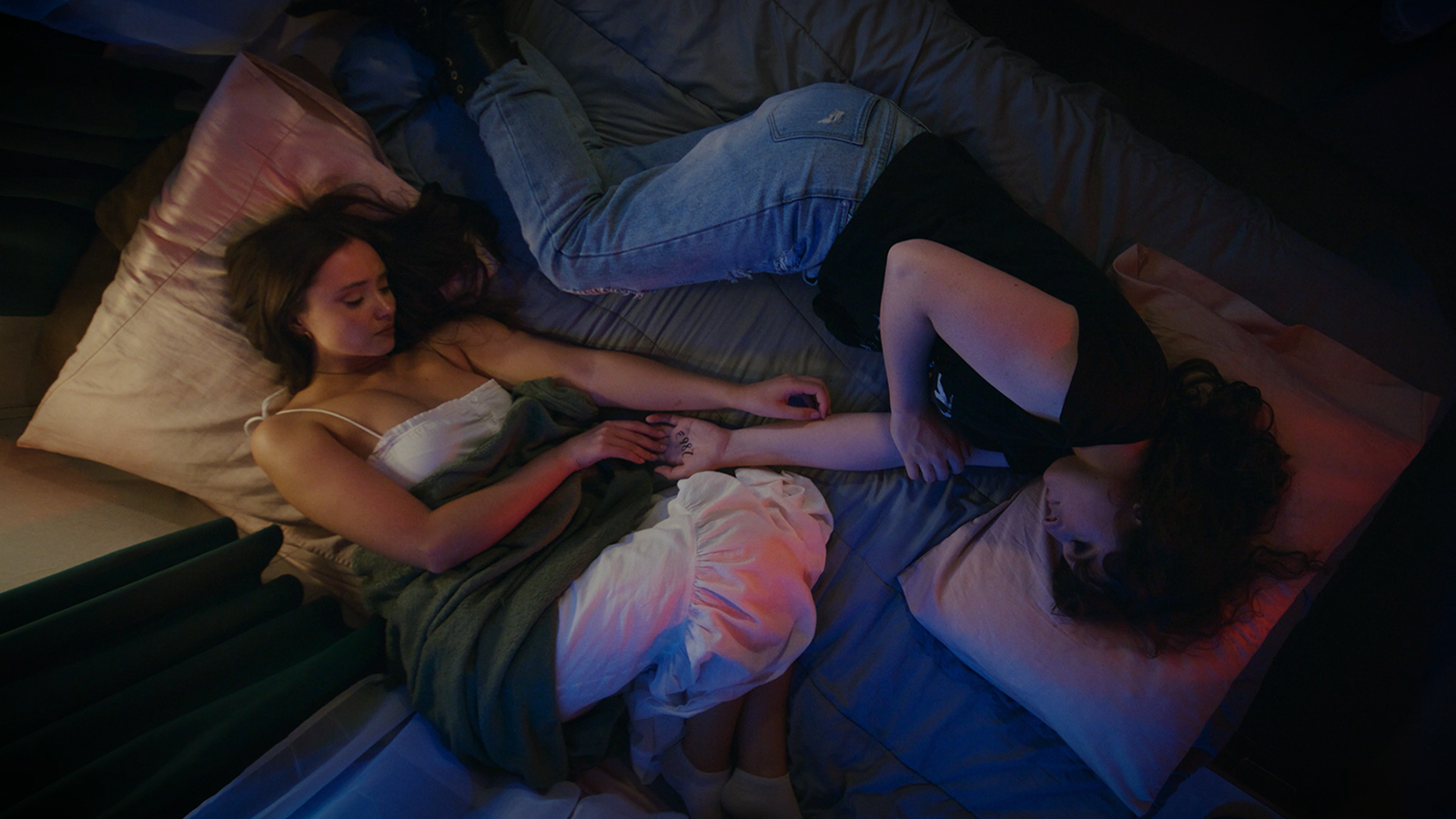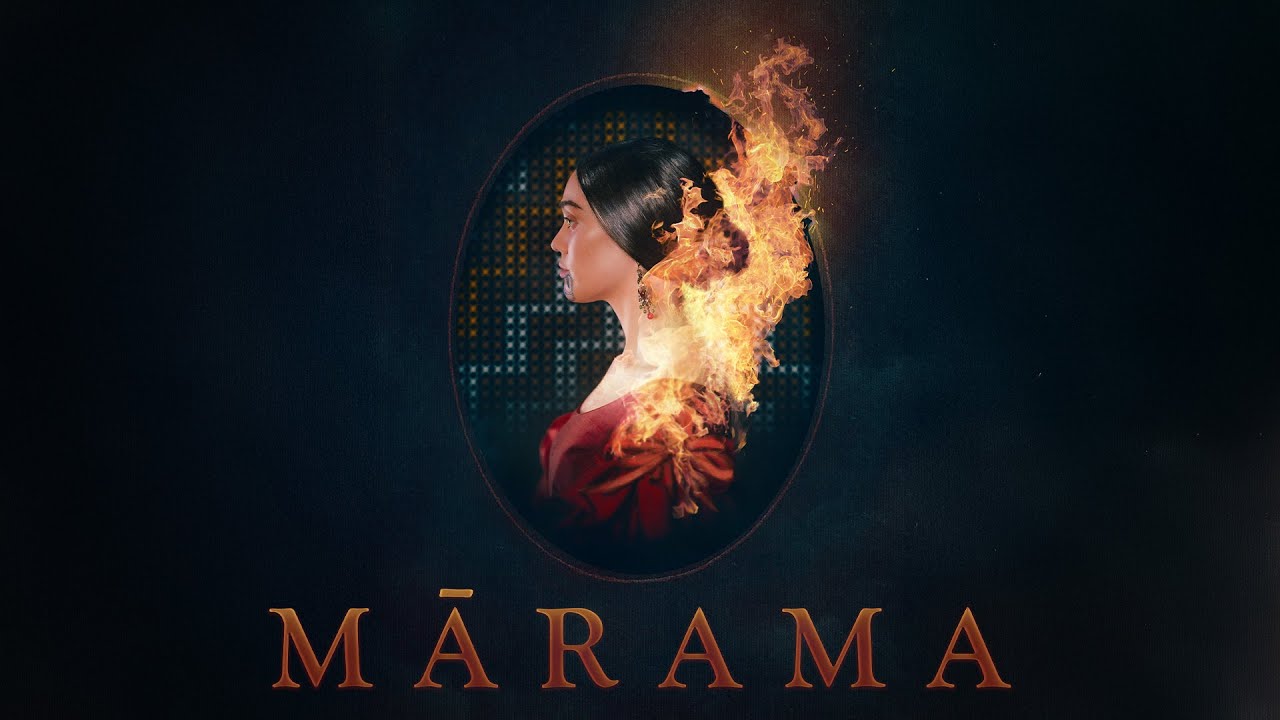
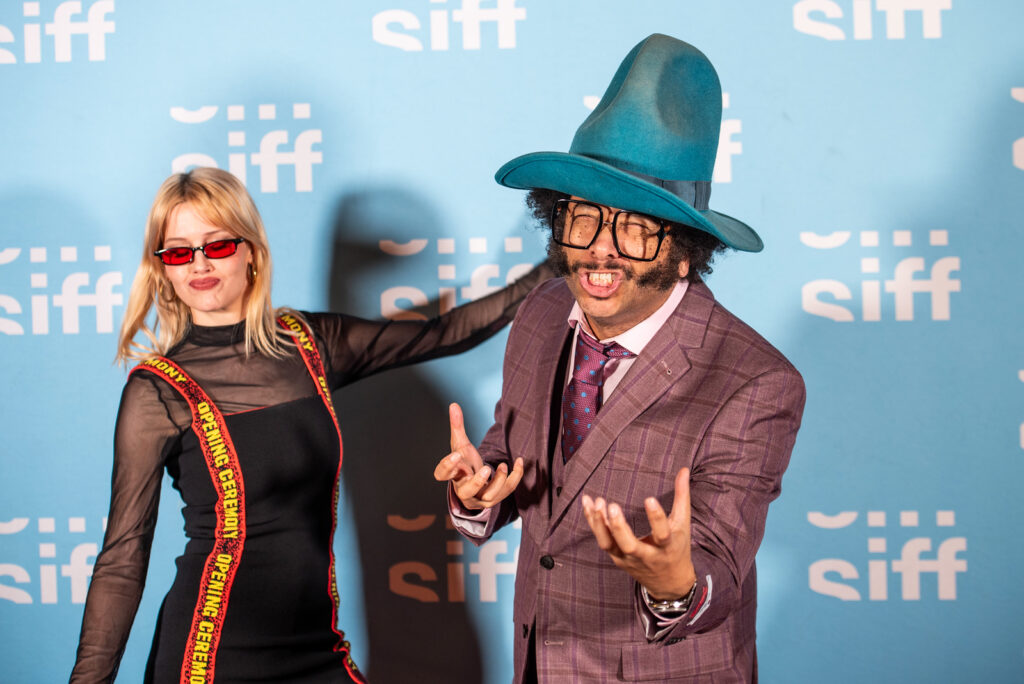
The 2026 Seattle International Film Festival opened with a bang as a sold-out crowd filled the historic Paramount Theater to see Boots Riley’s second feature film, I Love Boosters. In honor of the film’s high fashion theme, Riley wore a comically large turquoise hat and a snazzy mauve suit. He briefly introduced the film, saying that they almost didn’t get it finished, and we would see why when it was over. I believe he was referring to not only the high concept sci-fi material, but also the ambitious use of practical effects to bring his singular vision to light. Check out my review for this explosive film, and please go see it in theaters when it opens on May 22nd. This one demands the big screen treatment.
The following is a transcript of the Q&A hosted by SIFF after the screening. It has been lightly edited for clarity.
SIFF: Boots, thank you so much for being here on opening night for the Seattle International Film Festival. We’re so grateful to be able to start our festival with I Love Boosters.
Boots Riley: Thank you
SIFF: I’d love to just have you start by talking a little bit about where this movie began. I know you have a song of the same title from back in 2006. Did you always imagine it would become a movie?
BR.: I didn’t always imagine it would become a movie. But what I wanna do before we continue with this… I wanna say thank you to Seattle International Film Festival for having us. And – this is very important – to acknowledge the volunteers and the cinema workers. I know there is a cinema workers union and they’re in the middle of negotiating their contract with SIFF and I want to encourage SIFF to give them a fair contract.
[Crowd erupts in cheers and applause]
BR: I wrote a song 20 years ago called “I Love Boosters”, and it’s based on a lifetime of experiences of… I don’t know, like, trying to stay fly while you’re broke. And as a matter of fact, there’s somebody else that has a song about that who’s here. I think Macklemore (“Thrift Shop”) is here. And another rapper that’s here was also in the movie. He plays Li Pan. Alan Z is here.
I think about characters. I start with characters. I didn’t start thinking about the world that’s around them and what I actually think about that world… So, I have to be honest with myself about what I think about the world that shapes us and why that is meaningful in a personal way. And then that kind of brings up characters. And this was a group of women that I wanted to write about again. [My original pitch was] “It’s gonna be about a bunch of boosters that find a teleporter” because what I’m always trying to do, even before writing this… I’m always hyping the contradiction. And that’s what I realized I do with song lyrics… it’s like poetry. It’s like taking an idea that that’s right here, this line really connects to this idea, to this idea, to this idea, to this, to this, to that.
You take all that theory and get rid of it, and you put those two things together and it’s like, “WHOA! That’s a bar!” you know? What I’m doing is I’m just pointing out ironies and contradictions. And I’m doing that visually, cinematically, story-wise… And so, when I first said, “I’ll do the teleporter idea, the contradiction [with retail clothing] was taking the different points of production and distribution and putting them together geographically with… someone who makes the clothes and someone who sells them. And I just got bored of that idea after I started writing it. And then I went off and finished writing [his TV series] I’m a Virgo. I finish writing these two other scripts that are going to be the next movies after this. And then I got back to this. And I was thinking about science-fiction and…how science-fiction has changed our notions of even existence…
So, here’s an example: There is only right now. There’s not really a quote unquote time. There’s right now. Everything before is just a memory of things we see, things that are written down about what happened before. But that doesn’t exist. And the future is just our imagination. Now that’s empirically provable scientific fact. However, when I say it I sound like a hippie. And the reason I sound like a hippie is because of science fiction. It’s because we think of time as this thing that’s still there because we’ve seen all these things for over a century where it’s like, “if only we had the technology that could get us there…maybe sometime in 1000 years there will be that technology” or something like that. But there won’t be, because it doesn’t exist. And, like, I’m not against mythology and people believing bullshit. You know, whatever. Sometimes it’s useful. But I was like, “OK, well, what if I [incorporate] a philosophy that I use, just without [giving] the terminology. I use the philosophy of Dialectical Materialism in figuring out all sorts of stuff, both directly in my life and in my writing. So, I was like “what if I put that into it into a machine?” Then I got excited and finished the script.
[Crowd erupts in laughter and applause]
SIFF: I have to ask you about this collaboration with Keke Palmer. I feel like she is so slept on as an actress. I was so excited to see you had her in this lead role, and on top of that she is singing on tracks in the film. What was that collaboration like? Where did that begin? And how did these discussions evolve?
BR: Since the songs came up, I should mention that the song that you heard at the end [credits] as well as two of the other [tracks] in the film that Keke Palmer sings, are primarily by my daughter.
[Audience collectively awwwwwwws]
BR.: And I was on set, and I was playing [for] Keke, my daughter‘s demo for “Cassandra”, and she was crying, and she was like, “We gotta put this in the movie.” I thought maybe [it was] too slow or something… I met with Keke and… I think of what people know about her is… it’s kind of a character, right? And a lot of [directors], they want a certain cadence from her because it works. And she’s a comedic genius. But we started talking about some of the things [for that character] that were [based on] how she really relates and communicates when she’s not “on” and being the character that she’s creating. I’m saying this because she says this. And the whole idea was to get to things in a different way. And she said to me, “You know, everyone always says this to me. But then when they wanna make the money, then they’re like, ‘Do that Keke Palmer shit’.” And I mean… she is doing… I mean all of it is her, right? But it’s really cool because she is so smart and she reads a lot of stuff… I didn’t know [that] before meeting her… Just her philosophy of how she operates in the industry…