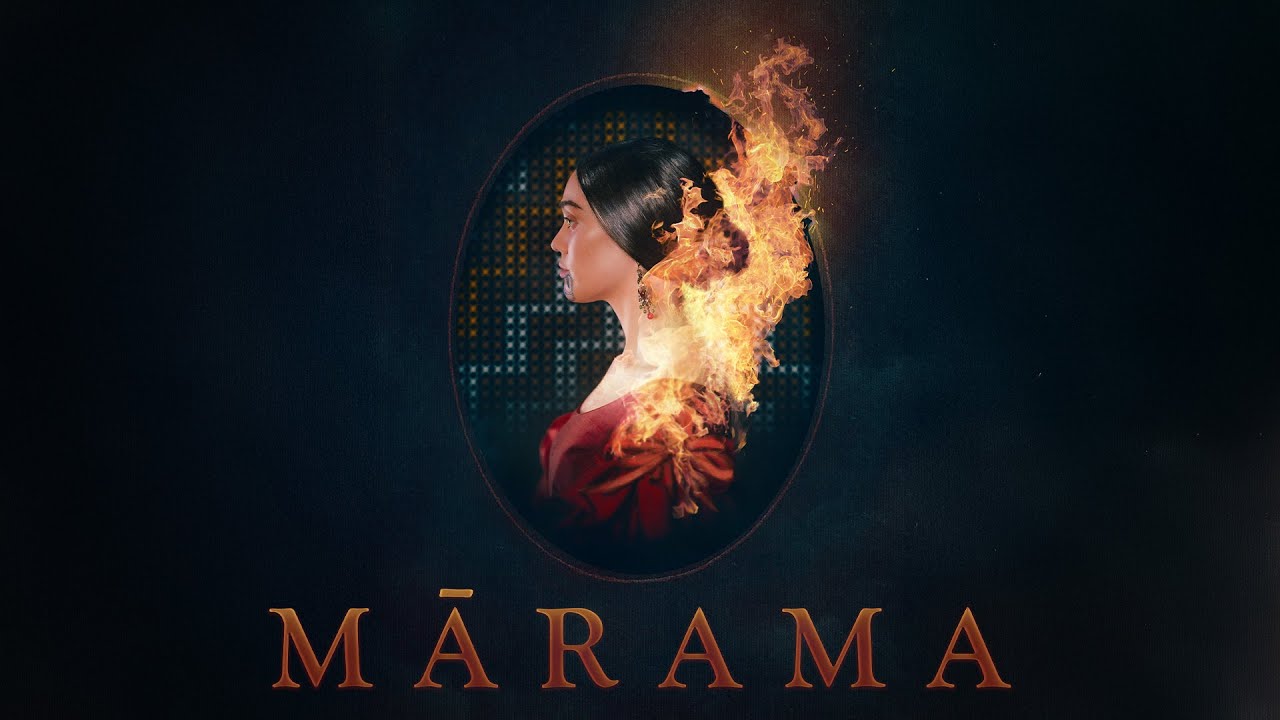
Mārama is an official selection of the 2026 Seattle International Film Festival.
Writer/director Taratoa Stappard didn’t set out to make a horror film for his feature debut. But as he researched Māori history and his personal connection to it, the horrors emerged on their own. He discovered so much colonizer-perpetrated violence, that one thing became painfully clear. Any film that truthfully reflects Māori history is inherently a horror story. And, as with most historical horror, women get the worst of it. Mārama is a powerful film in every respect. Even though the villains in Mārama are exploitative, Stappard worked very carefully to ensure that the viewers don’t feel complicit. The narrative presents and honors the culture, while simultaneously conveying how it feels for wāhine Māori to see it ravaged by predators.
Set in 1859, Mārama follows the eponymous young Māori woman (Ariāna Osborn) as she leaves behind her adopted parents in New Zealand and travels to the coast of Yorkshire, England seeking answers about her birth family. As Mārama walks down the dark corridors of her past, what she discovers sheds a blinding light on the grotesque ways the English decimated her culture and her people. The film lives in an accessible intersection of gothic horror, revenge drama, and historical fiction. It’s not an “easy” watch, but the rewards of sticking with it are immense.
With the opening, Stappard imparts a powerful thesis written in Māori and English on a black screen: “This story is grounded in the colonized history of v New Zealand. It contains disturbing scenes of the violation and desecration of the Māori culture. To move into our future, we must understand our past.”
After this, there is no narrative handholding. Stappard trusts his film and his audience. Next, we’re dropped into a dark, sparse room, looking down on a woman in a plain nightdress on her knees. Behind her is a broken chair. She drops a chisel to the ground and blood drips from her chin. But when she looks up, her eyes are filled with defiance. Through her garment suggests imprisonment, she has given herself moko kauae, a traditional tattoo for Māori women to honor their ancestors and heritage. She lets out a growl that is filled with the pain and vitriol of the thousands of wāhine Māori before her. It’s clear by her surroundings that this woman is not with her people. This is the only way she can reclaim her identity after everything else has been stripped from her. Upon rewatch, I am so grateful for this bold opening image, because it sets the tone for what’s to come. We will see colonizer violence galore, but the victims of it will not go quietly to that good night…

