
Hammer to Nail Review: Mārama

Mārama is an official selection of the 2026 Seattle International Film Festival.

Writer/director Taratoa Stappard didn’t set out to make a horror film for his feature debut. But as he researched Māori history and his personal connection to it, the horrors emerged on their own. He discovered so much colonizer-perpetrated violence, that one thing became painfully clear. Any film that truthfully reflects Māori history is inherently a horror story. And, as with most historical horror, women get the worst of it. Mārama is a powerful film in every respect. Even though the villains in Mārama are exploitative, Stappard worked very carefully to ensure that the viewers don’t feel complicit. The narrative presents and honors the culture, while simultaneously conveying how it feels for wāhine Māori to see it ravaged by predators.

Set in 1859, Mārama follows the eponymous young Māori woman (Ariāna Osborn) as she leaves behind her adopted parents in New Zealand and travels to the coast of Yorkshire, England seeking answers about her birth family.  As Mārama walks down the dark corridors of her past, what she discovers sheds a blinding light on the grotesque ways the English decimated her culture and her people. The film lives in an accessible intersection of gothic horror, revenge drama, and historical fiction. It’s not an “easy” watch, but the rewards of sticking with it are immense.

With the opening, Stappard imparts a powerful thesis written in Māori and English on a black screen: “This story is grounded in the colonized history of v New Zealand. It contains disturbing scenes of the violation and desecration of the Māori culture. To move into our future, we must understand our past.”

After this, there is no narrative handholding. Stappard trusts his film and his audience. Next, we’re dropped into a dark, sparse room, looking down on a woman in a plain nightdress on her knees. Behind her is a broken chair. She drops a chisel to the ground and blood drips from her chin. But when she looks up, her eyes are filled with defiance. Through her garment suggests imprisonment, she has given herself moko kauae, a traditional tattoo for Māori women to honor their ancestors and heritage. She lets out a growl that is filled with the pain and vitriol of the thousands of wāhine Māori before her. It’s clear by her surroundings that this woman is not with her people. This is the only way she can reclaim her identity after everything else has been stripped from her. Upon rewatch, I am so grateful for this bold opening image, because it sets the tone for what’s to come. We will see colonizer violence galore, but the victims of it will not go quietly to that good night…

Read the rest on Hammer to Nail!

Hammer to Nail Review: The Life We Leave

The Life We Leave is an official selection of the 2026 Seattle International Film Festival.

Since its inception in 1882, The National Funeral Directors Association has essentially offered two choices for decedents: burial or cremation. Within those parameters, there are customizable options, from expensive ornate caskets and headstones to cardboard urns; from grand funeral processions to intimate services. But the transactional nature of it taints every aspect and is very much contingent on what the families can afford. J.J. Gerber’s directorial debut, The Life We Leave, is a documentary that takes an in-depth look at one of the first companies in the world to offer a whole new way. Human composting is not just a green alternative. The “Return Home” model also involves and supports the grieving families every step of the way.

In 2019, Washington state became the first to legalize human composting. Return Home founder, Micah Truman saw a chance to get in on the ground floor of an emerging industry. He had recently left the tech world and initially entered the venture with that bottom line mindset. He came across a youtube video by Dr. John Paul, PHD, who explained his agricultural innovation for composting cows. Truman invited Dr. Paul out to lunch and didn’t even give the man a chance to bite into his sandwich before he got down to brass tacks. “Could you do it for people?” Though taken aback, Dr. Paul considered the question carefully and concluded that it was worth trying. What Truman didn’t know and would soon come to learn is that there is so much more that goes into funeral services besides body disposal. Or rather, there is so much more that should go into it. What “Return Home” offers is a way to reunite lost loved ones with the very elements of creation.

As of this writing, fourteen states have legalized human composting, and the companies that have sprung up accept clients from out of state. Most seem to charge comparable, if not significantly reduced rates as traditional funeral homes. Yes, the traditional places answer the phone and gladly retrieve your loved one at all hours, but after that, your involvement becomes very removed and transactional. When my own mother passed, she had chosen a place I never even visited. They picked her up, took my credit card info, followed her cremation wishes from her will, and mailed the remains. $2000 and a whole life burned into a box of ashes. The vessels provided, beyond the “basic cardboard box” cost extra. To have a service there cost extra. If you lose someone unexpectedly, these costs can feel limiting and blindsiding. But it used to be the only way to go…

Read the rest on Hammer to Nail!

Hammer to Nail Review: Forbidden Fruits

The newest addition to the toxic female friendship cinema pantheon is here and it’s called Forbidden Fruits. The film’s aesthetics recall classics like HeathersThe Craft, and Jennifer’s Body. But you’d better believe those comparisons are entirely intentional. I was not at all surprised to learn that Diablo Cody has her phrase-coining producer paws all over this thing. The debut feature for director and co-writer Meredith Alloway is based on the stage play, Of the women came the beginning of sin and through her we all die by Lily Houghton. The tag line on Houghton’s website reads, “a final girl writing plays/TV/films in a Lisa Frank journal”. If that means anything to you, you just might be the target audience for this film.

The success of Fruits really does rely on finding its target. But those they’re aiming for will be thrilled. The play’s lengthy original title (tough to fit on a movie poster) is a bible quote (Ecclesiasticus 25:25), which, in so uncertain terms, blames women for everything that’s ever gone wrong in this world, including the existence of death. Naturally, the film’s protagonists embrace this blame by forming a witch coven in the stock room of the high-end fast fashion mall store where they also work. In the play, the store is Free People (ironically named given their labor practices) because that’s where Houghton worked, at a mall in the suburbs of Houston, when she was inspired to write it.

For the film, they further evoke biblical themes by changing the name of the store to Free Eden and peppering the set design with snake and apple imagery. The leader of the coven is, in fact, named Apple (Lily Reinhart, Hustlers, TV’s Riverdale), as in the forbidden fruit that Eve eats in Genesis, gaining worldly knowledge. God punishes her and everyone else for the disobedience, thus inventing the patriarchy.

The other coven members likewise adopt produce-based names. Victoria Pedretti (TV’s You) is Cherry, and Alexandra Shipp (Barbie) is Fig. Lola Tong (The Summer I Turned Pretty) is Pumpkin, the group’s latest interloper. They do, in fact, have an opening after the mysterious departure of Pickle (Emma Chamberlain), but they’re hesitant to open their beaded curtain to a lowly pretzel sample girl from across the food court. Pervasive Pumpkin won’t take no for an answer, and soon, they’re initiating her in their stock room using a bejeweled cowboy boot, blood, tears, and a hilarious string of magic words…

Read the rest on Hammer to Nail!

Hammer to Nail Review: Mr. K

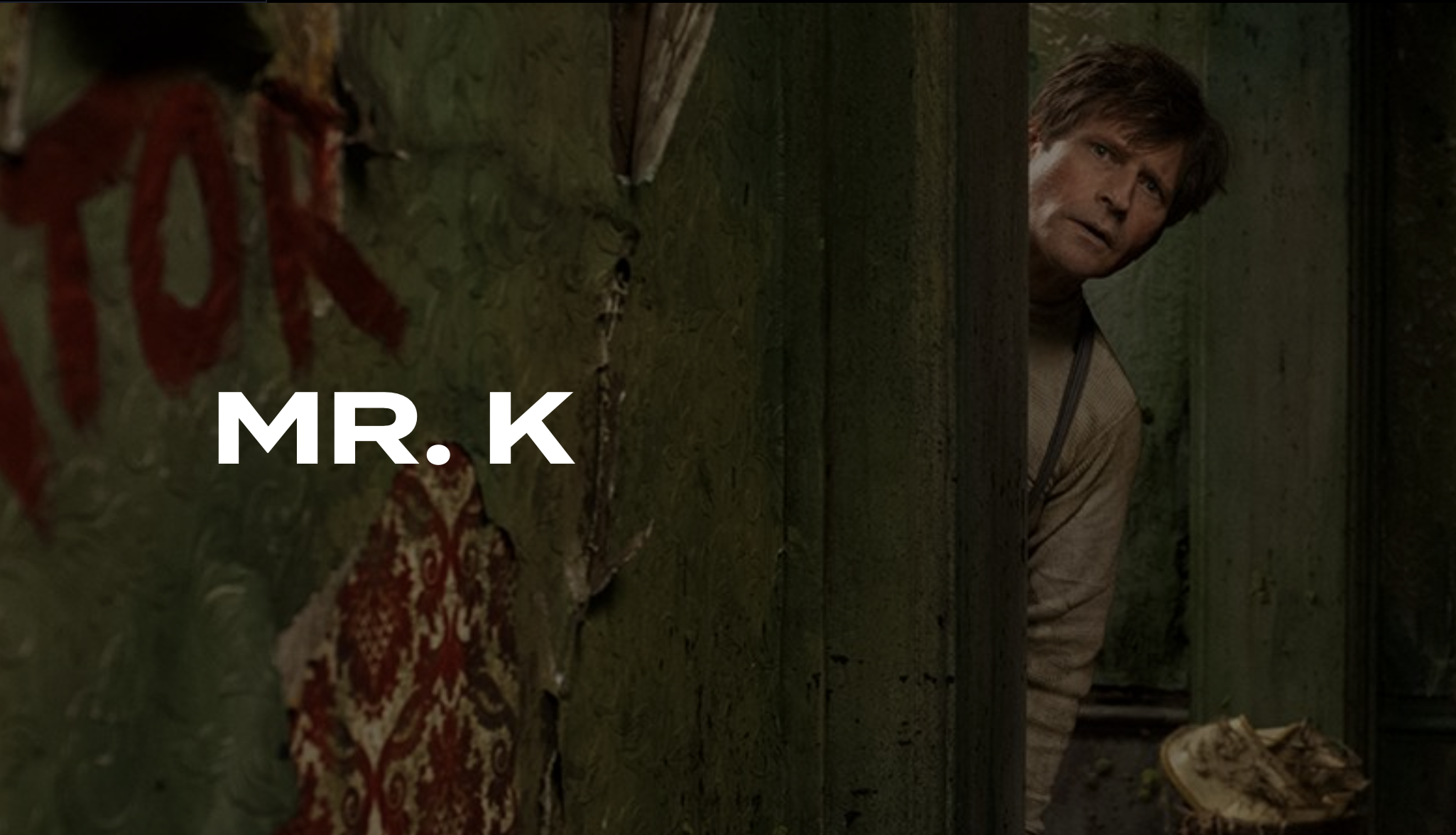
After over two decades of directing Dutch film and television, Tallulah Hazekamp Schwab makes her English language feature film debut with the surreal black comedy, Mr. K. Veteran eccentric Crispin Glover is perfect for the role of a traveling magician who is experiencing some existential career stagnation. On his way to a gig, he stops in an unfamiliar town, checking into a strange bucolic hotel. The next morning, he’s surprised and frustrated to learn that he cannot find the exit. None of the other inhabitants are much help. In fact, some seem downright determined to mislead him. Others insist that he must accept his new reality, as they have. Bit by bit, Mr. K uncovers the mystery of the hotel’s true nature that could be the answer to, not only his liberation, but life, the universe, and everything.

I won’t reveal too much of the plot because it’s best to experience the narrative along with Mr. K having no idea what is happening or about to happen. However, to give you a sense of the vibes, here are some films that sprang to mind while watching: Alice in Wonderland, Barton Fink, Snowpiercer, Time Bandits, Coraline, Delicatessen, and The Matrix. For a long time, Mr. K resists his absurd predicament as he tries to make sense of it. It’s not until he lets go of his drive to control his circumstances that he is able to move forward. This is also the best way to take in Schwab’s film. To walk away, as they say, you must leave something behind.

Schwab also wrote the script, which she deems her most personal work to date. She was inspired by her fascination with “doors and the idea that they conceal something unexpected.” Schwab wears her influences on her sleeve, as her title character evokes the Kafkaesque landscape that he must traverse. Growing up, she felt like she had trouble grasping the “rules” of society, because they seemed so dependent on where she was and who was imparting them to her. A principal conceit of the film is the idea that one person’s reality can be completely incomprehensible to someone else…

Read the rest on Hammer to Nail!

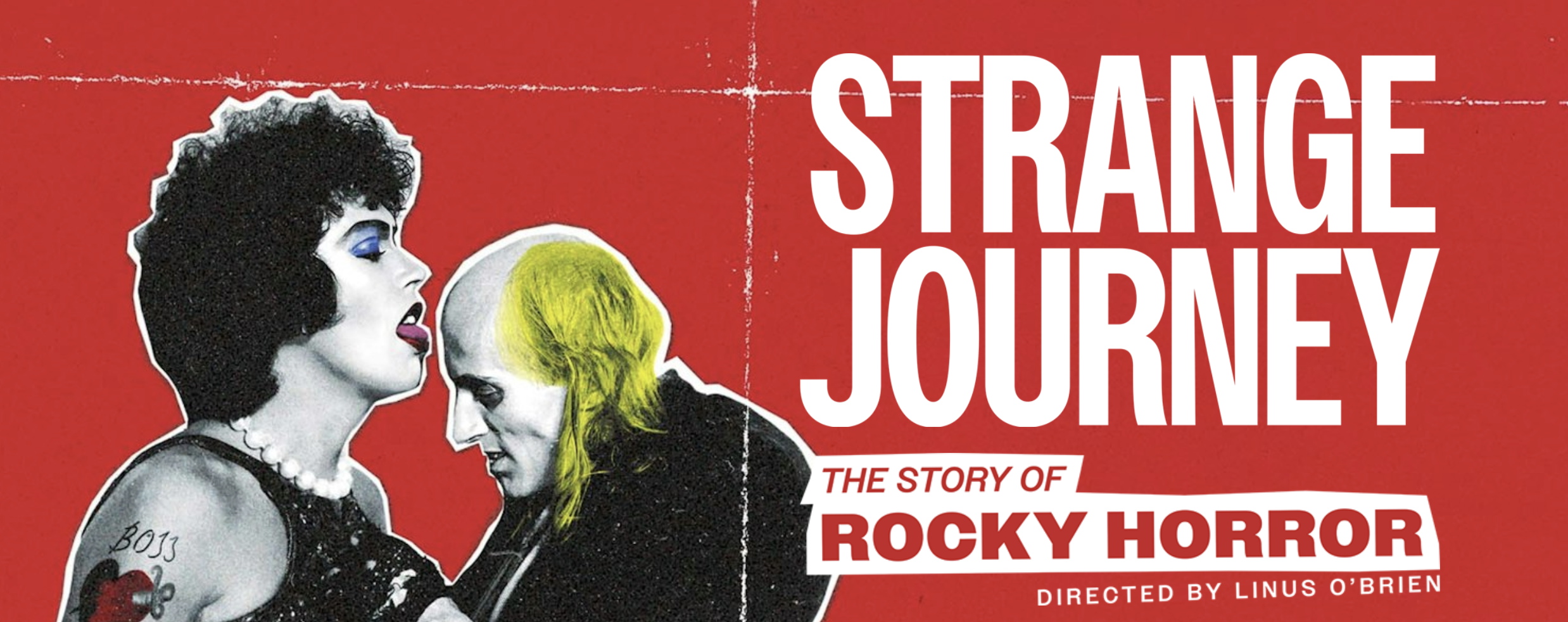
Hammer to Nail Review: Strange Journey: The Story of Rocky Horror

If you’re reading this review, chances are you’re already aware of the awesome power of movies. The best films can be the connective tissue for society’s outcasts. Even those with more “normie” proclivities can unlock something hidden deep within them when exposed to the right combination of moving images, sounds, and vibes.

For many people, that first magic film was and IS The Rocky Horror Picture Show. So-called Transylvanians don’t forget the first time they saw Frank-N-Furter throw off his cape to strut around in a saucy corset without apology. At the Frankenstein place, It’s Brad and Janet, in their J.C. Penny undergarments, who are the outsiders. But even they will be welcomed into the fold with open arms (and legs).

Linus O’Brien’s film, Strange Journey: The Story of Rocky Horror, is so much more than a historical document. It’s an origin story for a cultural touchstone of Queerdos. And yes, you can be straight and still be counted among their ranks, so long as you leave your judgments outside in the rain. Richard O’Brien first birthed his masterwork in the form of a 1973 London stage show, with Tim Curry in the original cast. It was wildly popular, but it would take fits and starts to grow into the juggernaut it is today. Fifty years later, it resonates anew with young audiences and slips on like an old fishnet stocking for O.G. fans.

Who better to tell this storied history than a guy who literally grew up with Rocky Horror: Linus O’Brien. Richard O’Brien’s son was always aware that his dad wrote a pervasive musical, but it didn’t dawn on him until a few years ago, just how meaningful it is to people. He explains it beautifully in his director’s statement:

“As I read through the comments [on a youtube video of “I’m Going Home”], I was overcome with emotion – each person shared their personal story and the deep place the song held in their heart… this was the first time I truly grasped the enormity of its influence on individual lives… the unique cult phenomenon it fostered and the safe space it created for all kinds of people; and the unfortunate reality that, in today’s political climate, Rocky is as relevant as ever.”…

Read the rest on Hammer to Nail!

Hammer to Nail Review: Year of the Fox

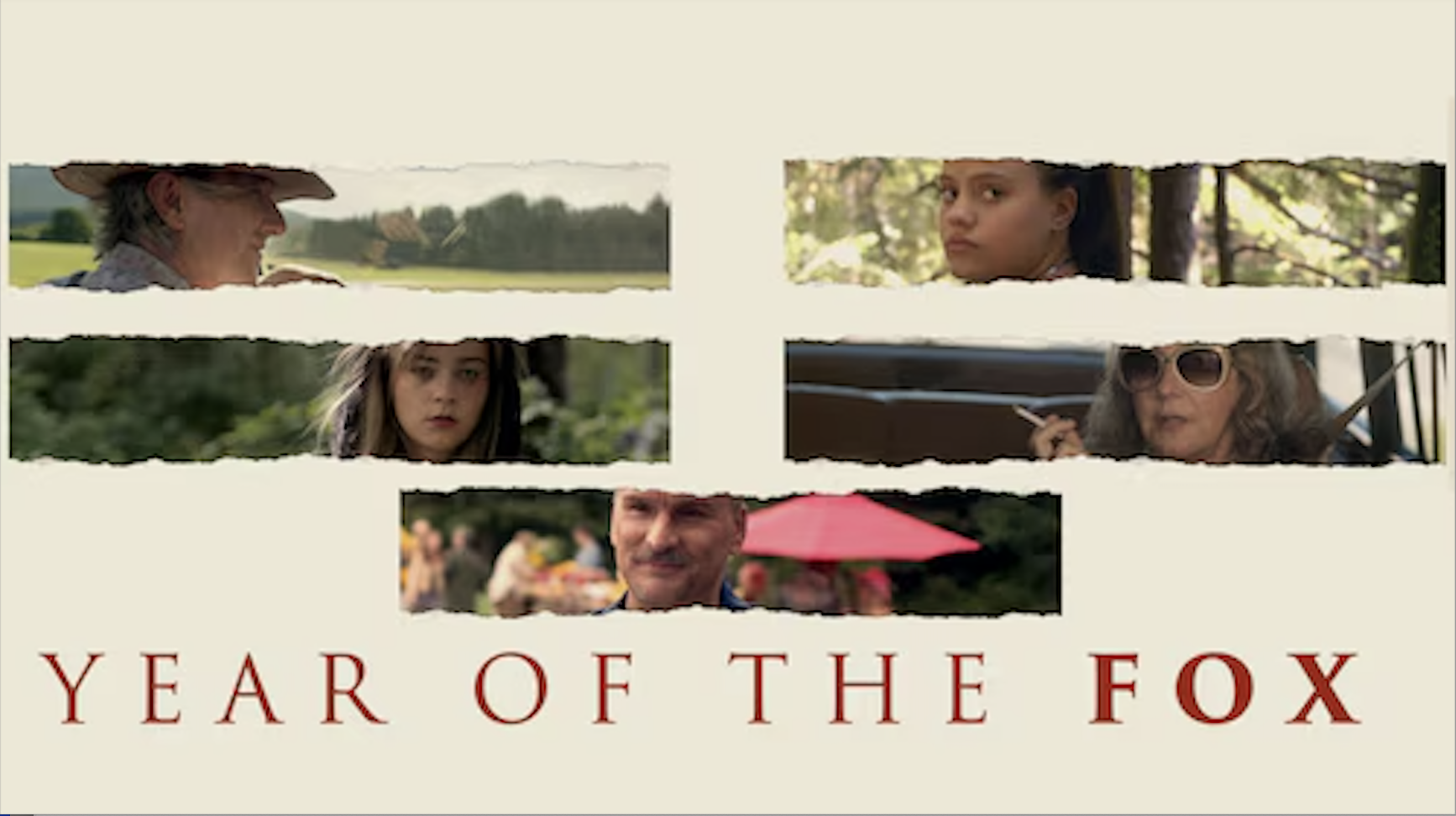
Megan Griffiths’ latest film, Year of the Fox (check out my interview with Griffiths and screenwriter Eliza Flug here) is a coming-of-age drama set in 1997 Seattle and Aspen. On the cusp of high school graduation, a young woman (Sarah Jeffery, TV’s Descendants), adopted into the upper echelon, gets a disillusioning peek behind the curtain of adulthood. There, she finds selfishness, pettiness, a ring of predators and the people who protect them. Year of the Fox presents a complex tableau of American high society including gender politics, the commodification of young girls, patriarchal hypocrisy, and the price of privilege that only women incur.

If this sounds familiar, you might be living in the United States in the year 2025. As of this writing, the president is doing everything he can to prevent the release of a list of rich pedophiles, even though he’s “definitely not on it”. In fact, there isn’t even a list. Let’s focus on important things like the recipe for Coca-Cola!  Twenty-eight years later, the only thing that’s really changed is the soundtrack. Systematic patriarchal exploitation is as American as apple pie.

As you might have guessed, Eliza Flug’s semi-autobiographical tale leans dark. But it’s not a suffocating darkness. That’s a tonal balance that Megan Griffiths has always deftly straddled in her myriad films about American womanhood (Eden, The Off Hours, Lucky Them, Sadie). Together, this dream team has crafted a weighty story about the ripples created when powerful men use their sovereignty to hurt women, without reproach, time and time again. Griffiths and Flug effectively inform the audience of the dirty deeds without miring us in the acts themselves. We don’t need to see the assaults, because it reverberates through the narrative: folded arms, hunched shoulders, a new bruise, a condom wrapper stuffed in a drawer, a knowing glance, a mysterious car dropping off a teenage girl in the wee hours, a man calling a seventeen-year-old girl, “an old soul.” It’s a shorthand that is familiar to at least 50% of the population. We know what all these things mean because we have all witnessed it or experienced it firsthand…

Read the rest on Hammer to Nail!

Hammer to Nail Review: Boys Go to Jupiter

Writer/director Julian Glander, best known for his 3D animated video game, ART SQUOOL, and Adult Swim contributions, gets personal with his feature debut, Boys Go to Jupiter. This animated slice-of-life musical conjures Scott Pilgrim vs the World, Barbie, Playmobile toys, and The Florida Project. But Glander and his producing partner, Peisin Yang Lazo mash up their evident influences in a way that feels wholly unique. It’s hardly the first film to depict that nebulous, confusing, and sometimes scary period betwixt teenhood and adulthood. But it feels fresh in so many ways. This one has sleeper classic written all over it. I wouldn’t be surprised if future filmmakers one day cite this film as an influence.

The story follows Billy 5000 (Jack Corbett, host of NPR’s Planet Money TikTok series),, a suburban teenager and recent high school drop-out, who is languishing in the dead zone between Christmas and New Years Eve. He decides that the best way to get his life on track is to earn $5000 delivering food via the Grubster app. He commutes on a Swagtron hoverboard, taking him across the paths of many oddball characters, who are voiced by a staggering roster of talent. Among them: an ineffectual security guard (Julio Torres, Problemista), the downtrodden owner of a mini golf course (Joe Pera), a fanatical Christian woman (Sarah Sherman, SNL), a spirited octogenarian (Cole Escola, TVs Search Party, Broadway’s Oh, Mary!), and the diabolical CEO of an orange juice company (90s comedy legend, Janeane Garofalo), who also happens to be the mother of Billy’s crush, Rozebud (indie musician Miya Folik). Influencing his misadventures at every turn is a donut-shaped alien he accidentally picks up during a delivery, and a worm-like creature (Tavi Gevinson) who may hold Billy’s fate in their… whatever it is that supernatural worms use instead of hands.

Meanwhile, Billy checks in with his friends, including the supportive and aptly-named Beatbox (Elise Fisher, Eighth Grade), a wild card called Freckles (Grace Kuhlenschmidt, TV’s The Daily Show), and the friend group scapegoat, Weenie (Chris Fleming). The crew are usually getting into some manner of suburban mischief. i.e. “We’re going down to the train tracks. Do a little train track stuff.” His family, including older sister, Gail 5000 (Eva Victor, Sorry, Baby) provides motivation in the form of tough love…

Read the rest on Hammer to Nail!

Hammer to Nail Review: I Don’t Understand You

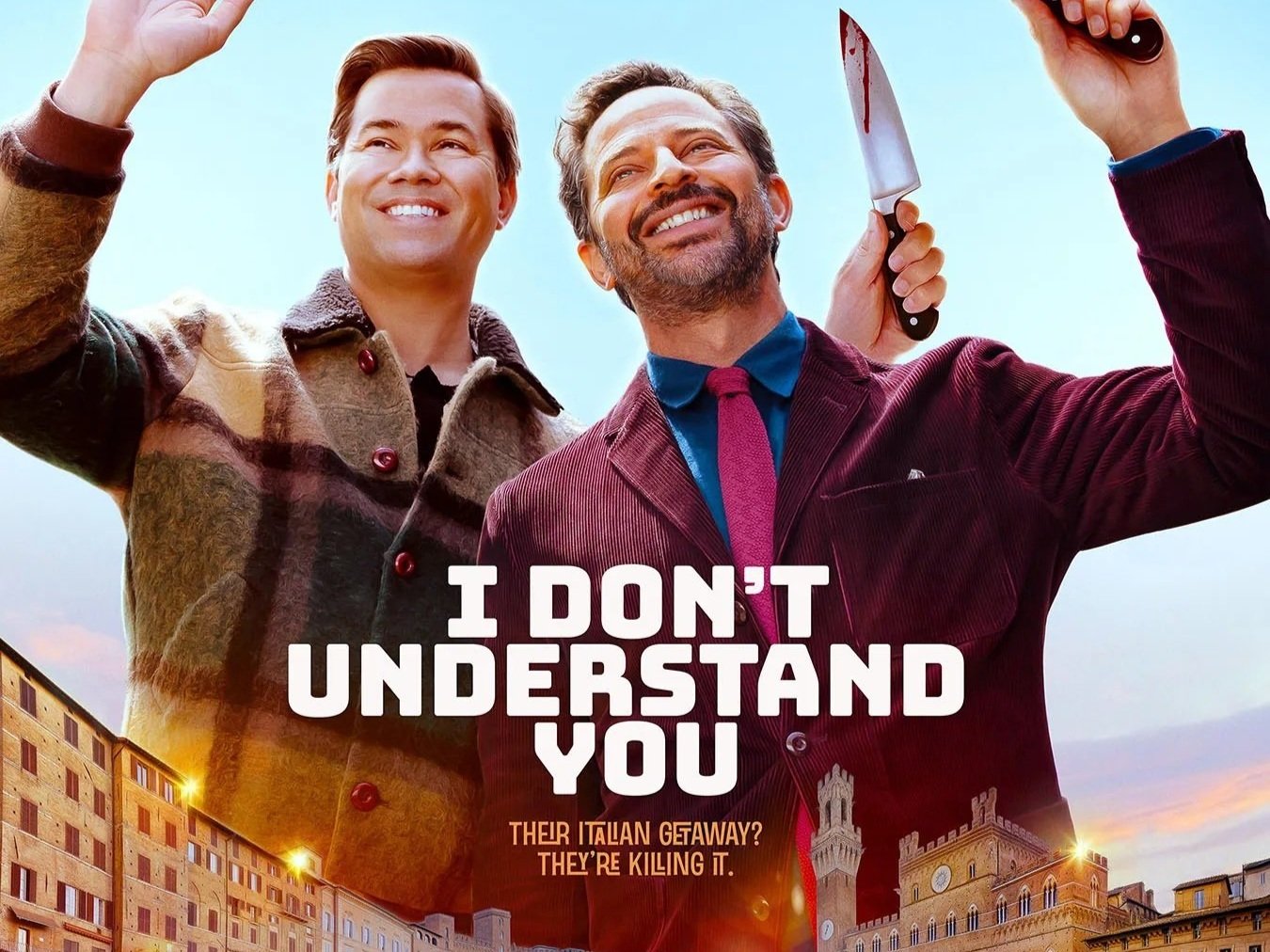
Watching I Don’t Understand You, the new semi-autobiographical comedy/thriller co-written and directed by real-life married couple Brian Crano and David Joseph Craig, I was reminded of my own “imminent parenthood” time. There is a certain panic that sets in when it’s definitely happening but you’re not sure you’re ready. In the case of I Don’t Understand You, it goes off the rails in very broad ways, but the vibes are inherently relatable. The dark comedy stars Nick Kroll (TVs Kroll ShowBig Mouth) and Andrew Rannells (TVs Big MouthGirls) as the Craig and Crano proxies, who embark on a wedding anniversary/babymoon to Italy on the cusp of their impending fatherhood.

Crano and Craig’s debut is, in many ways, a tribute/throwback to outrageous comedies about couples who see their relationship tested beyond their wildest imaginations. Films like, The Money PitDate Night, and Flirting with Disaster spring to mind. There’s also a top note of misunderstanding-based violence, like in Tucker & Dale vs. Evil. I won’t spoil the journey, but viewers should be prepared. for. anything.

We first meet Dom and Cole as they record and then re-record an introduction video to send to their prospective surrogate (played sparingly and virtually by Amanda Seyfried). The men struggle to find the balance between being themselves and making a good impression. But no matter what, they don’t want to get burned again (their previous surrogate wasn’t even pregnant and made off with a large sum of money). Plus, they REALLY want to become parents.

Craig and Crano really were scammed by a would-be surrogate, got stranded in the Italian countryside, and had to make their way through the crisis with only the most basic Italian skills (there are several jokes about the ineffectiveness of Duo Lingo in the film). Dom and Cole can barely communicate with the people tasked to help them, and the cultural differences between Italians and Americans cannot be overstated…

Read the rest on Hammer to Nail!