Pandemic movies that were shot pre-COVID and released after the outbreak are now so prevalent that they need their own genre. Maybe we could call it Prescient Pandemic Horror. Rod Blackhurst (Amanda Knox) directed one such offering in 2015. Here Alone premiered at the 2016 Tribeca Film Festival received a theatrical release in 2017. Four years later, it’s been resurrected to audiences who will likely relate much more closely to the story of a zombie pandemic survivor who wrestles with sharing her precious resources and personal space with strangers. Their presence also forces her to reckon with survivor’s guilt surrounding the fate of her husband (Shane West) and baby.
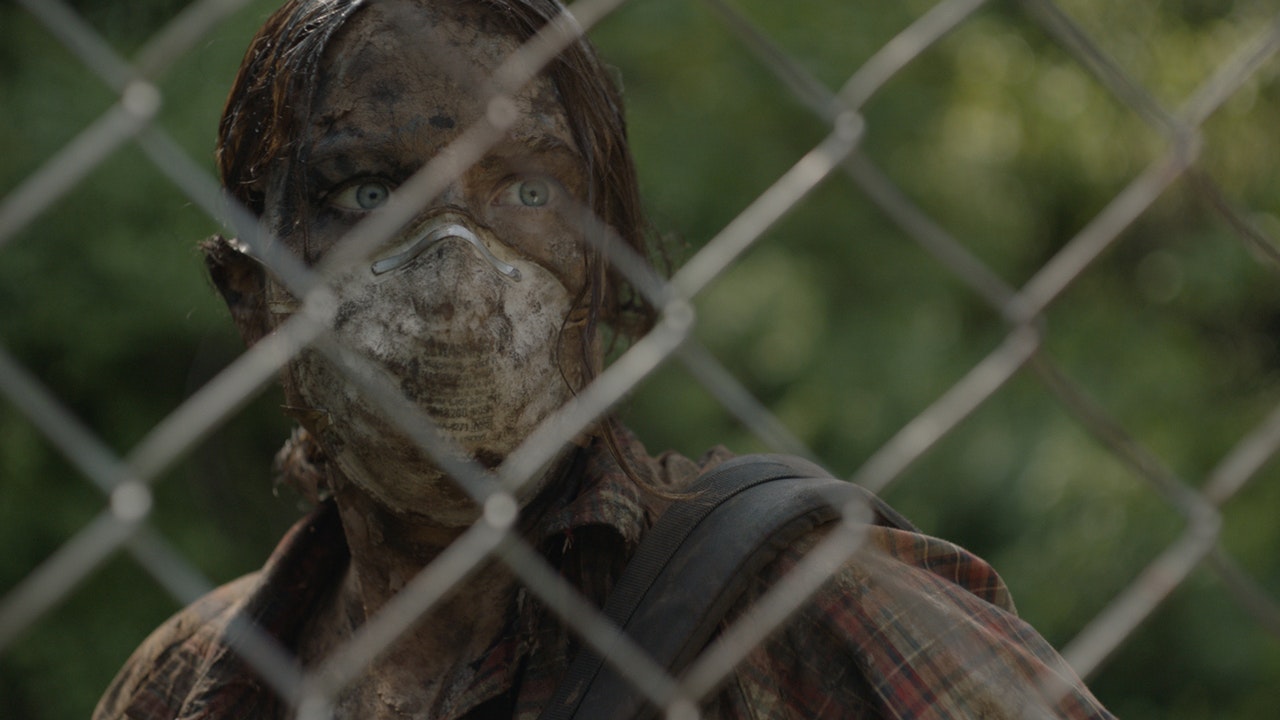
Written by David Ebeltoft, Here Alone follows Ann (Lucy Walters), a woman who has settled into a survival routine following the deaths of her husband and infant in a recent-ish zombie pandemic. There is a Kelly Reichardt-ness to the direction, particularly in the rural setting and long stretches without dialogue. We watch Ann go about her routine, keeping herself safe in the woods away from the deadly threat lurking in the urban areas. She keeps two camps: One in her car and one by a lake, splitting her time between the two. She uses the lake site in good weather to bathe and wash her clothes and the car site as shelter from the unpleasant elements. She keeps careful track of her rations and only goes on supply runs when absolutely necessary. She also consults a hand-written guide book for foraging, and doesn’t always get it right. But barfing and passing out is better than dying of hunger. Protective measures on the supply runs involve bleeding into a jar to set up a decoy, covering herself in animal feces to mask her own scent, and saving her urine in a bucket for a quick dousing if she’s being pursued.
One day, Ann runs into a teenager and her older male companion in need of medical attention. Ann is hesitant to help, but she concedes to the daughter’s pleas. She sets up a tent for them, bandages the man’s headwound, and shares her rations. A significant portion of the film involves the three of them sitting silently around a campfire, carefully crunching on the minute morsels they must call their dinner.
While the man heals, the girl tells Ann their story. They are a step-father and daughter heading north (presumably to Quebec) in search of a safe haven that has been broadcasting a beacon to survivors. Olivia’s (Gina Piersanti) mother succumbed to the virus and it’s been the two of them ever since. When Chris (Adam David Thompson) heals, he shares his side of the story, which involved having to kill his wife in front of her daughter. They’ve been in search of a safe place to call home ever since.
Ann doesn’t reveal much of her trauma to her reluctant roommates, but Ebeltoft shows the audience in periodic flashbacks. Ann’s condescending and gruff husband was somewhat of a survivalist and he directed her in packing up and getting the fam out of Dodge. He also dictated to her the survival guide and went on supply runs while she remained at camp with the baby. Of course, there’s no baby or husband in the present so we know something awful happened to them. Eventually, we see those awful things and they go a long way toward explaining Ann’s wariness of Olivia and Chris as well as her reluctance to leave her camps, however dangerous it is to stay in one place.
Olivia seems protective of her step-father, but their bond is more complicated than that, as we learn when Chris begins to show a romantic interest in Ann. Olivia’s jealousy throws a very dangerous wrench into the works when Chris invites Ann to join them on their journey up north.
What sets Here Alone apart from other zombie films is its focus on the survivors. We rarely get a glimpse of the threat that decimated humanity. We just know it’s out there. Sometimes, we hear an inhuman snarl or wail, but we mostly stay with the living in isolation hoping to avoid the plague that got them there. Also, no one ever says the word “zombies”. But whatever is affecting people, it starts as little red rings on the stomach, and ends with an automaton craving for human flesh.
The performances from leads aren’t bad, and I’m sure the casting was budgetary, but script and direction are so strong that it’s hard not to think about how much more impactful the film would be in the hands of more dynamic performers. Imagine what Ryan Gosling could do with a monologue about having to kill his wife in front of her daughter. Or what Michelle Williams or Tessa Thompson could do with extended periods of silent survival.
Overall, Here Alone is a riveting film with home-hitting elements like the initial uncertainly surrounding how bad things would get with the “virus”, the prevalence of masks, and how quickly one can get used to being alone, despite the mental unhealthiness of isolation. There’s a subtle message about coping here that I haven’t seen much in genre films. Ann wonders how Chris is able to make jokes and try to have fun on occasion, when he has experienced so much loss. He tells her, “I choose what to remember and when to remember it.” Ann, on the other hand, wears her trauma like an armor. Neither of them is wrong. We do what we must to survive. One nice thing about our pandemic is we don’t have to murder anyone ourselves to keep from getting infected.
May 7, 2021
Categories: Filmpinions . Tags: Amanda Knox, COVID-19, David Ebeltoft, here alone, Lucy Walters, Pandemic, Quarantine, Rod Blackhurst, shane west, zombie, zombie apocalypse . Author: Baxter . Comments: Leave a comment