
Hammer to Nail Review: Mr. K

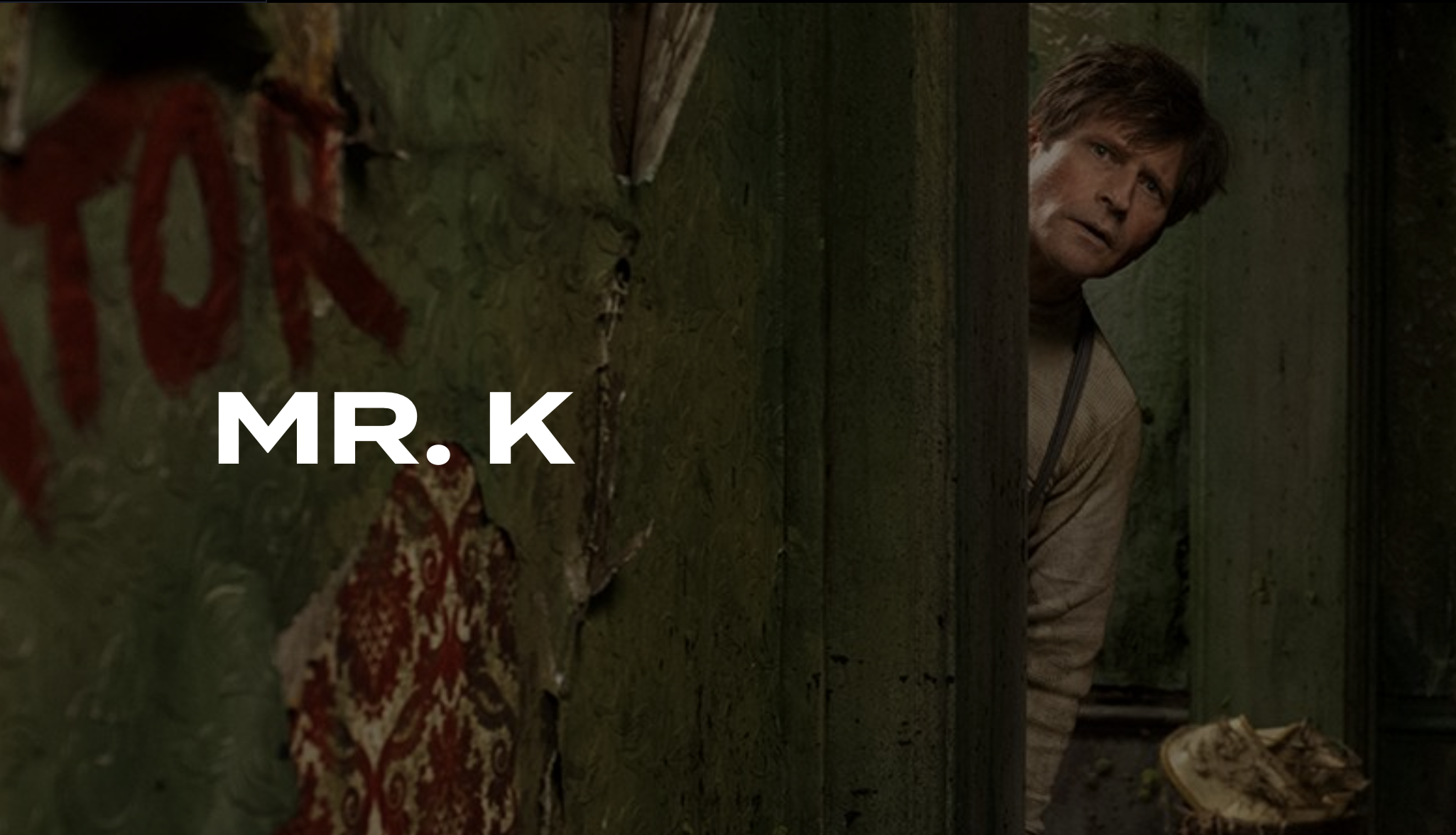
After over two decades of directing Dutch film and television, Tallulah Hazekamp Schwab makes her English language feature film debut with the surreal black comedy, Mr. K. Veteran eccentric Crispin Glover is perfect for the role of a traveling magician who is experiencing some existential career stagnation. On his way to a gig, he stops in an unfamiliar town, checking into a strange bucolic hotel. The next morning, he’s surprised and frustrated to learn that he cannot find the exit. None of the other inhabitants are much help. In fact, some seem downright determined to mislead him. Others insist that he must accept his new reality, as they have. Bit by bit, Mr. K uncovers the mystery of the hotel’s true nature that could be the answer to, not only his liberation, but life, the universe, and everything.

I won’t reveal too much of the plot because it’s best to experience the narrative along with Mr. K having no idea what is happening or about to happen. However, to give you a sense of the vibes, here are some films that sprang to mind while watching: Alice in Wonderland, Barton Fink, Snowpiercer, Time Bandits, Coraline, Delicatessen, and The Matrix. For a long time, Mr. K resists his absurd predicament as he tries to make sense of it. It’s not until he lets go of his drive to control his circumstances that he is able to move forward. This is also the best way to take in Schwab’s film. To walk away, as they say, you must leave something behind.

Schwab also wrote the script, which she deems her most personal work to date. She was inspired by her fascination with “doors and the idea that they conceal something unexpected.” Schwab wears her influences on her sleeve, as her title character evokes the Kafkaesque landscape that he must traverse. Growing up, she felt like she had trouble grasping the “rules” of society, because they seemed so dependent on where she was and who was imparting them to her. A principal conceit of the film is the idea that one person’s reality can be completely incomprehensible to someone else…

Read the rest on Hammer to Nail!

Film Review: Clay’s Redemption

Director Carlos Boellinger calls Clay’s Redemption is an “unapologetic midnight movie”. Indeed, it would be fun to end a late night with this neon-drenched action noir fantasy. Shot in the darkest corners of London, Boellinger’s debut feature evokes Blade RunnerThe Matrix, and Cinemax’s American Gods with its lively tale of a Sleeve Walker (a sort of body-hopper) called Clay who helps a group of god-like immortals defeat a power-hungry demon. In exchange, he will earn his freedom and be settle into his final form. 

Boellinger wrote the dialogue-light script with Ivo Alexander. A couple of paragraphs on a black screen set the scene for the story. There are 9 living gods who are fighting amongst themselves for the all the power, Highlander-style. Meanwhile, a demon hunts them to steal their power for its own. Sleeve Walkers are convicts forced into indentured servitude, swapping bodies whenever their old ones wear out. When the story kicks off, we meet Clay (Akie Kotabe, TVs The Man in the High Castle), strolling around town in his latest body rental. A couple of stylish immortals hire him for one last job. If he can manage to transport an important woman to safety, he can earn his freedom in a body to call his own. Of course, the enemies are powerful and lurk around every corner, and everyone wants to get their hands on the mysteriously mute Maya (played by UK musician, Nuuxs). 

The best thing this film has going for it is the cinematography, also done by Boellinger. Clay’s Redemption was shot guerilla style around London, using only available light. This is clearly a low-budget project, but the seams are well hidden in the visuals. Boellinger has a real eye for composition akin to Nicolas Winding Refn’s stunning, but otherwise lackluster Only God Forgives. It doesn’t hurt that every performer looks like a supermodel. Among those who consulted on the look of the film were production designer Tony Noble (Moon) and designer Charli Cohen.

The lively score, composed by London-based duo TwoTwentyTwo, keeps the viewer engaged, but the film shines during the fight sequences. Kotabe steps out of his CIA IT guy 

pigeon hole, into that of formidable leading action man. All-in-all, Clay’s Redemption isn’t an instant classic, but it’s a good showcase for the talents of many involved. If you enjoy cool fight choreography in visually arresting locales, there’s something for you here.