
Hammer to Nail Review: Mr. K

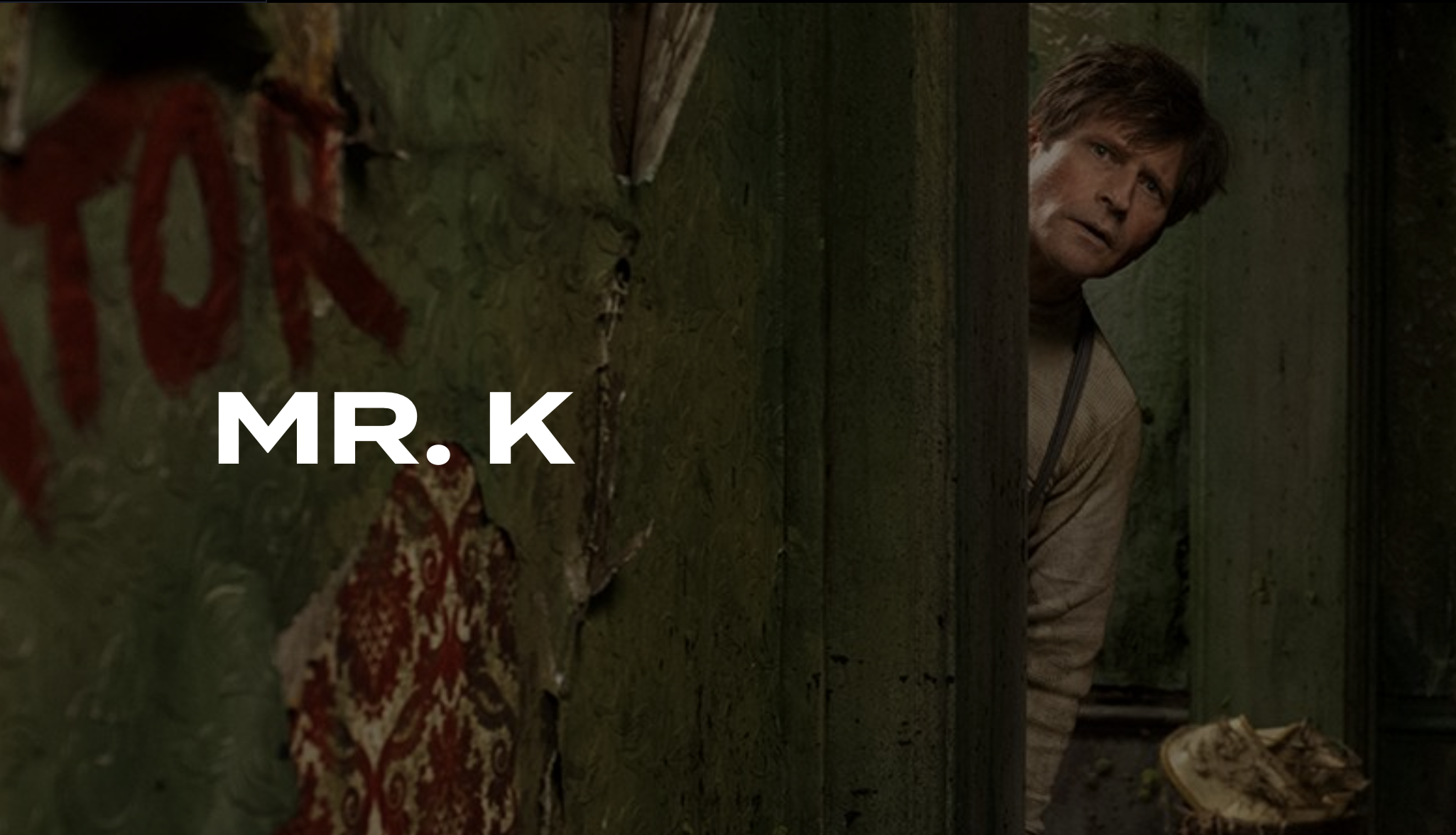
After over two decades of directing Dutch film and television, Tallulah Hazekamp Schwab makes her English language feature film debut with the surreal black comedy, Mr. K. Veteran eccentric Crispin Glover is perfect for the role of a traveling magician who is experiencing some existential career stagnation. On his way to a gig, he stops in an unfamiliar town, checking into a strange bucolic hotel. The next morning, he’s surprised and frustrated to learn that he cannot find the exit. None of the other inhabitants are much help. In fact, some seem downright determined to mislead him. Others insist that he must accept his new reality, as they have. Bit by bit, Mr. K uncovers the mystery of the hotel’s true nature that could be the answer to, not only his liberation, but life, the universe, and everything.

I won’t reveal too much of the plot because it’s best to experience the narrative along with Mr. K having no idea what is happening or about to happen. However, to give you a sense of the vibes, here are some films that sprang to mind while watching: Alice in Wonderland, Barton Fink, Snowpiercer, Time Bandits, Coraline, Delicatessen, and The Matrix. For a long time, Mr. K resists his absurd predicament as he tries to make sense of it. It’s not until he lets go of his drive to control his circumstances that he is able to move forward. This is also the best way to take in Schwab’s film. To walk away, as they say, you must leave something behind.

Schwab also wrote the script, which she deems her most personal work to date. She was inspired by her fascination with “doors and the idea that they conceal something unexpected.” Schwab wears her influences on her sleeve, as her title character evokes the Kafkaesque landscape that he must traverse. Growing up, she felt like she had trouble grasping the “rules” of society, because they seemed so dependent on where she was and who was imparting them to her. A principal conceit of the film is the idea that one person’s reality can be completely incomprehensible to someone else…

Read the rest on Hammer to Nail!

Hammer to Nail Review: The Becomers

Writer/director Zach Clark (Little Sister, White Reindeer) returns with his fifth feature film, The Becomers– a unique pandemic-era allegory with notes of Jonathan Glazer’s Under the Skin, Jim Jarmusch’s Only Lovers Left Alive, and The Coneheads.

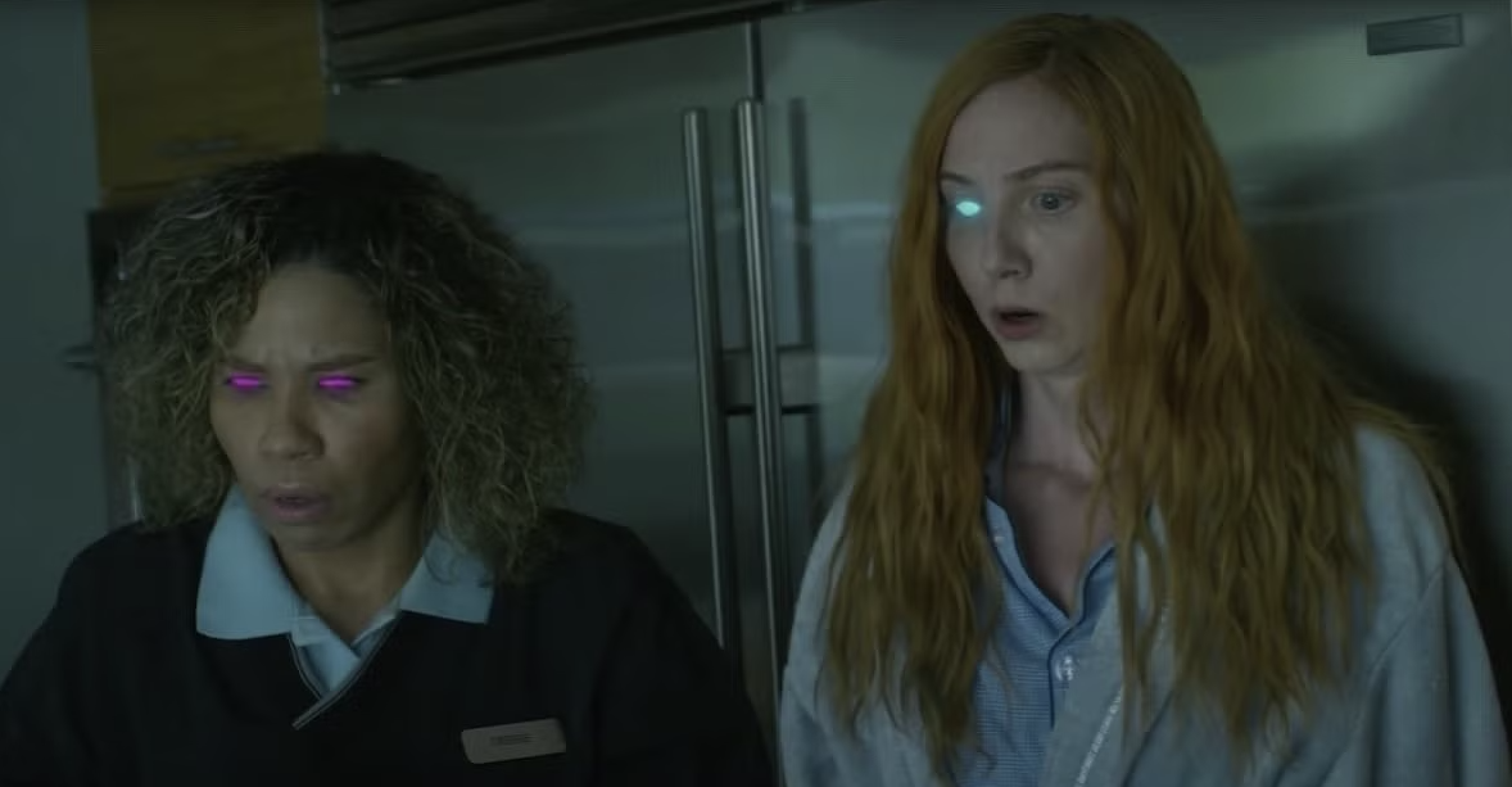
When an unnamed alien couple (called X and Y in the script) evacuate their dying planet for the refuge of earth, they are separated, and must enact unimaginable horrors to assimilate to their new surroundings and ultimately reunite. Aided by the universal trauma of the 2020 global pandemic, Clark fits a lot of context into a tight ninety-minute story. The result is an impactful, at times grotesque, occasionally comedic, and wholly romantic depiction of what it takes to regain a sense of normalcy and contentment after losing everything you once knew.

Differentiated only by the color of their pupilless, glowing eyes, X and Y utilize a technology invented by their planet’s scientists, to assimilate on Earth. Unfortunately, in involves stealing the body of a human, at the cost of their life. Worse still, the effect is only temporary, resulting in a string of unwitting deaths in the name of their own survival. They just happen to land in the Chicago area during the uncertain, mask-filled, social-bubble era of our recent past. This timing has its advantages and disadvantages.

The plot unfolds organically, with a voiceover (from Russell Mael of the band Sparks) metering out the events that brought the couple into this predicament. The narrator continues revealing the backstory throughout the present narrative. We learn a bit about the culture of their former lives, and this is where the Coneheads comp comes in. It began with a blind date over “squash steak wraps and black drink” before the couple “connected pods” and made a life together. “There were signs of things to come – the news was strange, scary, yet our little lives were as normal as ever.” They describe a rather familiar set of events that result in their own global crisis, and ultimately, a complete planetary evacuation to save their species…

Read the rest on Hammer to Nail!

Film Review: Minor Premise

Minor Premise was shot pre-pandemic, but the panic, paranoia, and desperate isolation Eric Shultz’s debut delivers will doubtless resonate with occupants of this modern world. We may as well get used to scripts like this. With only 3 characters, and one primary location, the film still manages to build a riveting narrative off of an extrapolated premise. The protagonist is Ethan (Sathya Sridharan, Bikini Moon), a neuroscientist who is falling apart under personal and professional pressures. With a looming deadline, he decides to fast track his current project by experimenting on himself. Obviously, this tinkering has some pretty dire consequences.

The narrative joins Ethan in the middle of his crisis. He ran a program on his own brain and now he repeatedly blacks out and loses time. He misses an important meeting, prompting Allie – his former flame and current colleague – to check on him. Allie (Paton Ashbrook, TV’s House of Cards) catches Ethan at a bad time and he locks her in a room. When he neutralizes, he and Allie quickly manage to work out what’s going on in the old noggin.

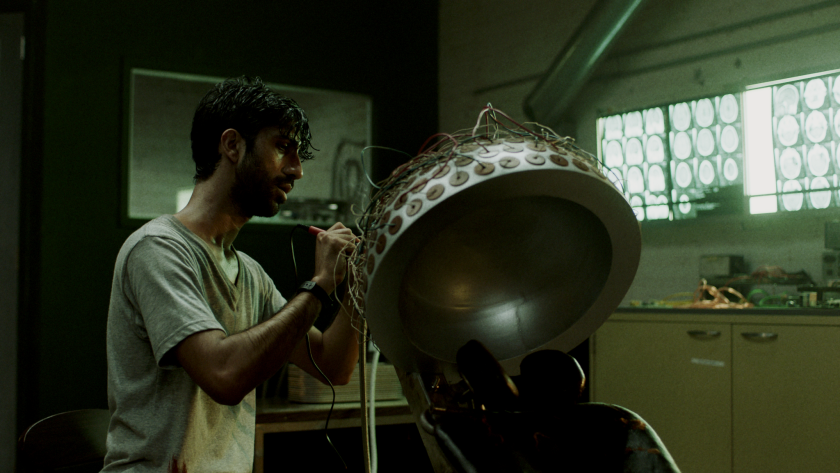
Ethan was attempting to carry on his recently deceased father’s work – a machine that isolates and records memories. The ultimate goal is to curate thought in order to treat people with PTSD or addiction. Ethan figured out that memory is tied to emotion and, as such, accidentally split his own psyche into 10 parts, or traits. Each trait gets to party in full control of his body for 6 minutes per hour. This in-and-of-itself isn’t great, but this constant switching also fries significant amounts of brain cells during every transition. There’s a limit to how much he can take. He needs to merge is brain back and fast. He’s got two useful selves: intellect, and a sort of baseline personality that is his unified brain. The other parts are more id-driven traits such as anger, libido, anxiety, and euphoria, during which time he’s not particularly productive. This gives Ethan and Allie essentially 12 minutes per hour to figure out how to fix Ethan before he becomes a vegetable.

It’s not often that a visibly low-budget sci-fi film still works as a successful genre picture, but the script co-written by Schultz, and producers Thomas Torrey and Justin Moretto, is tight, cerebral, and rooted in real science. The three writers all have degrees to back up the neuro-babble. Ethan is a rogue academic so it stands to reason that he would have to work on a fixed budget out of his basement. It doesn’t even seem that incredible that he might fashion a neuron-altering machine out of an old salon hairdryer chair. Schultz utilizes the most basic filming and editing tricks, such as slow motion, jump cuts, erratic camera movements, and soft focus to effectively convey Ethan’s unstable mental state. A wall clock and a watch timer help temporally orient the viewer. Security camera footage fills in gaps inside and out of the narrative. Schultz and team were clearly influenced by thinky sci-fi the likes of Primer and Pi, with a little Eternal Sunshine brain-mapping for dramatic tension.

Of course, the plausibility of this premise relies heavily on performance. Sridharan must convey 10 distinct selves, all whilst still being essentially himself and he must do it with very few props or scene partners. Much of the film consists of close-ups of Ethan’s sweaty face so it’s a damn good thing Sridharan has the range to pull this off. It’s an extremely impressive performance from a man who must wake up confused about 1000 times and instantaneously inhabit a different concentrated part of his personality. Sridharan is mesmerizing and honestly, without this caliber of talent, the film wouldn’t have held together nearly this well. They mostly brush past his base personalities but we do get a much-needed musical interlude/dance break. Allie and Ethan get a brief chance to reconnect on an emotional level during another visit from Euphoria.

With Sridharan happily chewing the meaty bits of the script, that unfortunately leaves Ashbrook with the gristle. Allie is unquestionably supportive of Ethan, despite her “ex” status. They don’t go into what ended their relationship, but the implication is that Ethan was the one who drove her away with his consuming drive. You wouldn’t know there were any hard feelings based on her head-first dive into this risky plan to save Ethan. It’s not just risky for him. He also has an angry side that physically assaults Allie, and a sinister mysterious side that seems to be actively attempting to sabotage their mission.

Allie does have one other dimension which is that of the curious mind. She cares about Ethan and wants to save him, but she is also invested in the science itself, which allows for some natural expository dialogue about what they’re working on from scene to scene. The third player in the story is Malcolm, the head of the department who is lighting a fire under Ethan’s ass for results goddamnit. When Malcolm (played by Paton’s uncle and Twin Peaks alum, Dana Ashbrook) shows up unexpectedly at Ethan’s place, he’s greeted by one of the more violent personalities and they have to add keeping him unconscious and wiping his memory to their already monumental to-do list.

With Minor Premise, Schultz has cemented himself as a sci-fi director to watch. I can only hope he doesn’t let a budget destroy his creativity.

Film Review: Prospect

prospect-sxsw-e1525697994308
The universe is vast and mysterious. But the fact remains that even if humans manage to dwell beyond the confines of Earth, we will still be humans. We’ll likely always be slaves to some sort of currency and thrive on a class divide, even in a far-flung future galaxy. Writer/director team Zeek Earl and Christopher Caldwell work off of this concept in their debut feature space western, Prospect. The alien world they’ve miraculously created on a shoestring budget is rife with implications of an expansive human-populated universe that is inaccessible to their financially-strapped protagonist.

Cee (Sophie Thatcher) is a teenager living with her widower father, Damon (Jay Duplass), on a space freighter. They are prospectors in orbit around a green moon rich with precious gems called aurelacs. Extracting them from their fleshy spermatozoidal sacs is a risky and complicated process. But Damon is uniquely skilled and also desperate to make ends meet, which is why he decides to risk their lives for the chance at one big score that would cure their financial ills for good. Of course, they aren’t the only ones after the motherlode. Damon’s get-rich-quick scheme soon turns into a fight for survival for him and his daughter…

Read the rest at Hammer to Nail!