Hammer to Nail Presents: A Conversation with Boots Riley at the SIFF 2026 Premiere of I Love Boosters

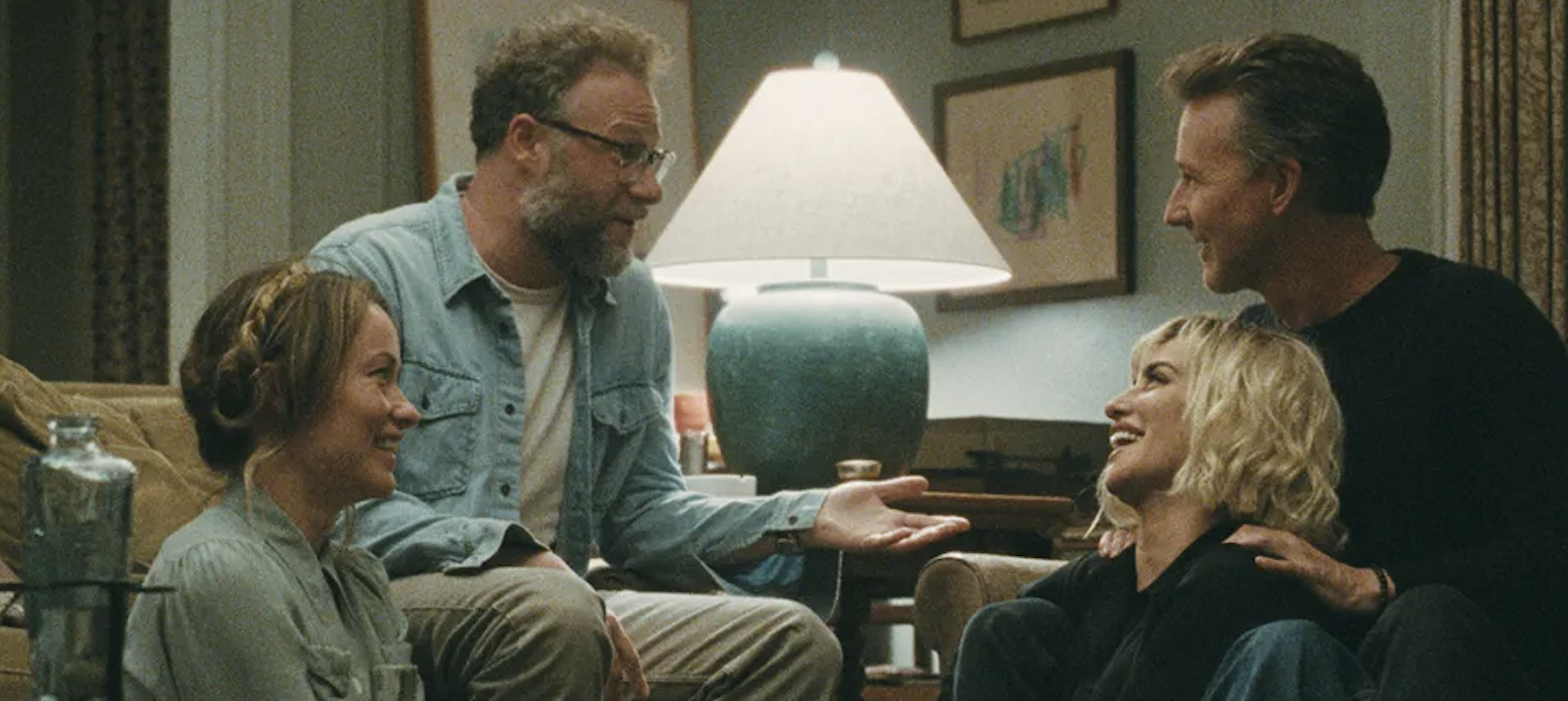
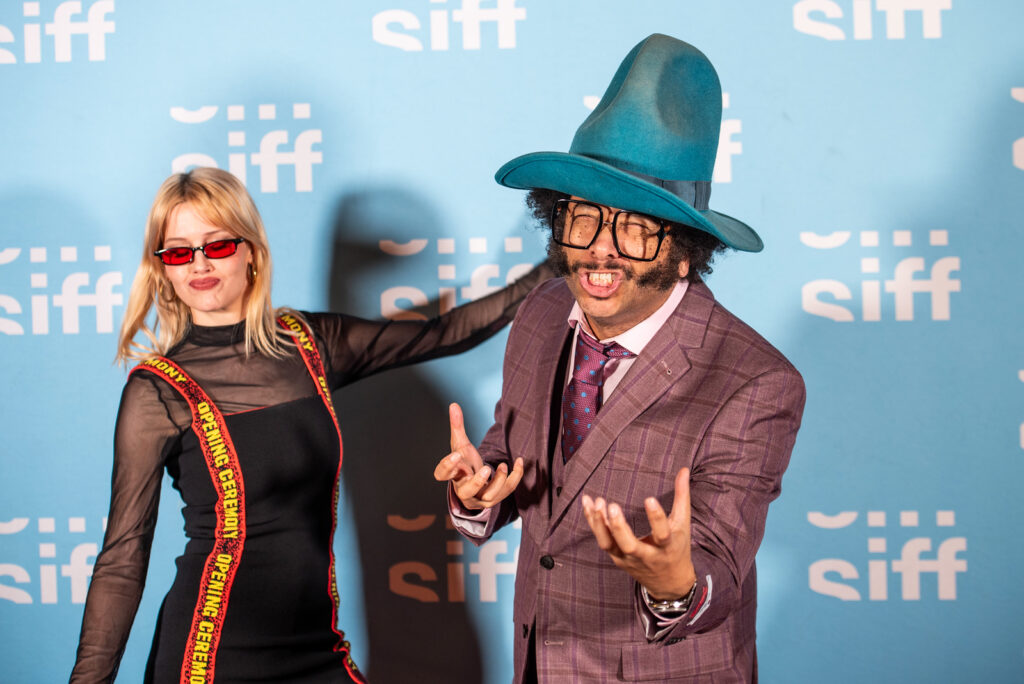
The 2026 Seattle International Film Festival opened with a bang as a sold-out crowd filled the historic Paramount Theater to see Boots Riley’s second feature film, I Love Boosters. In honor of the film’s high fashion theme, Riley wore a comically large turquoise hat and a snazzy mauve suit. He briefly introduced the film, saying that they almost didn’t get it finished, and we would see why when it was over. I believe he was referring to not only the high concept sci-fi material, but also the ambitious use of practical effects to bring his singular vision to light. Check out my review for this explosive film, and please go see it in theaters when it opens on May 22nd. This one demands the big screen treatment.

The following is a transcript of the Q&A hosted by SIFF after the screening. It has been lightly edited for clarity.

SIFF: Boots, thank you so much for being here on opening night for the Seattle International Film Festival. We’re so grateful to be able to start our festival with I Love Boosters.

Boots Riley: Thank you

SIFF: I’d love to just have you start by talking a little bit about where this movie began. I know you have a song of the same title from back in 2006. Did you always imagine it would become a movie?

BR.: I didn’t always imagine it would become a movie. But what I wanna do before we continue with this… I wanna say thank you to Seattle International Film Festival for having us. And – this is very important – to acknowledge the volunteers and the cinema workers. I know there is a cinema workers union and they’re in the middle of negotiating their contract with SIFF and I want to encourage SIFF to give them a fair contract.

[Crowd erupts in cheers and applause]

BR: I wrote a song 20 years ago called “I Love Boosters”, and it’s based on a lifetime of experiences of… I don’t know, like, trying to stay fly while you’re broke. And as a matter of fact, there’s somebody else that has a song about that who’s here. I think Macklemore (“Thrift Shop”) is here. And another rapper that’s here was also in the movie. He plays Li Pan. Alan Z is here.

I think about characters. I start with characters. I didn’t start thinking about the world that’s around them and what I actually think about that world… So, I have to be honest with myself about what I think about the world that shapes us and why that is meaningful in a personal way. And then that kind of brings up characters. And this was a group of women that I wanted to write about again. [My original pitch was] “It’s gonna be about a bunch of boosters that find a teleporter” because what I’m always trying to do, even before writing this… I’m always hyping the contradiction. And that’s what I realized I do with song lyrics… it’s like poetry. It’s like taking an idea that that’s right here, this line really connects to this idea, to this idea, to this idea, to this, to this, to that.

You take all that theory and get rid of it, and you put those two things together and it’s like, “WHOA! That’s a bar!” you know? What I’m doing is I’m just pointing out ironies and contradictions. And I’m doing that visually, cinematically, story-wise… And so, when I first said, “I’ll do the teleporter idea, the contradiction [with retail clothing] was taking the different points of production and distribution and putting them together geographically with… someone who makes the clothes and someone who sells them. And I just got bored of that idea after I started writing it. And then I went off and finished writing [his TV series] I’m a Virgo. I finish writing these two other scripts that are going to be the next movies after this. And then I got back to this. And I was thinking about science-fiction and…how science-fiction has changed our notions of even existence…

So, here’s an example: There is only right now. There’s not really a quote unquote time. There’s right now. Everything before is just a memory of things we see, things that are written down about what happened before. But that doesn’t exist. And the future is just our imagination. Now that’s empirically provable scientific fact. However, when I say it I sound like a hippie. And the reason I sound like a hippie is because of science fiction. It’s because we think of time as this thing that’s still there because we’ve seen all these things for over a century where it’s like, “if only we had the technology that could get us there…maybe sometime in 1000 years there will be that technology” or something like that. But there won’t be, because it doesn’t exist. And, like, I’m not against mythology and people believing bullshit. You know, whatever. Sometimes it’s useful. But I was like, “OK, well, what if I [incorporate] a philosophy that I use, just without [giving] the terminology. I use the philosophy of Dialectical Materialism in figuring out all sorts of stuff, both directly in my life and in my writing. So, I was like “what if I put that into it into a machine?” Then I got excited and finished the script.

[Crowd erupts in laughter and applause]

SIFF: I have to ask you about this collaboration with Keke Palmer. I feel like she is so slept on as an actress. I was so excited to see you had her in this lead role, and on top of that she is singing on tracks in the film. What was that collaboration like? Where did that begin? And how did these discussions evolve?

BR: Since the songs came up, I should mention that the song that you heard at the end [credits] as well as two of the other [tracks] in the film that Keke Palmer sings, are primarily by my daughter.

[Audience collectively awwwwwwws]

BR.: And I was on set, and I was playing [for] Keke, my daughter‘s demo for “Cassandra”, and she was crying, and she was like, “We gotta put this in the movie.” I thought maybe [it was] too slow or something… I met with Keke and… I think of what people know about her is… it’s kind of a character, right? And a lot of [directors], they want a certain cadence from her because it works. And she’s a comedic genius. But we started talking about some of the things [for that character] that were [based on] how she really relates and communicates when she’s not “on” and being the character that she’s creating. I’m saying this because she says this. And the whole idea was to get to things in a different way. And she said to me, “You know, everyone always says this to me. But then when they wanna make the money, then they’re like, ‘Do that Keke Palmer shit’.” And I mean… she is doing…  I mean all of it is her, right? But it’s really cool because she is so smart and she reads a lot of stuff… I didn’t know [that] before meeting her… Just her philosophy of how she operates in the industry…

Read the rest at Hammer to Nail!

Hammer to Nail Review: I Love Boosters

As someone who doesn’t much care about designer clothes, I had no idea that the titular Boosters in Boots Riley’s new film were based on a real underground profession. Moreover, they’ve been around for a while. Riley wrote an ode to them in 2006 with his band, The Coup. When Riley introduced, I Love Boosters before a sold-out screening at the 2026 Seattle International Film Festival, he explained that Boosters perform the valuable service of “helping broke people look fly”. As the song goes…

A booster is a person who jacks from the retail
And sells it in the hood for dirt-cheap resale
In these hard times, they press on like Lee Nails
In all of my experience, their sex has been female

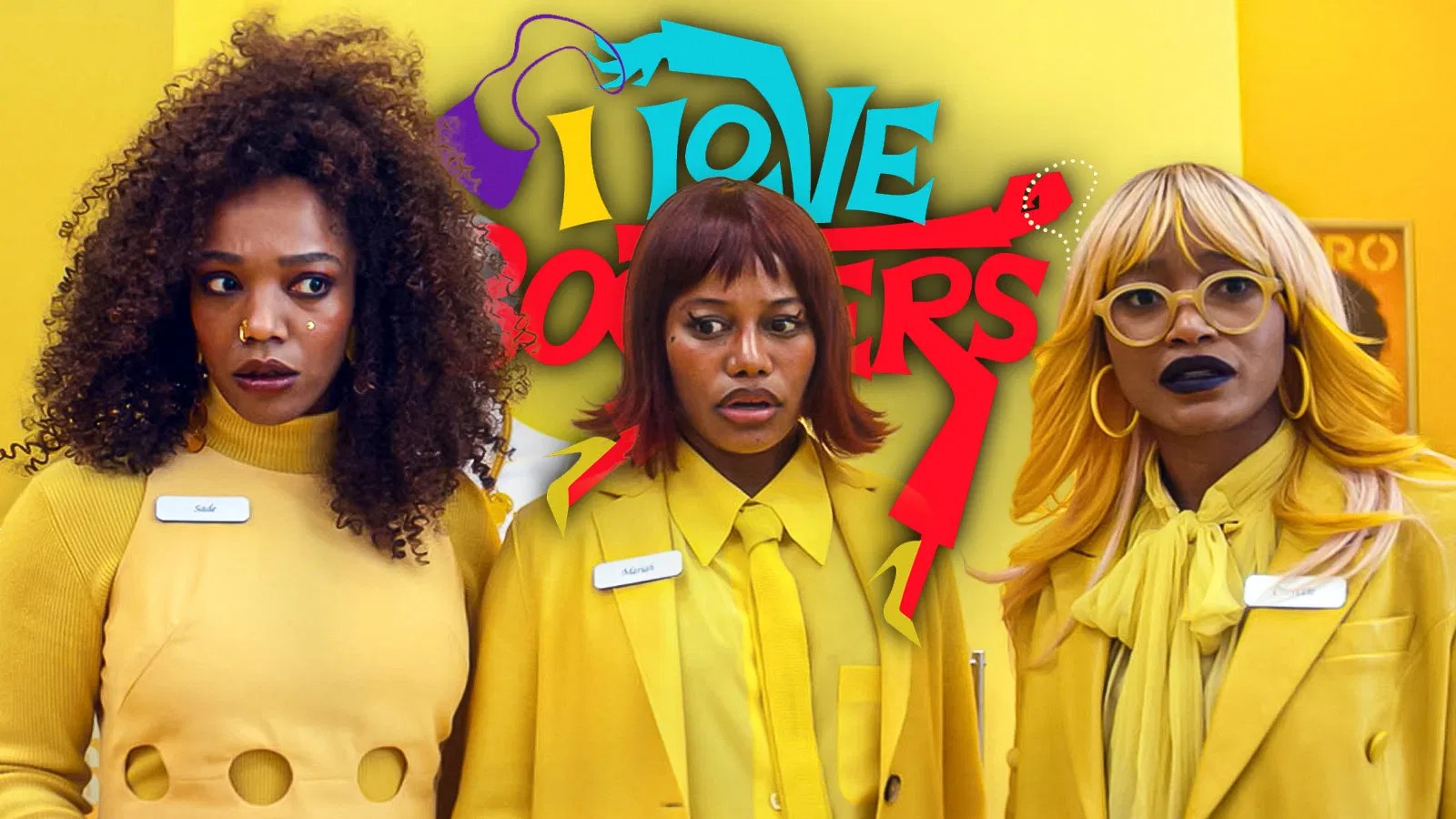
The film, I Love Boosters, opens with a bang and never lets up. Riley’s follow-up to 2018’s Sorry to Bother You is even more uncompromising than his debut. The frenetic opening credits (which use a custom font that is instantly iconic) zoom you through the Bay Area, to witness some of the most striking class disparity in the country. It’s the perfect setting for an allegorical anti-capitalist comedy. Our guide in this fashion underworld is Corvette (Keke Palmer), the leader of a prolific band of boosters called The Velvet Gang.

Early on, the film establishes the mechanics of a boost. The Velvet Gang, which also includes Mariah (Taylour Paige) and Sade (Naomi Ackie), assemble outfits from past boosts so that no one is suspicious of them when they’re in these high-end stores. Their outfits have lots of pockets and/or storage space. There’s a new outfit (and wig) for each boost. The production clearly kept costume designer Shirley Kurata (Everything Everywhere All at Once) VERY busy. Each ensemble is more outrageous than the last. Some of the looks are giving The Fifth Element on ayahuasca (complimentary). Whatever they wear, our leading ladies have no trouble slaying while they steal. Once in the targeted store, one of them creates a distraction while the other two cram their garments with as many designer threads as they can hold without busting the seams.

After safely absconding with the goods, Corvette hits the Oakland house parties to find people in need of a designer glow-up. The first sale we witness occurs after a guy goes home with her, expecting to hook up. He’s a little frustrated when she first reveals her ulterior motive. Still, he does not leave before buying some sick new shoes at a great price.

The Couture Robin Hood gig hits a snag when the mogul behind one of their frequent sources, Metro Designer, catches wind of the Velvet Gang and makes it her personal mission to bring them down. What Christie Smith (Demi Moore) doesn’t realize, or at least pretends not to know, is that Corvette had beef first. Corvette once showed Smith some of her own designs. Smith rejected a collaboration and sold the designs as her own. Corvette frequently sees her work in Metro Designer stores, which only fuels her rage and determination to get compensation one way or another.

Despite The Velvet Gang’s prolific heists, they are all still struggling to make ends meet. For Corvette, this financial anxiety is manifested through a growing Katamari ball of debt that lurks around every corner. It’s far enough away to not pose an imminent threat but always menacing and inching ever closer…

Read the rest of this review at Hammer to Nail!

Hammer to Nail Review: See You When I See You

The Duplass Brothers were quite prolific in the early aughts, releasing eight features between 2005 and 2012. Jay Duplass took a break from directing features after 2012’s The Do-Deca-Pentathelon. During Pandemmy Times, he (like a lot of folks) did some soul searching and found two projects in rapid succession. The Baltimorons came out in 2025. See You When I See You is the second film from the newly invigorated Duplass. Coincidentally (?) both films are comedies centered around suicide. They don’t sound particularly funny, but those Duplass boys are masters of tone juggling. Their films often pack an emotional punch but soften the blow with built-in humor along the way. The jokes mostly don’t come from the circumstances, but from the characters themselves. There’s an extra layer of comedy in See You When I See You, because the scribe who based the screenplay on his own memoir (Tragedy Plus Time: A Tragic-Comic Memoir), is comedian Adam Cayton-Holland.

Cayton-Holland’s 2018 memoir is about how his family fell apart and came back together after his little sister’s suicide. He adapted it into a slightly less autobiographical screenplay and gave it to producing pals Emily v. Gordon and Kumail Nanjiani to shop around. Gordon and Nanjiani are no strangers to this genre, having made their own reality-based tragic-comedy, The Big Sick. Duplass was hesitant to accept their directing offer because he’d never made a film that he didn’t write himself. But when he read the screenplay, it reminded him of the genre-straddling films he loved in his youth like Terms of Endearment and Kramer vs Kramer. Duplass did give the script an overhaul with his own proverbial pen, adding visual illustrations of internal conflict that are very effective, without being too expository or heavy-handed.

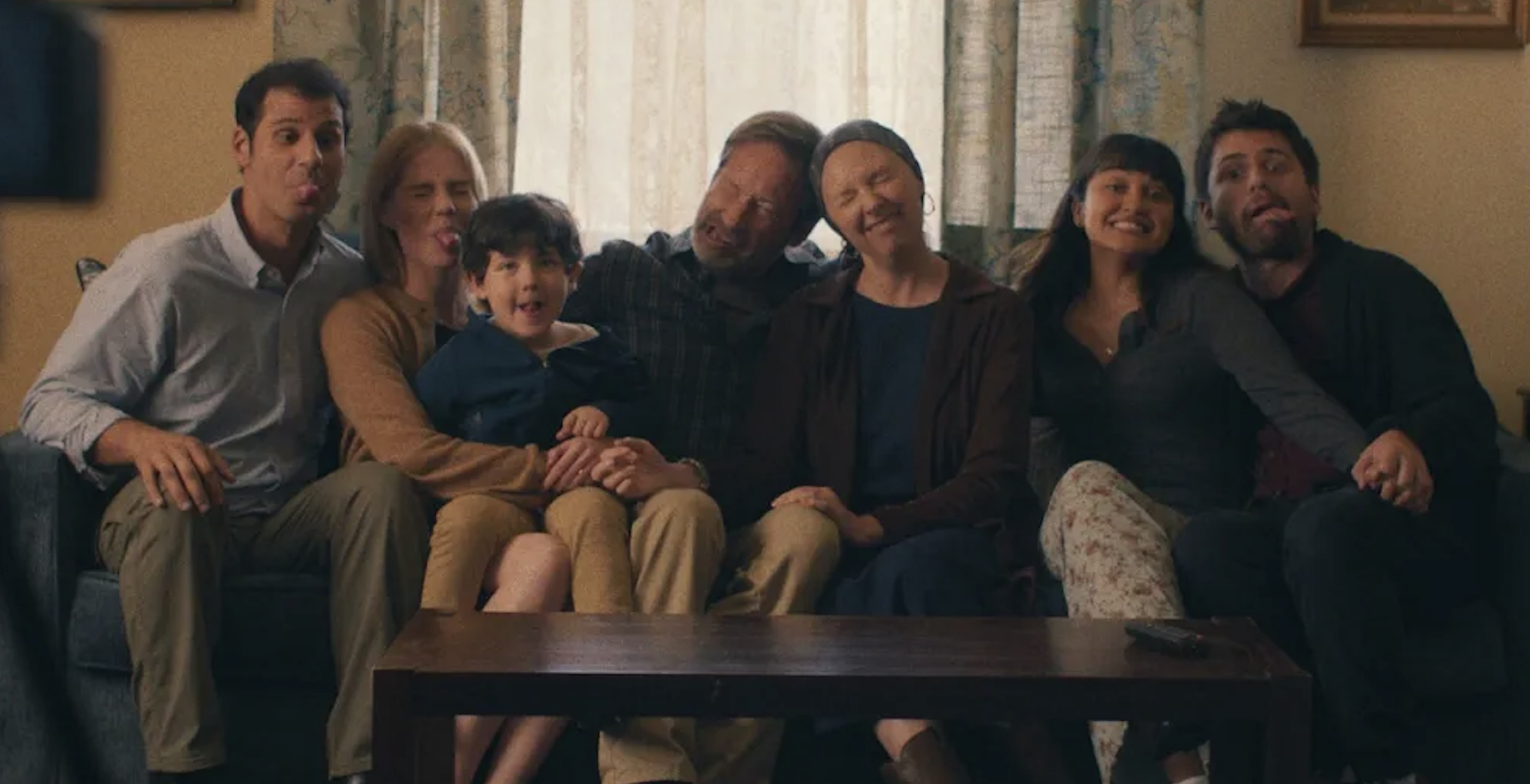
We first meet the Whistler family as they’re in the process of cleaning out the house left behind by Leah (Kaitlyn Dever), the baby of the family. Robert (David Duchovny) and Page (Hope Davis) are the grieving parents, arguing over how much of Leah’s childhood art they should keep. Emily (Lucy Boynton) is the oldest sibling, and we can tell right away she’s the one running the show. Inside the house, Aaron (Cooper Raiff) gets lost in the memory of a family photo taken on the dock of a Lakehouse. Right away, we know so much about who these people are. They’re close, but they also have trouble talking to each other about hard things and get bogged down in details. Aaron is too paralyzed by grief to be any help. His journey into the photo memory also hints at a recurring story device, which illustrates his despair and PTSD in profound ways. I can honestly say I’ve never seen anything quite like it…

Read the rest of this review at Hammer to Nail!

Hammer to Nail Review: Again Again

Again Again is an official selection of the 2026 Seattle International Film Festival!

For their feature debut, co-directors Heather Ballish and Mia Moore Marchant unquestionably drew inspiration from the time loop film that defined the genre, but Again Again completely upends the premise of Groundhog Day by daring to ask the heady philosophical questions. What if the person stuck in the time loop is not a selfish, curmudgeonly, white cis man who needs to learn to love someone other than himself, but a young trans woman who can’t love herself? Moreover, what if after the loop breaks, she doesn’t just get the girl and live happily ever after? Instead, their relationship picks up in the messy place where it left off pre-loop; only now one half of the couple has acquired a decade’s worth of baggage that the other half blissfully forgets with the dawn of each new day. What this fantastic genre bender presupposes is, maybe the looper would have intense PTDS from this experience, that would only be catastrophically exacerbated by the sudden and unexplained end to the phenomenon.

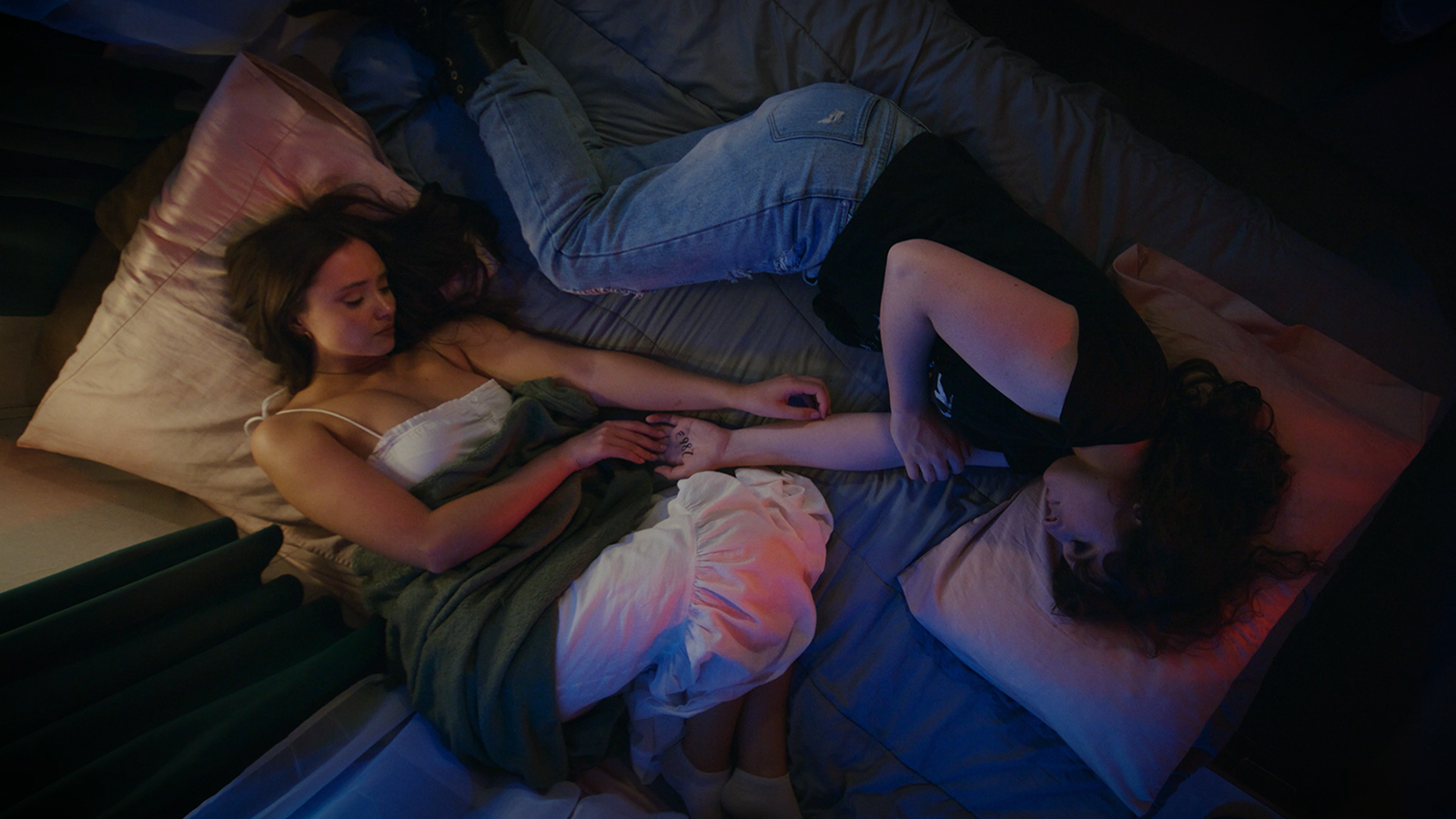
We first meet Agatha (Marchant) on her 2863rd go-round of a day that follows a traumatic event. She spends a lot of time in bed in a yin-yang configuration with her unaffected girlfriend, Tessa (Aria Taylor, Charlie Says). Aggie is painfully aware of how long she’s been stuck because every day she writes the new number on her hand in permanent marker. This is a brilliant story device (not to mention a powerful repeated image) because it helps orient the audience as Aggie’s story unfolds through flashbacks. In fact, Marchant’s entire script is exemplary at metering out exposition. It’s not just what you learn, or how you learn it, but also when you learn it. As we jump through time with Aggie, we learn details of her and Tessa’s history at the most emotionally impactful moments. I don’t know how many drafts there were of this script, but it feels controlled and fine-tuned in a way that is very rare for debut films.

I’ll try to keep plot details to a minimum because everyone should be able to experience the thrill of discovery that Marchant’s script provides. But what we know pretty much right away is that these two young women were childhood best friends since before Aggie’s transition, and now they’re in love. But Tessa, who is cis, is also engaged to a cis man. Most of the film takes place in a tastefully and lovingly adorned camper van where the two women have circular conversation about their past, present and future. Most of these conversations have already taken place many times, but Tessa can’t remember. On day 2864, Aggie wakes up, looks at her hand baring the number of the day before, and realizes she’s free. But her freedom from the loop creates a whole new prison of uncertainty, as Aggie and Tessa attempt to figure out what this means for their future.

Again Again was filmed in and around Aberdeen, WA where Marchant grew up. Aberdeen is best known as Kurt Cobain’s hometown. Much of Kurt’s work was informed by the experience of growing up a sensitive, nonconforming artist in this backwards industrial burgh. The song title “Come as You Are” is a reference to the ironic “motto” emblazoned (to this day) on the sign that welcomes you into town. “Something in the Way” is about the deep despair that Kurt felt when he hid under the Young Street Bridge, which overlooks the “Muddy Banks of the Wishkah” (also the name of a live Nirvana album). A pivotal scene in Again Again takes place under Kurt’s bridge, which has since become a shrine emblazoned with fan-scrawled messages and even a plaque. Marchant’s deft utilization of this location is subtle. No character calls out its historical significance. But if you know, you know, you know?

Marchant’s Aberdeen is also sometimes quaint and inviting, such as when she visits Boom Town Records and flirts with the trans woman (Abigail Thorne, HBOs House of the Dragon), who works there. And because it’s the Pacific Northwest after all, the scenery is sometimes arrestingly beautiful, such as when Aggie kicks along the beach in her combat boots and flannel in the cloudy, cool morning. This town, like it’s inhabitants, contain multitudes.

Read the rest of this review on Hammer to Nail!

Hammer to Nail Review: Circle

(The 2015 Seattle International Film Festival started May 14 and ran all the way until June 7. HtN was on the scene and a festival wrap-up is coming later this week. In the meantime, check out this review of Circle, the latest from filmmakers Aaron Hann and Mario Miscione).

Circle is the most fun you can have watching a diverse group of strangers get systematically executed. Aaron Hann and Mario Miscione crafted a shrewd script for their Twilight Zone inspired morality tale about fifty people who are forced to stop being polite and start getting judgmental.

It begins with everyone returning to consciousness after a blackout, to discover that they are standing in a circle, facing each other, in a dark room. They soon learn that they cannot move too much or try to step off the red dots under their feet, lest a machine in the middle of the room electrocutes them. And that’s not even the bad news. Every two minutes, the machine also kills one person at random. They can’t stop the death, but they do have the power to choose the next victim by popular vote. There are other rules and nuances that they ascertain along the way, all of which play into their harrowing discussion about who should be the next to die and if “winning” this sadistic game is even an option…

Read the rest on Hammer to Nail!

Hammer to Nail Review: Sleeping with Other People

(The 2015 Seattle International Film Festival started May 14 and runs all the way until June 7. Keep an eye on HtN for several reviews like this one, the latest from Writer/director Leslye Headland).

Writer/director Leslye Headland’s Sleeping with Other People is a Rom-Com that exists in the space between sincerity and satire. It’s hard to top Headland’s own description: “When Harry Met Sally for assholes.” But if you were truly an asshole, you’d be annoyed by the film’s frequent moments of earnestness. Moreover, fans of that saccharine, genre-defining film might have trouble empathizing with Headland’s deeply flawed protagonists. With its sexual implicitness, casual swearing, and unabashed recreational drug use, Sleeping with Other People is more akin to the films of Judd Apatow and Nicholas Stoller than to Rob Reiner…

Read the rest on Hammer to Nail!

Hammer to Nail Review: Glassland

(The 2015 Seattle International Film Festival started May 14 and runs all the way until June 7. Keep an eye on HtN for several reviews like this one, the latest from Irish filmmaker Gerard Barret).

Irish filmmaker, Gerard Barrett  follows up his acclaimed first feature Pilgrim Hill with Glassland, another peek into the hardships of life in working-class Dublin. John (Jack Reynor, Transformers: Age of Extinction) is a young man struggling to hold his family together thanks to his mother, Jean’s (Toni Collette), full-blown alcoholism. She drinks like it’s her job and so it becomes John’s job to keep her alive and the family above water. He occasionally attempts to blow off steam in the company of his best friend, Shane (Will Poulter), who is going through some heavy stuff of his own regarding his estranged newborn son. Glassland is an incredibly bleak and intense 90 minutes that haunts you for days after. The lasting impression it leaves is especially remarkable considering the budget and time constraints under which Barrett worked…

Read the rest on Hammer to Nail!

SIFF REVIEW: 9 Full Moons

2013 SEATTLE INTERNATIONAL FILM FESTIVAL SELECTION!
Unrated
103 minutes

****

It doesn’t matter if your personalities are different, so long as your souls are compatible. When Lev (Bret Roberts) and Frankie (Amy Seimetz) meet at a bar, they are instantly drawn to one another. At first, Lev resists Frankie. Or at least it seems like that’s what’s happening. But Frankie soon learns that Lev is a hyper-introvert and she becomes even more determined to make him a part of her life. They know each other immediately, without needing to reveal themselves in words. But two broken people do not necessarily become whole just by falling in love.

Writer/Director Tomer Almagor’s debut film is an uncommon love story that is driven by complex characters that need each other more than they realize. The odds are certainly stacked against them. Frankie has a bit of a drinking problem, driven by insecurity. She is a gregarious, empathetic and creative person but she thinks so little of herself that she shrugs off an acquaintance rape as if she had it coming. Lev is a free spirit who loves Frankie but isn’t used to considering the feelings of another with his every day decisions (i.e. getting a drink with co-workers instead of coming home for dinner). They also don’t have any cheerleaders on the sidelines. Lev’s supposed best friend dismisses Frankie as a “Train Wreck” and all but tells him to break up with her.

Frankie doesn’t seem to have any real friends outside of Lev either. She occupies her time fixing up junk that she finds on the side of the road and then selling it, yard sale style. When she tells Lev that she does this to stave off the loneliness, he earnestly responds that she shouldn’t be lonely since she has him, despite the fact that he is constantly at work. Granted, his work is a once-in-a-lifetime opportunity to produce the comeback record for hipster country legend Charlie King Nash (Donal Logue). But he doesn’t see how much she needs him until an irreparable tragedy has torn them further apart.

Amy Seimetz was the perfect choice to play Frankie. She’s beautiful, but she has a relatable quality and isn’t afraid to be truly vulnerable. If “It Girl” is still a thing, it definitely describes Seimetz, who has been popping up everywhere both in front of and behind the camera. Despite her youth, she currently has 48 IMDb acting credits including “The Off Hours,” “You’re Next,” TV’s “The Killing,” Lena Dunham’s “Tiny Furniture” and “Upstream Color.” She also wrote and directed her first feature, “Sun Don’t Shine,” to much critical acclaim. She has shown an incredible amount of versatility in her roles and she deserves to be a household name.

Bret Roberts is equally at home with his character. Lev is a tortured musician, but it’s not just a façade. It’s probably not a coincidence that Lev is a Jim Morrison doppelganger (though Roberts did portray the Lizard King in another film). Though neither Frankie nor the audience can always tell what is going on in his brooding head, Lev’s love for Frankie cannot be concealed. It’s not anything he says. It’s all in his eyes. The man is a Mumblecore director’s dream.

“9 Full Moons” is full of complex characterizations, which is part of what makes it so special. You can’t sum up Lev or Frankie in a couple of words. They are real people who are trying to stay true to themselves whilst attempting to figure out how to navigate a stable relationship. Though their love is pure and simple, their lives certainly are not. Almagor has stated that the script is based off of his real-life relationship. Though the details are fictionalized, he has managed to keep all of the nuances that make up two people struggling to find their place in the world. It’s a beautiful film and I look forward to seeing what else he can do.

Originally published on FilmThreat.com (now defunct).

SIFF 2013: One Critic’s Overview

The Seattle International Film Festival is the largest film festival in North America, and it lasts for four weeks (six for press). It boasts over 450 features and shorts from over 70 countries so attending it is basically running an independent film marathon (only with a whole lot more sitting). Of course, I don’t get to anywhere near 450 films, but I do my best. This year, I caught about 2-dozen films. This year, I was excited about more films than usual, and there were still 4 or 5 that were on my list that I didn’t make it to. Here is my SIFF experience in a nutshell.

BEST:

“9 Full Moons” – A refreshingly realistic romantic drama about two artistic messes who understand each other in a way that no one else can. Amy Seimetz rides further down the track toward indie darling status.

“An Evening with Kyle MacLachlan” – Not a film, but this local legend has been in plenty of great ones. In addition to a Q & A with the actor, the evening included a screening of the two-hour “Twin Peaks” pilot, which looked more beautiful than ever projected on the big screen. I wouldn’t be surprised if the majority of the audience is now knee deep in a series re-visit.

“Byzantium” – Finally making up for the fun-in-a-bad-way debacle that was “Interview with the Vampire”, Neil Jordan re-invents the vampire drama. No longer is it a metaphor for sex. This beautiful film is about the shifting relationship between mothers and daughters as well as a commentary on the difficulty women (particularly working single mothers) face inside a violently patriarchal system. Social messages aside, it fulfills the long-overdue triumphant return of vamps with (both literal and figurative) claws instead of glitter and ennui.


“The Punk Singer” – Pitch-perfect music documentary about musician and feminist icon Kathleen Hanna. It’s the kind of film that makes you want to go record shopping immediately.

“Teddy Bears” – Debut black comedy from writer/director Thomas Beatty, co-directed with his wife, Rebecca Fishman with a script that is loosely based on an event in their pre-marriage relationship. Though the plot resembles a broad sitcom premise, the resulting film is anything but broad. A group of extremely capable actors (many of whom have done sitcoms) play it straight, and find the humor in grief-inspired downward spirals. “Teddy Bears” proves that it is possible to make an artistically proficient film about anything, so long as you write from a truthful place.

WORST:

“Il Volto di Un’altra (Another Woman’s Face)” – This over-the-top Italian comedy misses the perfect opportunity to break the record for most liquid feces in a movie.

“Last I Heard” – “Sopranos” copycat starring Paul Sorvino and Michael Rapaport as they attempt to steer a sinking ship of a film about a former mobster who has outworn his welcome and his usefulness.

“Papadapalous & Sons” – You would expect this sort of feel-good family drivel from an American film, but the Brits usually have more class. One good performance (Georges Corraface, as a surprisingly endearing Pollyanna of an uncle) kept me from clawing out my eyeballs while I waited for this film to be over.

WORTH MENTIONING:

“Big Star: Nothing Can Hurt Me” – This paint-by-numbers documentary about the brilliant but ironically named 70s rock band that toiled in obscurity until it was discovered by the indie music scene of the late 80s. The film is a little too thorough and occasionally dips into over-reverence. But Big Star is a band worth gushing about.

“The Bling Ring” – A terrific companion piece for Harmony Korine’s “Spring Breakers”, Sofia Coppola’s latest hipsterfest tells the true-ish story of a gang of dangerously bored middle class high school students who enjoy a brief stint as burglars to the semi-stars.

“Cockneys vs. Zombies” – It’s “Shaun of the Dead” meets BBC’s “Misfits”. While it never quite lives up to its influences, it’s still jolly good fun.

“Here Comes the Devil” – Very much in the Hammer Horror spirit, this Mexican film uses more “just cuz” sex scenes and quick zooms than you can shake a Satanic stick at. The characters behave nonsensically quite often and it takes a lot longer than necessary to get from point A to point B, but it’s certainly never boring.

“I Declare War” – I’m still not 100% sure what to make of this film that many have accurately described as “Lord of the Flies” meets “The Room”. A group of friends take their after-school Capture the Flag games a little too seriously, quoting Patton and occasionally bordering on real violence. The script could easily be re-shot with grownup actors to become a standard “war is hell” drama, save the odd moment where their reality bleeds into the fantasy. My favorite such exchange: “You can’t stop a war for juice.” “Watch me.”

“Mutual Friends” – This New York City based romantic comedy is sure to please wide audiences with its idealistic take on modern relationships and how you don’t always fall in love with the person you think you need. Director, Mathew Watts co-authored the script with five others, giving each character their own unique voice and perspective. Filled with one-liners and emotional observations, “Mutual Friends” is poised to become a breakout indie hit and I wouldn’t be surprised to see Watts become a household name within the Romantic Comedy genre.

“Pussy Riot: A Punk Prayer” – HBO Film’s documentary catches you up on all that nasty business involving three members of the Russian punk band who were tried and put in prison for staging a 40 second non-violent musical protest inside a Catholic Church.

“The Wall” – This almost-great intellectual horror film is beautifully acted but suffers from an overdose of expository voiceover.

Originally published on FilmThreat.com (now defunct).

SIFF Review: Last I Heard

2013 SEATTLE INTERNATIONAL FILM FESTIVAL SELECTION!
Unrated
101 minutes

*

In the tradition of “The Sopranos,” “Last I Heard” goes for a realistic take on mob life. But unlike “The Sopranos,” which was a cinematic television show, David Rodriguez’ second feature is uncomfortably clunky and, at best, feels like a made-for-TV movie. If it takes us anywhere that we haven’t been before, it’s because we wouldn’t have wanted to go there in the first place.

Joseph “Mr. Joe” Scoleri (Paul Sorvino) has just completed a 20-year stint in the federal pen for his generally mob-like criminal activity. With nowhere else to go, he returns to his old stomping ground in Queens, NY to live amongst his daughter and their like-family next-door neighbors. Mr. Joe’s lawyer (Chazz Palminteri) breaks the news that his client cannot and should not attempt to pick up where he left off, leaving the emotionally and medically unstable former Big Deal in limbo.

I honestly feel bad giving a negative review to a movie that tries so hard to be something special. But it just falls so short that I struggle to find a single redeemable quality to it. Writer/director David Rodriguez clearly set out to make something that felt truthful, but he doesn’t seem to know a light touch from a punch in the face. He doesn’t trust his actors enough to convey the appropriate pathos or his audience enough to assume they’ll “get it” unless several characters spell out the themes over and over again.

Michael Rapaport plays Bobby, the devoted neighbor who now drives around the sad old man he used to look up to. Bobby must have said some variation of “he used to be such a big deal and now he’s just a sad old man” ten times. He drops it into nearly every conversation. Rapaport seems to be trying his best, but he just isn’t hitting the notes. I will forever find a degree of charm in every Rapaport performance because of his role in “True Romance,” but it’s also because of that character that I will always think of him as Dick Ritchey: earnestly awful actor.

Still, Rapaport comes off as classically trained compared to some of the other guys. I think Rodriguez must have been going for authenticity when he cast the film, but it didn’t have the intended effect. Maybe these really are the guys you would find in a deli in Queens, but acting is more than just being like the person you’re playing. You still have to seem natural on camera. You still have to recite scripted lines as if they are your own thoughts. This hardly ever happens in “Last I Heard.” And it can’t possibly just be the pedigree of his performers. Rodriguez managed to score faces from numerous legendary crime films (“Goodfellas,” “Scarface,” “A Bronx Tale”), yet half the time, the actors perform as if they have an off-camera gun to their heads.

Fortunately, the most competent performance belongs to lead actor Paul Sorvino. But perhaps he does too good of a job making his neutered mob boss character believable, because you don’t feel sorry for him at all. This is a man who was most certainly behind many murders, if not a murderer himself. He was and is a terrible father, friend and a bigot to boot. So why should we care if he’s having heart problems or struggling to find his place in a world that has moved on without him?

I’ve made only a passing reference to a female presence in “Last I Heard.” That’s because it’s half-assed at best and insulting at worst. Bobby’s wife (Andrea Nittoli) is basically just there as a sounding board for Bobby or to tell other people how much her husband works. Mr. Joe’s daughter, Rita (Renee Props), has a little bit more meat, but she mostly comes off as a selfish nag. I prefer to have a film devoid of women to one where they are clearly just there to meet a quota.

But even if Rodriguez had all his other ducks in a row, he still got screwed in the editing room. The mark of a well-cut film is one in which you don’t notice the editing at all. With that in mind, Rodriguez needs to fire his editor, because it is a week-one film school failure. Scenes frequently lag with too much action-free time on either end. It gets so bad at points that you expect to hear someone say, “cut.” It makes the whole thing feel amateurish.

I’d say, “Don’t quit your day job,” but filmmaking most likely is David Rodriguez’ day job. Better luck next time, Dave?

Originally published on FilmThreat.com (now defunct).