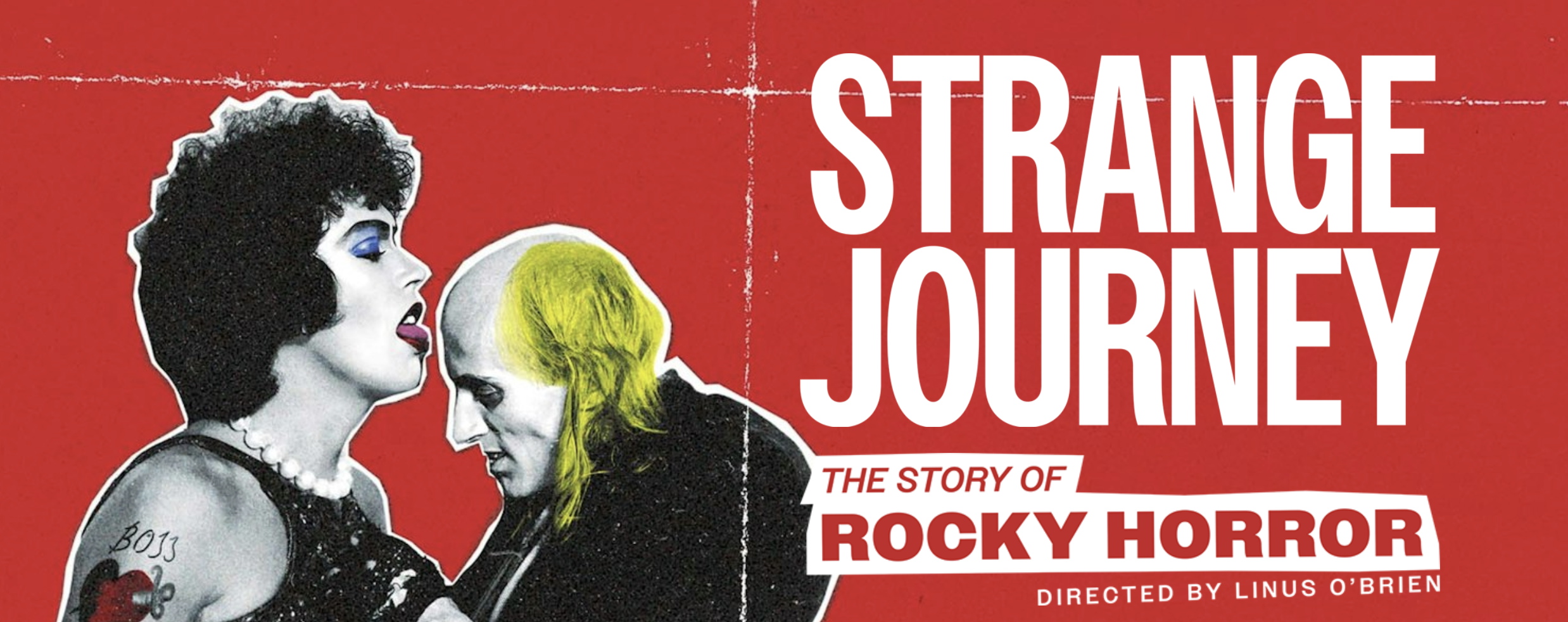
Hammer to Nail Review: Strange Journey: The Story of Rocky Horror

If you’re reading this review, chances are you’re already aware of the awesome power of movies. The best films can be the connective tissue for society’s outcasts. Even those with more “normie” proclivities can unlock something hidden deep within them when exposed to the right combination of moving images, sounds, and vibes.

For many people, that first magic film was and IS The Rocky Horror Picture Show. So-called Transylvanians don’t forget the first time they saw Frank-N-Furter throw off his cape to strut around in a saucy corset without apology. At the Frankenstein place, It’s Brad and Janet, in their J.C. Penny undergarments, who are the outsiders. But even they will be welcomed into the fold with open arms (and legs).

Linus O’Brien’s film, Strange Journey: The Story of Rocky Horror, is so much more than a historical document. It’s an origin story for a cultural touchstone of Queerdos. And yes, you can be straight and still be counted among their ranks, so long as you leave your judgments outside in the rain. Richard O’Brien first birthed his masterwork in the form of a 1973 London stage show, with Tim Curry in the original cast. It was wildly popular, but it would take fits and starts to grow into the juggernaut it is today. Fifty years later, it resonates anew with young audiences and slips on like an old fishnet stocking for O.G. fans.

Who better to tell this storied history than a guy who literally grew up with Rocky Horror: Linus O’Brien. Richard O’Brien’s son was always aware that his dad wrote a pervasive musical, but it didn’t dawn on him until a few years ago, just how meaningful it is to people. He explains it beautifully in his director’s statement:

“As I read through the comments [on a youtube video of “I’m Going Home”], I was overcome with emotion – each person shared their personal story and the deep place the song held in their heart… this was the first time I truly grasped the enormity of its influence on individual lives… the unique cult phenomenon it fostered and the safe space it created for all kinds of people; and the unfortunate reality that, in today’s political climate, Rocky is as relevant as ever.”…

Read the rest on Hammer to Nail!

Film Review: When Today Ends

When Today Ends


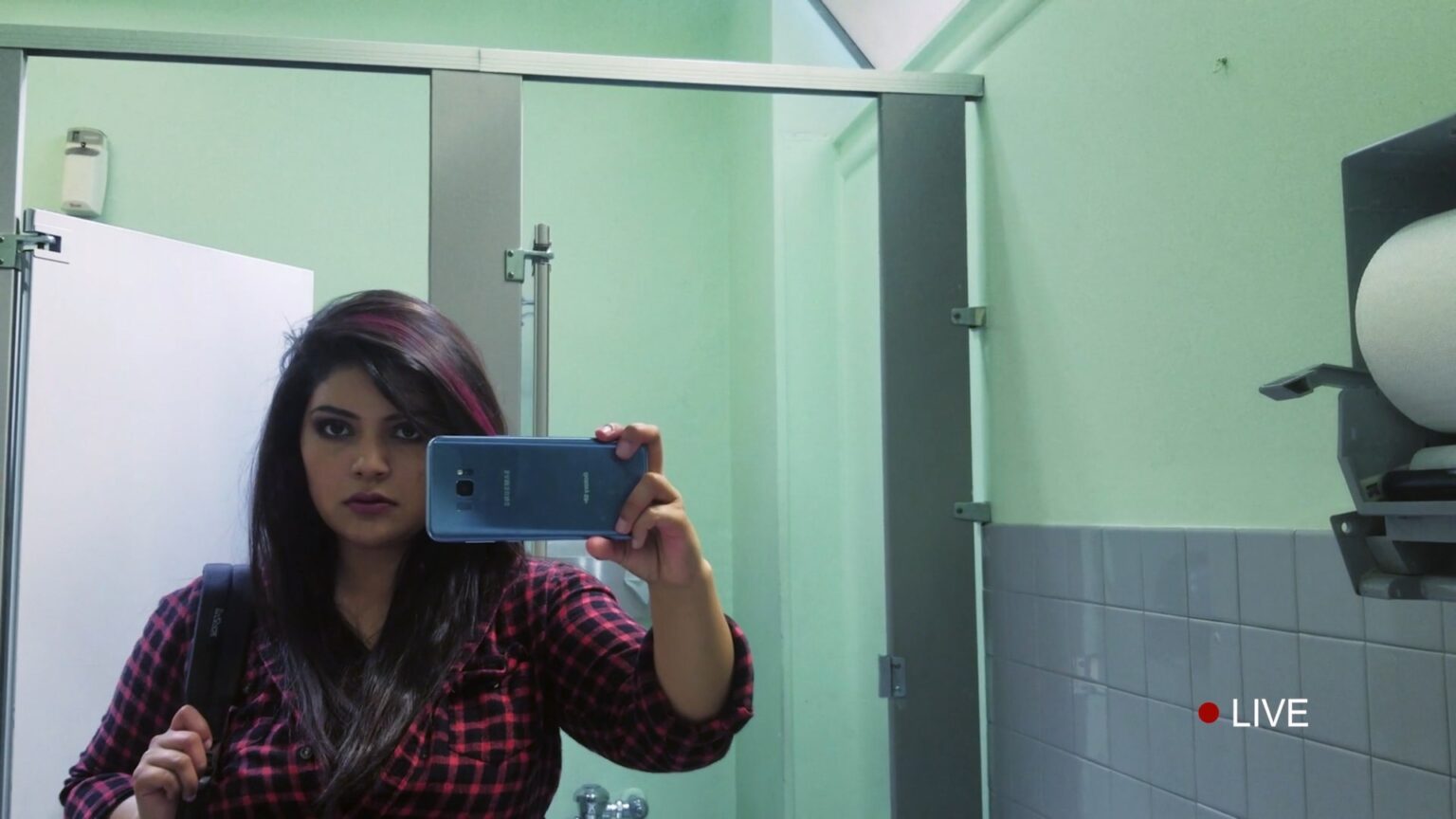
Michael Leoni wrote and directed When Today Ends, a docu-style drama presented as found footage from four teens who turned to social media to combat their depression. As we follow them through their days, we start to see darkness under their smiley internet personas and rehearsed affirmations. The meaning behind the title begins to take shape. These are the faces of suicidal kids who won’t make it through the day. Leoni’s narrative feature debut is a powerful missive on a far-too-invisible mental health crisis. It’s the sort of film that should be shown in schools, if only the schools weren’t part of the problem. 

The one thing I wish Leoni had done was include a kid who really did seem to have everything but was still struggling internally. Suicidal depression can manifest even in kids who aren’t being beaten every day or berated at home. But the kids we do meet are fully formed, unique souls with fears, wants, and voices all their own. There’s Jenna (Jacqui Veni), a smart and kind college student whose persona of perfection is also her biggest stressor. There’s James (Derek Breezee), a hockey champ who doesn’t understand why the rest of his team has it in for him. Nicole (Gavin Leatherwood) is a trans girl trapped in a dangerously conservative community who must hide her true self from peers and family alike for her own safety. Megan (Angel Guadalupe) is a high school student who feels invisible until she takes drastic steps to be seen.

Leoni uses a “curated media” motif to legitimize a story shot entirely on cell phone. And it mostly works. Despite the low-budget feel of the production, the performances are all outstanding. The actors understand their characters in a very holistic way. They are fully-formed people who really feel like they’re only a comment away from interacting with you. Sometimes it gets so real that it’s almost voyeuristic but you’re so invested in their well-being that you are compelled to stick around. The bad news is that the kids aren’t alright. Not by a longshot. 

It’s about time we as a society started showing some goddamned empathy for teenagers. Even without the pressures the kids face in When Today Ends, there just isn’t a teen out there truly having a good time. The high school curriculum is challenging. They’re tired all the time because they’re hormonal and their bodies are still growing. Teens are basically expected to work a full-time job with extracurriculars and then do homework, all while deciding whether or not they want to go to college, and if so, where, and what will they study and can they even afford it? If they have crushes or best friend drama or bullies or siblings, that just adds to the pile. They’re so busy and under insane amounts of pressure and then grownups get mad at them for being sleepy. That’s the BEST base scenario for being a teenager. What if your parents are in the midst of a messy divorce or a close family member is sick, or your family can’t always afford food, or you’re being bullied and you don’t even understand why, or you’re trans and your parents are scary Christians? Suicide is never the answer, but you can start to see why it might seem appealing to many kids. Especially when their parents or teachers blame them for their problems or worse, ARE the problem. 

On a personal note, this movie made me realize how awful a punishment it is to take a teen’s phone away. Grounding them is one thing. But isolating them from their peers, when they already feel so painfully alone most of the time is a next level cruel. I like that When Today Ends doesn’t paint social media as the problem but rather as a tool to combat the problem. Yes, it can be misused but is mostly very positive and even a reason that some teens have lasted this long. 

When Today Ends is currently streaming on multiple platforms.

SIFF Review: Finding Kim

kimposterr

There has been a recent surge in films about trans people, both narrative and documentary. And it’s about time. Trans rights have long been either lumped in with the rest of the LGBTQ issues, or ignored altogether. According to Kim, a trans man and the subject of Aaron Bear’s first feature documentary, Finding Kim, the Ls, Gs, Bs, and Qs have been some of the worst offenders for undermining trans equality. Trans women in particular have been excluded from women’s events as if they were devious cisgender men in disguise.

Fortunately for Kim, he lives in Seattle, where he has a supportive group of friends and can utilize his health insurance to cover his first surgical procedure, done by a sympathetic specialist. This has been a long time coming for Kim, who didn’t come to terms with being trans until his late 40s. Raised as a girl, Kim was often called a boy by peers, as if it were an insult. His classmates also barred him from using the bathroom at school – any bathroom. He never told his parents what he was going through, resulting in a very lonely existence. When he was older, he thought he might be a lesbian, but after spending time in that community, he still didn’t feel quite right. He finally had his life-altering breakthrough when he met a therapist who told him that all those masculine feelings he had were because he was a man. Within a couple of months, he was taking daily testosterone shots (called “T”) and finally starting to feel at home in his own body…

Read the rest on Hammer to Nail!

SIFF Review: The Joneses

jonesesposter

It shouldn’t be too much to ask of the world to let us live our truth. And yet, for Jheri Jones, and an estimated .3% of American adults identifying as transgender, it often seems an insurmountable request. It wasn’t until Jheri stopped waiting for permission that she could be truly happy. Moby Longinotto’s poignant, heartfelt, and often hilarious documentary, The Joneses, follows transgender matriarch Jheri and her family during another period of transition. Jheri struggles to find the right moment to tell her story to the grandchildren who’ve only ever known her as Grandma. Meanwhile, one of her sons, inspired by Jheri’s bravery, decides to stop hiding his true self. It’s a story filled with equal parts heartbreak and redemption, but, most importantly, it has something missing from far too many stories about transgender Americans: Hope…

Read the rest on Hammer to Nail!