Hammer to Nail Review: The Life We Leave

The Life We Leave is an official selection of the 2026 Seattle International Film Festival.

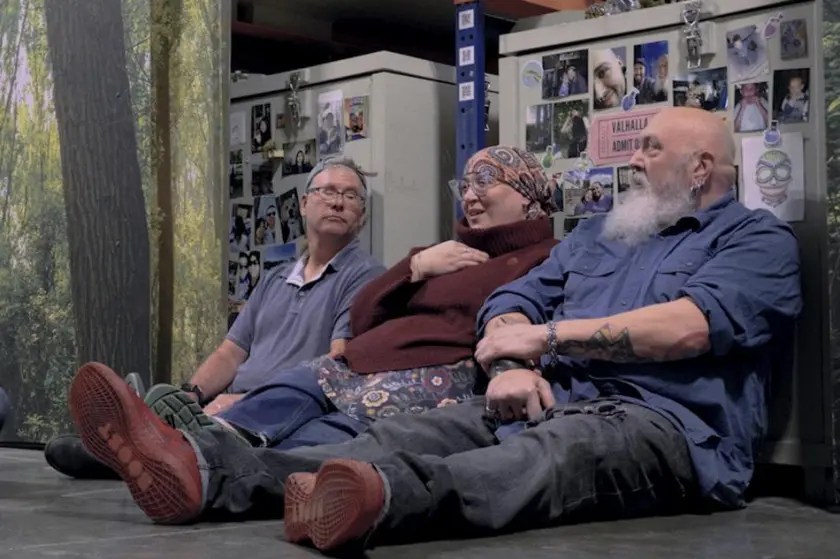
Since its inception in 1882, The National Funeral Directors Association has essentially offered two choices for decedents: burial or cremation. Within those parameters, there are customizable options, from expensive ornate caskets and headstones to cardboard urns; from grand funeral processions to intimate services. But the transactional nature of it taints every aspect and is very much contingent on what the families can afford. J.J. Gerber’s directorial debut, The Life We Leave, is a documentary that takes an in-depth look at one of the first companies in the world to offer a whole new way. Human composting is not just a green alternative. The “Return Home” model also involves and supports the grieving families every step of the way.

In 2019, Washington state became the first to legalize human composting. Return Home founder, Micah Truman saw a chance to get in on the ground floor of an emerging industry. He had recently left the tech world and initially entered the venture with that bottom line mindset. He came across a youtube video by Dr. John Paul, PHD, who explained his agricultural innovation for composting cows. Truman invited Dr. Paul out to lunch and didn’t even give the man a chance to bite into his sandwich before he got down to brass tacks. “Could you do it for people?” Though taken aback, Dr. Paul considered the question carefully and concluded that it was worth trying. What Truman didn’t know and would soon come to learn is that there is so much more that goes into funeral services besides body disposal. Or rather, there is so much more that should go into it. What “Return Home” offers is a way to reunite lost loved ones with the very elements of creation.

As of this writing, fourteen states have legalized human composting, and the companies that have sprung up accept clients from out of state. Most seem to charge comparable, if not significantly reduced rates as traditional funeral homes. Yes, the traditional places answer the phone and gladly retrieve your loved one at all hours, but after that, your involvement becomes very removed and transactional. When my own mother passed, she had chosen a place I never even visited. They picked her up, took my credit card info, followed her cremation wishes from her will, and mailed the remains. $2000 and a whole life burned into a box of ashes. The vessels provided, beyond the “basic cardboard box” cost extra. To have a service there cost extra. If you lose someone unexpectedly, these costs can feel limiting and blindsiding. But it used to be the only way to go…

Read the rest on Hammer to Nail!

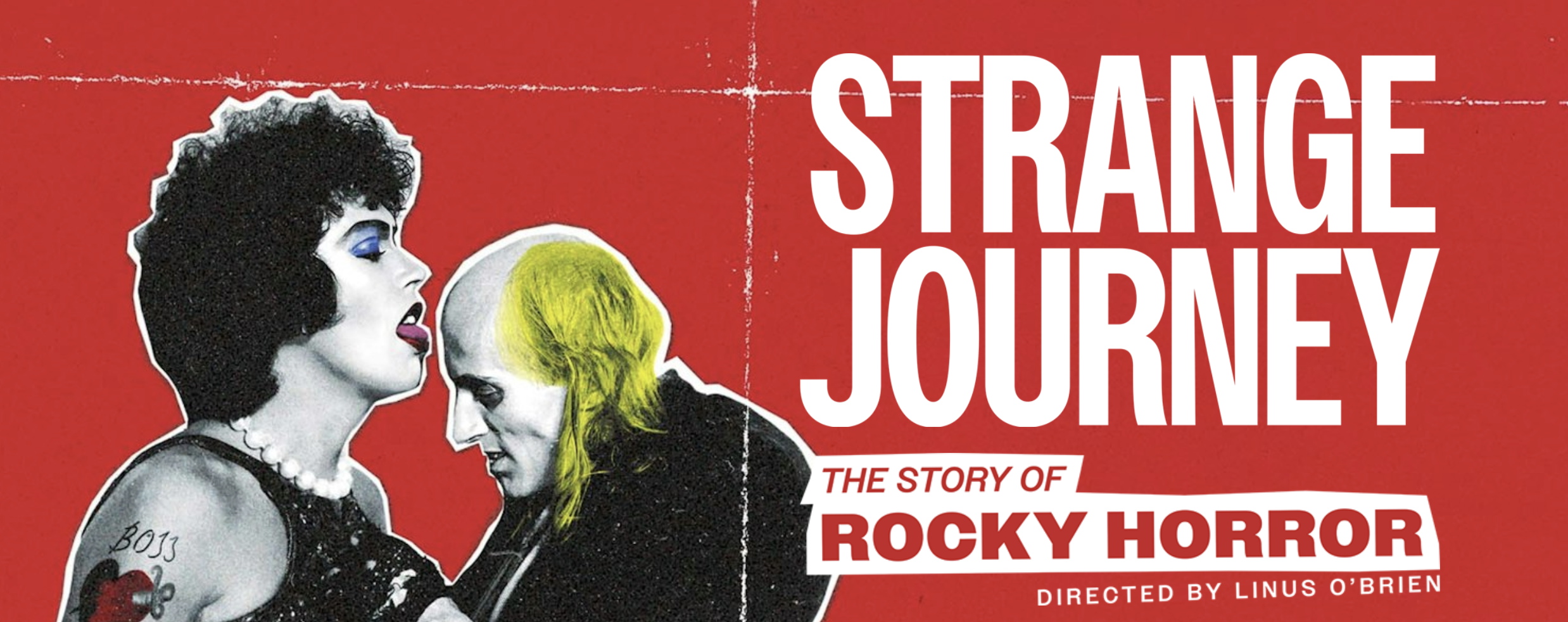
Hammer to Nail Review: Strange Journey: The Story of Rocky Horror

If you’re reading this review, chances are you’re already aware of the awesome power of movies. The best films can be the connective tissue for society’s outcasts. Even those with more “normie” proclivities can unlock something hidden deep within them when exposed to the right combination of moving images, sounds, and vibes.

For many people, that first magic film was and IS The Rocky Horror Picture Show. So-called Transylvanians don’t forget the first time they saw Frank-N-Furter throw off his cape to strut around in a saucy corset without apology. At the Frankenstein place, It’s Brad and Janet, in their J.C. Penny undergarments, who are the outsiders. But even they will be welcomed into the fold with open arms (and legs).

Linus O’Brien’s film, Strange Journey: The Story of Rocky Horror, is so much more than a historical document. It’s an origin story for a cultural touchstone of Queerdos. And yes, you can be straight and still be counted among their ranks, so long as you leave your judgments outside in the rain. Richard O’Brien first birthed his masterwork in the form of a 1973 London stage show, with Tim Curry in the original cast. It was wildly popular, but it would take fits and starts to grow into the juggernaut it is today. Fifty years later, it resonates anew with young audiences and slips on like an old fishnet stocking for O.G. fans.

Who better to tell this storied history than a guy who literally grew up with Rocky Horror: Linus O’Brien. Richard O’Brien’s son was always aware that his dad wrote a pervasive musical, but it didn’t dawn on him until a few years ago, just how meaningful it is to people. He explains it beautifully in his director’s statement:

“As I read through the comments [on a youtube video of “I’m Going Home”], I was overcome with emotion – each person shared their personal story and the deep place the song held in their heart… this was the first time I truly grasped the enormity of its influence on individual lives… the unique cult phenomenon it fostered and the safe space it created for all kinds of people; and the unfortunate reality that, in today’s political climate, Rocky is as relevant as ever.”…

Read the rest on Hammer to Nail!

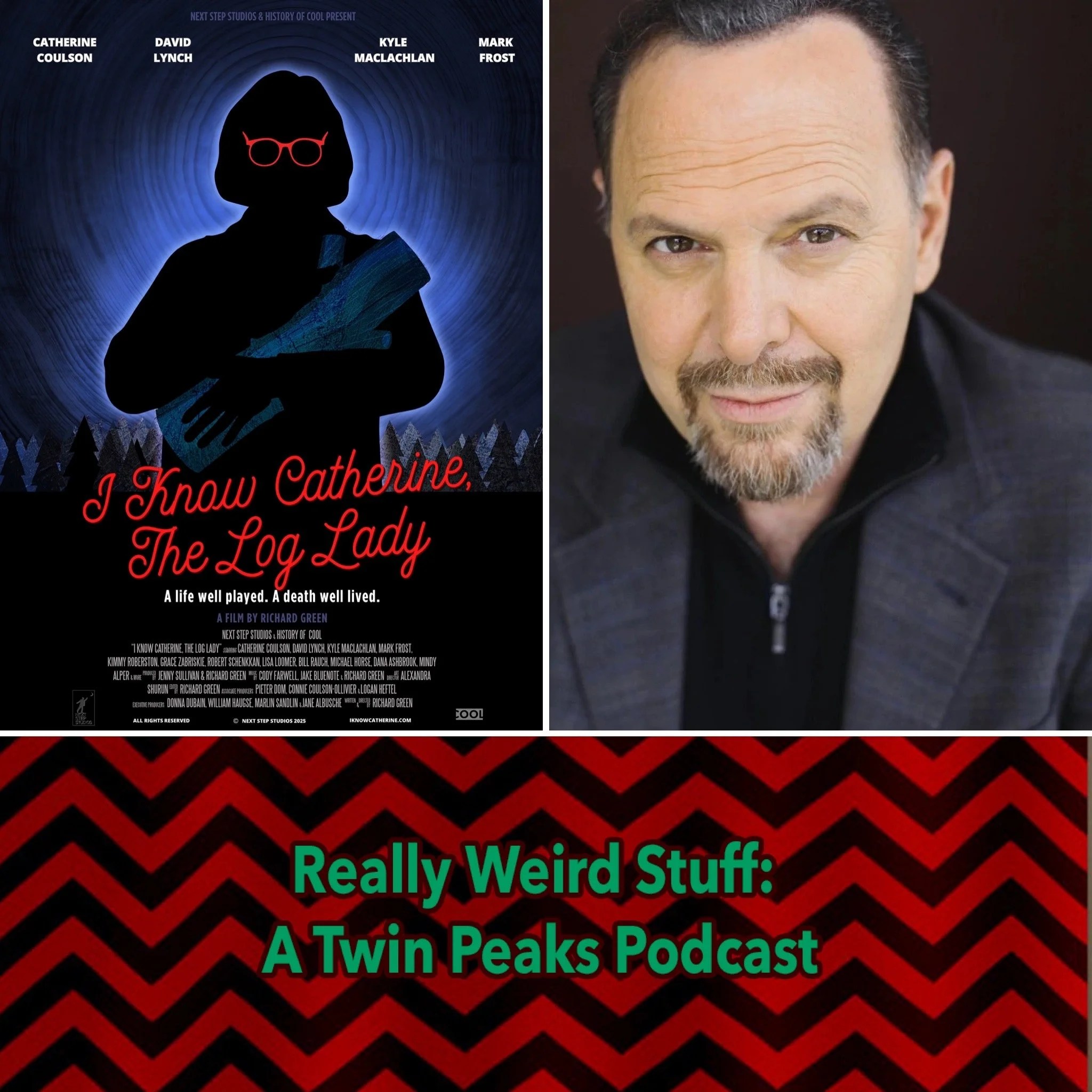
Hammer to Nail Presents: Richard Green, director of “I Know Catherine, the Log Lady”

On this very special episode of Really Weird Stuff: A Twin Peaks Podcast, we team up with independent cinema outlet, Hammer to Nail, to interview Richard Green, director of the new documentary, I Know Catherine, the Log Lady, about the life and death of Catherine Coulson, aka Margaret Lanterman from Twin Peaks. As the film shows, her time on T.P. was just a fraction of the huge, dynamic life of a beloved woman. 

Lynch fans will also recognize Richard Green as the Magician from
Mulholland Dr. (“No Hay Banda!”) 

Baxter spoke to Green about his indelible time working with David, the challenges of reducing hundreds of hours of content into a digestible feature, the importance of the theatrical experience, and how David’s death may have been a boon to art-house cinema. 

Plus MUCH MORE! 

Check iknowcatherine.com for more information and to see if the film is coming to your city!

Hammer to Nail


insta: @reallyweirdstuffpod
bluesky: @reallyweirdstuff.bsky.social
youtube: @reallyweirdstuffpod

Film Review: Sammy Davis, Jr.: I Gotta Be Me

53_sammy-davis-jr-ie28099ve-gotta-be-me_1200x800
“Even if you win, you don’t win.”

That’s the lesson Sammy learned the day he got jumped by a racist fellow infantryman and won the fight. Nursing his well-deserved wounds, the man told Davis that he was “still a [n word].” That was the moment that Davis decided fighting wasn’t getting him anywhere. If he was going to change the hearts of white America, he had to try another tactic.

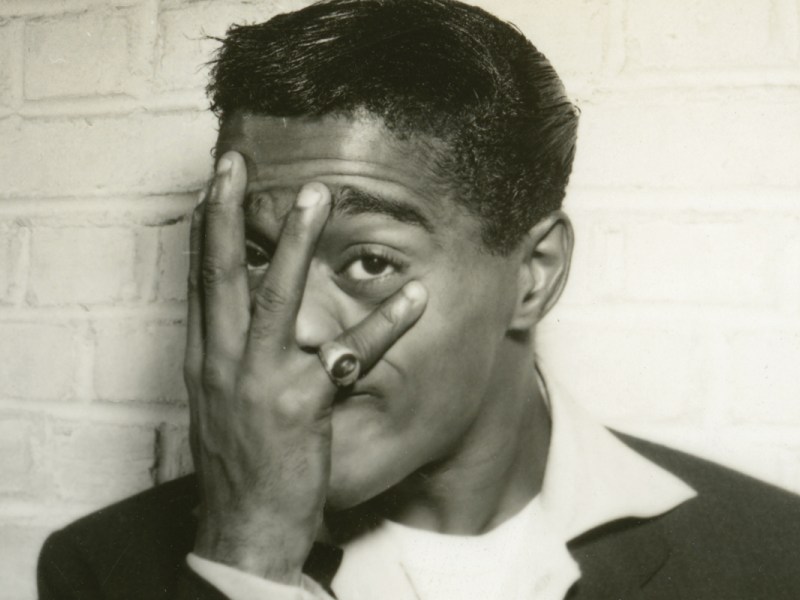
Samuel D. Pollard’s documentary about the career of Sammy Davis, Jr. is more than just a Hollywood biography. At a time when race relations have returned to the forefront of America’s consciousness, Sammy’s struggle rings true to a shameful degree. Despite his innumerable talents, he still faced plenty of discrimination on account of his skin color and later, his Jewish faith. But his unflappable spirit was also a beacon of hope for other marginalized people. As one interviewee puts it, his success, “made [African Americans] feel special and for a time feel equal”.

Read the rest at Hammer to Nail!

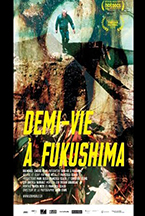
H2N Review: Half Life in Fukushima

1fuku

The title of Mark Olexa and Francesca Scalisi’s documentary, Half-Life in Fukushima, is a pun, of sorts. Half-life is the time it takes for the radioactivity of an isotope to decrease to half its original value. It is also an apt term for the life of Naoto Matsumura, a farmer who, along with his elderly father, continues to reside in the Japanese town that was evacuated after the 2011 nuclear plant meltdown caused by the one-two punch of an earthquake and a tsunami. At a mercifully short sixty minutes, Half-Life follows Naoto through his day tending to his farm and caring for his father. His down-time resembles every “last man on earth” style apocalypse film, as he hits golf balls on an empty course, sings a mournful karaoke tune to no one, and chain smokes while watching the news. He lives this way because he knows no other way. There is nothing for him outside the city. He can’t abandon his home, even though everyone else has done just that.

Though Naoto passes the occasional clean-up crew, he leads a nearly solitary existence. Occasionally, the filmmakers layer in sounds of the bustling city over shots of the man walking down the middle of a deserted street. At one point, the ambient noise changes as Naoto wades into the ocean. This time, instead of a thriving cityscape, we hear the screams of terror coming from people who have been told that they must leave or die. It is the reason they have not returned. Naoto is not dead, though he is not exactly alive either…

Read the rest at Hammer to Nail!

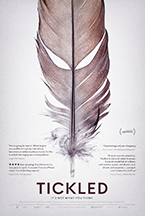
Hammer to Nail Review: Tickled

tickledposter

I don’t know about you, but I hate being tickled and always have. There’s something insidious about a person forcing uncontrollable laughter out of you despite not enjoying how they’re doing it. Inexplicably, both my children love being tickled and will even request it. If they ask me to stop, I do so immediately. Their laughs are genuine, though I can’t imagine why. Even as a child, I detested it and would become furious when subjected to it. On more than one occasion, my brother received a bloody nose in response to his non-consensual tickling. So when I heard about “Competitive Endurance Tickling” – the subject of New Zealand directors David Farrier and Dylan Reeve’s documentary, Tickled – my first thought was, “DEAR GOD, WHY?!” The easy answer is the same as the reason people do anything unpleasant – money. A lot of money. But, as Farrier and Reeve soon discover, there’s a lot more to the story than that…

Read the rest at Hammer to Nail!