Hammer to Nail Review: The Life We Leave

The Life We Leave is an official selection of the 2026 Seattle International Film Festival.

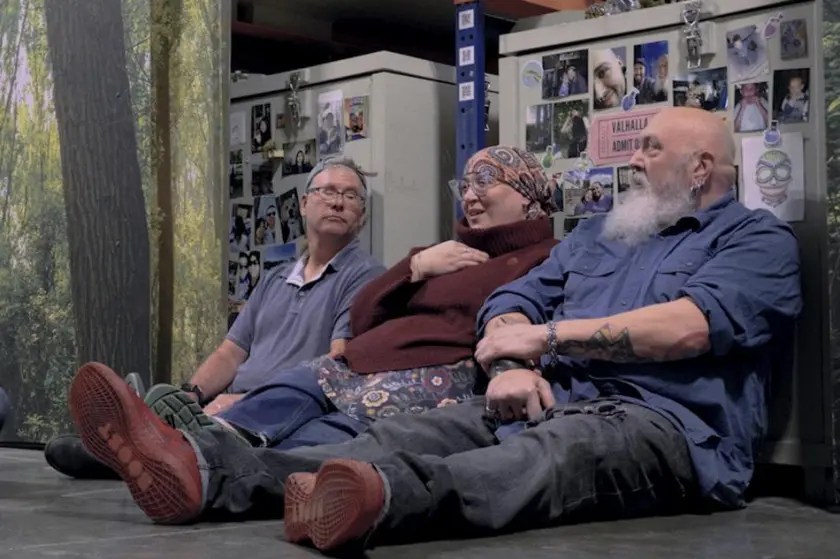
Since its inception in 1882, The National Funeral Directors Association has essentially offered two choices for decedents: burial or cremation. Within those parameters, there are customizable options, from expensive ornate caskets and headstones to cardboard urns; from grand funeral processions to intimate services. But the transactional nature of it taints every aspect and is very much contingent on what the families can afford. J.J. Gerber’s directorial debut, The Life We Leave, is a documentary that takes an in-depth look at one of the first companies in the world to offer a whole new way. Human composting is not just a green alternative. The “Return Home” model also involves and supports the grieving families every step of the way.

In 2019, Washington state became the first to legalize human composting. Return Home founder, Micah Truman saw a chance to get in on the ground floor of an emerging industry. He had recently left the tech world and initially entered the venture with that bottom line mindset. He came across a youtube video by Dr. John Paul, PHD, who explained his agricultural innovation for composting cows. Truman invited Dr. Paul out to lunch and didn’t even give the man a chance to bite into his sandwich before he got down to brass tacks. “Could you do it for people?” Though taken aback, Dr. Paul considered the question carefully and concluded that it was worth trying. What Truman didn’t know and would soon come to learn is that there is so much more that goes into funeral services besides body disposal. Or rather, there is so much more that should go into it. What “Return Home” offers is a way to reunite lost loved ones with the very elements of creation.

As of this writing, fourteen states have legalized human composting, and the companies that have sprung up accept clients from out of state. Most seem to charge comparable, if not significantly reduced rates as traditional funeral homes. Yes, the traditional places answer the phone and gladly retrieve your loved one at all hours, but after that, your involvement becomes very removed and transactional. When my own mother passed, she had chosen a place I never even visited. They picked her up, took my credit card info, followed her cremation wishes from her will, and mailed the remains. $2000 and a whole life burned into a box of ashes. The vessels provided, beyond the “basic cardboard box” cost extra. To have a service there cost extra. If you lose someone unexpectedly, these costs can feel limiting and blindsiding. But it used to be the only way to go…

Read the rest on Hammer to Nail!

Hammer to Nail Review: Year of the Fox

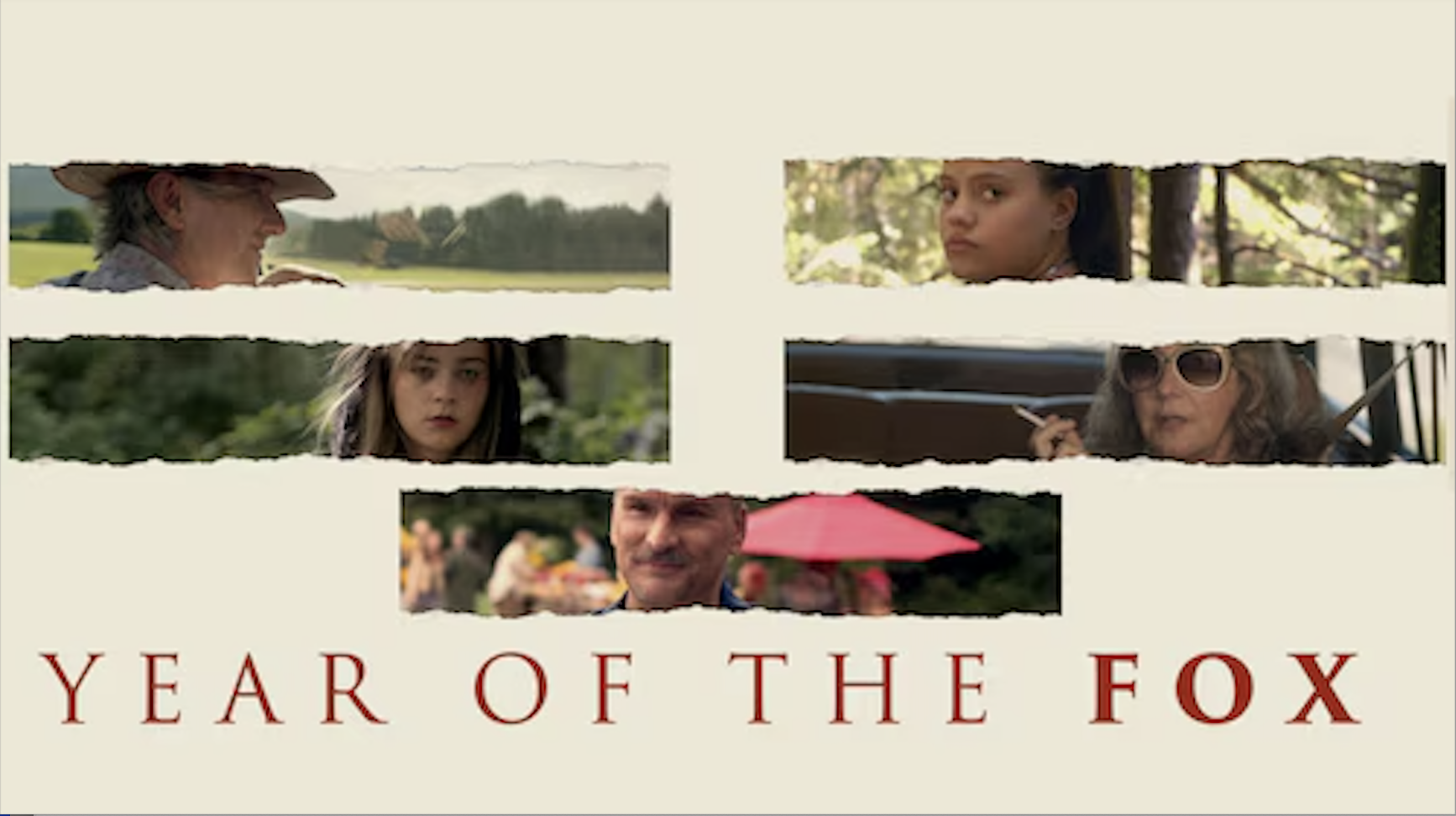
Megan Griffiths’ latest film, Year of the Fox (check out my interview with Griffiths and screenwriter Eliza Flug here) is a coming-of-age drama set in 1997 Seattle and Aspen. On the cusp of high school graduation, a young woman (Sarah Jeffery, TV’s Descendants), adopted into the upper echelon, gets a disillusioning peek behind the curtain of adulthood. There, she finds selfishness, pettiness, a ring of predators and the people who protect them. Year of the Fox presents a complex tableau of American high society including gender politics, the commodification of young girls, patriarchal hypocrisy, and the price of privilege that only women incur.

If this sounds familiar, you might be living in the United States in the year 2025. As of this writing, the president is doing everything he can to prevent the release of a list of rich pedophiles, even though he’s “definitely not on it”. In fact, there isn’t even a list. Let’s focus on important things like the recipe for Coca-Cola!  Twenty-eight years later, the only thing that’s really changed is the soundtrack. Systematic patriarchal exploitation is as American as apple pie.

As you might have guessed, Eliza Flug’s semi-autobiographical tale leans dark. But it’s not a suffocating darkness. That’s a tonal balance that Megan Griffiths has always deftly straddled in her myriad films about American womanhood (Eden, The Off Hours, Lucky Them, Sadie). Together, this dream team has crafted a weighty story about the ripples created when powerful men use their sovereignty to hurt women, without reproach, time and time again. Griffiths and Flug effectively inform the audience of the dirty deeds without miring us in the acts themselves. We don’t need to see the assaults, because it reverberates through the narrative: folded arms, hunched shoulders, a new bruise, a condom wrapper stuffed in a drawer, a knowing glance, a mysterious car dropping off a teenage girl in the wee hours, a man calling a seventeen-year-old girl, “an old soul.” It’s a shorthand that is familiar to at least 50% of the population. We know what all these things mean because we have all witnessed it or experienced it firsthand…

Read the rest on Hammer to Nail!

Hammer to Nail Interview: Megan Griffiths & Eliza Flug (YEAR OF THE FOX)

Megan Griffiths’ latest film, Year of the Fox, is a coming-of-age drama that takes place in 1997 Aspen and Seattle. Ivy (Sarah Jeffery) is a young woman on cusp of finishing high school, when she gets a disillusioning peek behind the curtain of her parents’ social circle. There she finds selfishness, deceit, pettiness, judgement, and a ring of untouchable predators. If you are reading this in America in the year 2025, this dynamic may sound achingly familiar. Systematic patriarchal exploitation is as American as apple pie.

As you may have guessed, screenwriter Eliza Flug’s semi-autobiographical tale leans dark. But it’s not a suffocating darkness. As Ivy puts it: “It’s hard to trust the good memories through the bad, but they were just as real”. Griffiths has always been deft at maintaining this verité tonal balance, ever since her quiet stunner, The Off Hours, premiered at Sundance in 2011. Griffiths and Flug are a match made in feminist cinema heaven. Their affinity for a light touch is a breath of fresh air in this perpetual landscape of male-dominated cinema. Sometimes the occasion calls for a Coralie Fargeat protagonist barfing up blood all over the patriarchy, and other times, a cozy, quietly scathing tone poem like Year of the Fox delivers a similar catharsis. Together, this dream team has crafted a formidable film about the ripples created when powerful men use their influence to hurt women – without repercussion – time and time again.

I recently chatted with Megan and Eliza about their journey since the film’s debut at the Seattle International Film Festival, trusting the audience to grasp narrative nuance, the music and films that inspire them, and using art as an act of rebellion.

 This interview has been edited for clarity and brevity.

Hammer to Nail: Thank you for joining me today and for making this incredible film. I felt a personal connection to Year of the Fox because I graduated from high school in 1996 and moved to Seattle for college. The dynamic between Ivy’s parents is very familiar to me. I found myself gasping in recognition, especially when the parents talk to each other because that’s how my parents talked to each other for many years.

Megan Griffiths: Glad it was relatable.

Eliza Flug: Sorry it was relatable.

[Everyone laughs]

HtN: And I also loved that you showed something rarely depicted in movies and TV, which is that an encounter with a predator can be just as traumatizing even if they don’t get what they came for. Just being in proximity to the danger. Seeing that play out on screen was so unusual.

MG: Yes, a near miss can be traumatizing too.

HtN: The film premiered at the Seattle International Film Festival in 2023. What was the journey like from the festival debut to the recent release?

MG: We were working with a distributor and ultimately, they weren’t putting out the film, and so we ended that relationship and worked with our new distributor, Monument Releasing, to get the film [out]. We’ve been waiting anxiously to release the film for this entire period so we’re happy to be getting it out now.

HtN: When did you start production?

MG: We shot it in 2021.

HtN: Wow!

MG: Yeah, it’s been a long journey. It’s not like the COVID era is ancient history but it is weird to think about the fact that we were shooting with a very freshly vaccinated crew with very strong limits on how many people could be in our party scenes and how to get people to be on set together safely. This was all very present in our production.

EF: And on the production side, it was a 15% markup for a COVID nurse to be on set at all times, and on the insurance cost. On my end, it was interesting to see that happen. There had been shutdowns in L.A. In the month while we were filming in Colorado and Washington state, we’d had one within less than two months. So, getting together as a community was special. It was actually really nice to see humans and be together. It was a really special time, for sure.

MG: Yeah, and it was a story we were both really ready and excited to share, and it’s just been a challenge. I mean, the entire film landscape is a challenge right now, so we’ve just been part of that – the issues that are affecting every filmmaker these days.

HtN: Yeah. And issues that are affecting every woman. I mean, you shot this so long ago and it was as true in 1997 as it is today in 2025. So many truths in this movie.

You both complimented each other creatively on this film. Eliza, in your writer’s statement for the film you talked about how power is always better when it is shared. [Author’s note: The full quote is, “It was freeing to write this reflection and to see Megan Griffiths, a filmmaker I respect, take what she read and create this translation, to work with her and to learn about power, and how it is better when it is shared. Always.”]

How did you share the power when you were collaborating on this film?

EF: I think that you choose it, and you’re very selective on how you do something, especially if you want it to be relatable to other people. You have to be true, and you hope for that truth and integrity in the relationship. It’s not something you can force. And it’s something you come by honestly every day. And so, Megan led the charge on that with production and with her community – our shared community of women working together, wanting to create something that would speak to our children. It was more about, “what do they think of this and what will they see?” Making film can be very selfish and making art is very self-involved, but it was an act of trying to create something for other people as opposed to just being about the past or the self. I think we both came from that perspective, which made it easy to work together.

MG: I think we had a shared desire to have this conversation be – not just something that was happening between the two of us over coffee – but having with an audience. Within our culture the conversation’s gotten a lot louder recently because of what’s leading the headlines these days, but it’s not new. The idea of talking about sexual politics, talking about predation, both sides of the coin – the people who are predators and the people who are interacting with them and having their lives impacted by them – these are all conversations that have been going on since way before this movie, since way before Jeffrey Epstein, but they’re coming to a head culturally right now and I’m glad we’re able to contribute our little piece of the puzzle…

Read the rest on Hammer to Nail!

Paid in Puke S3E9: Lynn Shelton Special

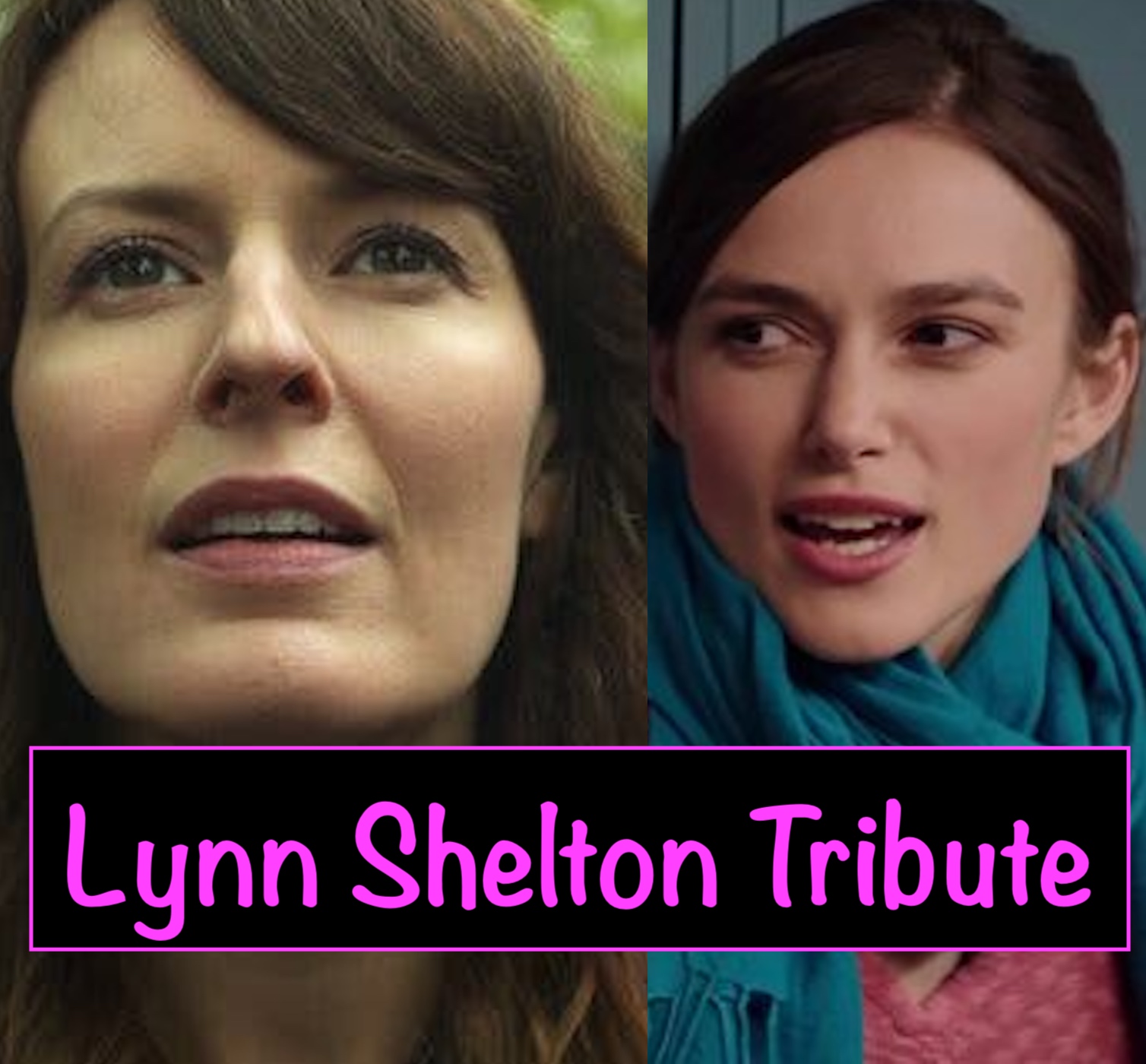
lynn ep artOn this episode of Paid in Puke, we pay tribute to the late Seattle film auteur, Lynn Shelton, who recently passed away unexpectedly at the age of 54. We celebrate her career with 2013’s Touchy Feely, which Lynn also wrote, and 2014’s Laggies, written by Andrea Seigel.

Touchy Feely stars Rosemarie Dewitt and Ellen Page. Laggies stars Kiera Knightly and Chloe Grace Mortez. They share common themes of women who are at an existential crossroads and must take drastic steps to move forward.

Lynn was very beloved, not just in Seattle, but by all who knew her. Rest in Power, Lynn.

Hammer to Nail: The Complete History of Seattle

seattlecover

The Complete History of Seattle doesn’t just eschew the band documentary formula. Nick Toti’s film, which is mainly about 90s Christian experimental punk group, Raft of Dead Monkeys, binges on the genre and then simultaneously craps and barfs it back up. Believe it or not, this is not a criticism. It’s quite refreshing and exciting to watch something from a typically formulaic genre and not have any clue where you’ll end up.

Part of the reason the film is structured this way is due to Raft of Dead Monkeys’ wholly unique stage show. The band rose from the ashes of 90-Pound Wuss and Roadside Monument – two popular Christian punk bands that were darlings of the faith-based Seattle indie label Tooth & Nail. Taking their name from a throwaway joke in an Adam Sandler SNL skit, they were not your garden variety Christians. Raft’s music was particularly profane and noisy, and their performances invoked many provocative images including bloody crucifixions, fascism, monkeys barfing bananas, male and female go-go dancers, and sexy junkie nurses (played by their wives and girlfriends). At the time of their formation, the band members were feeling disillusioned and alienated from both their fellow Christian musicians and the secular punk scene at large. According to their manifesto, they were attempting to create the music that would usher in the apocalypse. In response to feeling shunned, they basically became Christian anarchists…

Read the rest on Hammer to Nail!

SIFF 2016 Wrap-Up

Another SIFF has come and gone. This year, the Seattle International Film Festival ran from May 19th to June 12th and featured 421 films from 85 countries. I have to say this was one of my favorite years. With so many options, it’s always hard to narrow down one’s itinerary. Plus, even when most of the films are great, seeing so many in such a concentrated period of time tends to make them all blur together. But I loved so many of the films I saw this year, that when I receive the inevitable question, “what’s good?” I have a long and enthusiastic answer. If you’re reading this, I assume you would have asked me the same question. So here it is…

siff-2016

Read on Hammer to Nail!

SIFF Review: The IF Project

iffyposter

Most people join law enforcement because they want to help victims of crime, but not as many are equally as passionate about helping the people who committed crimes. To Seattle P.D. Officer Kim Bogucki the inmates of the Washington Corrections Center for Women in Gig Harbor, WA are more than just numbers. They are human beings who have made horrible mistakes. If they share what they’ve learned with young girls and women in the outside world, perhaps they can prevent someone else from meeting the same fate. Kathlyn Horan’s documentary, The IF Project, profiles Bogucki and the program she started as well as four of the inmates whose lives were changed as a result.

The first writing assignment Bogucki gave inmates was to write a letter to their younger selves telling them something that might have changed the course of their life. That first day, her query was met with silence. But the question stuck with one inmate, a woman named Renata Abramson, and she began to not only discover the answer for herself, but also to pose it to her fellow inmates. Months later, Renata presented Bogucki with a stack of letters and the IF Project was born…

Read the rest on Hammer to Nail!

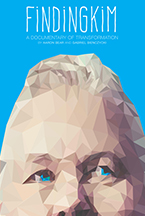
SIFF Review: Finding Kim

kimposterr

There has been a recent surge in films about trans people, both narrative and documentary. And it’s about time. Trans rights have long been either lumped in with the rest of the LGBTQ issues, or ignored altogether. According to Kim, a trans man and the subject of Aaron Bear’s first feature documentary, Finding Kim, the Ls, Gs, Bs, and Qs have been some of the worst offenders for undermining trans equality. Trans women in particular have been excluded from women’s events as if they were devious cisgender men in disguise.

Fortunately for Kim, he lives in Seattle, where he has a supportive group of friends and can utilize his health insurance to cover his first surgical procedure, done by a sympathetic specialist. This has been a long time coming for Kim, who didn’t come to terms with being trans until his late 40s. Raised as a girl, Kim was often called a boy by peers, as if it were an insult. His classmates also barred him from using the bathroom at school – any bathroom. He never told his parents what he was going through, resulting in a very lonely existence. When he was older, he thought he might be a lesbian, but after spending time in that community, he still didn’t feel quite right. He finally had his life-altering breakthrough when he met a therapist who told him that all those masculine feelings he had were because he was a man. Within a couple of months, he was taking daily testosterone shots (called “T”) and finally starting to feel at home in his own body…

Read the rest on Hammer to Nail!

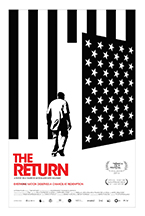
SIFF Review: The Return

thereturnposter

Despite our founding principals, the United States is generally terrible at taking care of our own, especially if they suffer from mental illness or addiction. Newly released prisoners are just one of the many groups the system fails on a regular basis. Kelly Duane de La Vega and Katie Galloway’s vital documentary, The Return, details just one aspect of the myriad flaws in the American criminal justice system.

Following the voter-approved repealing of California’s Prop 184, also known as the Three Strikes Law, thousands of non-violent prisoners with life-sentences suddenly qualified for appeals. But you can’t strip someone of their humanity, as our prison system does, then dump them on the outside and expect them to thrive…

Read the rest at Hammer to Nail!

SIFF Review: The Family Fang

fangposter

Jason Bateman is no stranger to the aggravation of selfish, irresponsible parents. On Arrested Development, he played arguably the most put-upon son in television history. Bateman returns to the well for his second directorial outing, adapting Kevin Wilson’s novel, The Family Fang. Bateman and Nicole Kidman play a pair of adult siblings who are developmentally arrested by their childhood spent being the unwitting participants in their parents’ surreptitious public art performances. Think the lesson pranks George Bluth paid J. Walter Weatherman to pull on his children. Only this time, the intent is a lot less explicit and the emotional consequences much less humorous…

Read the rest on Hammer to Nail!