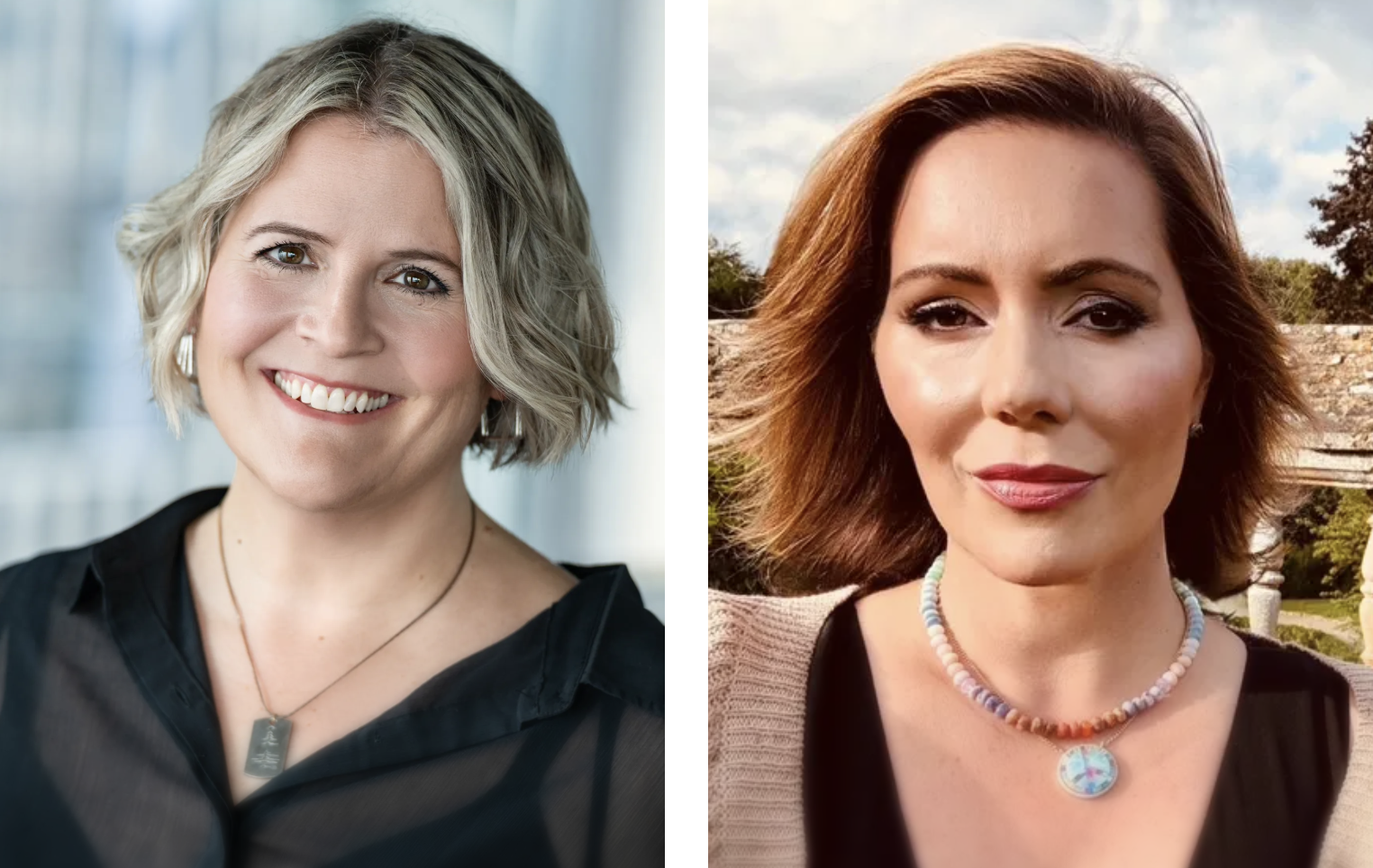
Megan Griffiths’ latest film, Year of the Fox, is a coming-of-age drama that takes place in 1997 Aspen and Seattle. Ivy (Sarah Jeffery) is a young woman on cusp of finishing high school, when she gets a disillusioning peek behind the curtain of her parents’ social circle. There she finds selfishness, deceit, pettiness, judgement, and a ring of untouchable predators. If you are reading this in America in the year 2025, this dynamic may sound achingly familiar. Systematic patriarchal exploitation is as American as apple pie.
As you may have guessed, screenwriter Eliza Flug’s semi-autobiographical tale leans dark. But it’s not a suffocating darkness. As Ivy puts it: “It’s hard to trust the good memories through the bad, but they were just as real”. Griffiths has always been deft at maintaining this verité tonal balance, ever since her quiet stunner, The Off Hours, premiered at Sundance in 2011. Griffiths and Flug are a match made in feminist cinema heaven. Their affinity for a light touch is a breath of fresh air in this perpetual landscape of male-dominated cinema. Sometimes the occasion calls for a Coralie Fargeat protagonist barfing up blood all over the patriarchy, and other times, a cozy, quietly scathing tone poem like Year of the Fox delivers a similar catharsis. Together, this dream team has crafted a formidable film about the ripples created when powerful men use their influence to hurt women – without repercussion – time and time again.
I recently chatted with Megan and Eliza about their journey since the film’s debut at the Seattle International Film Festival, trusting the audience to grasp narrative nuance, the music and films that inspire them, and using art as an act of rebellion.
This interview has been edited for clarity and brevity.
Hammer to Nail: Thank you for joining me today and for making this incredible film. I felt a personal connection to Year of the Fox because I graduated from high school in 1996 and moved to Seattle for college. The dynamic between Ivy’s parents is very familiar to me. I found myself gasping in recognition, especially when the parents talk to each other because that’s how my parents talked to each other for many years.
Megan Griffiths: Glad it was relatable.
Eliza Flug: Sorry it was relatable.
[Everyone laughs]
HtN: And I also loved that you showed something rarely depicted in movies and TV, which is that an encounter with a predator can be just as traumatizing even if they don’t get what they came for. Just being in proximity to the danger. Seeing that play out on screen was so unusual.
MG: Yes, a near miss can be traumatizing too.
HtN: The film premiered at the Seattle International Film Festival in 2023. What was the journey like from the festival debut to the recent release?
MG: We were working with a distributor and ultimately, they weren’t putting out the film, and so we ended that relationship and worked with our new distributor, Monument Releasing, to get the film [out]. We’ve been waiting anxiously to release the film for this entire period so we’re happy to be getting it out now.
HtN: When did you start production?
MG: We shot it in 2021.
HtN: Wow!
MG: Yeah, it’s been a long journey. It’s not like the COVID era is ancient history but it is weird to think about the fact that we were shooting with a very freshly vaccinated crew with very strong limits on how many people could be in our party scenes and how to get people to be on set together safely. This was all very present in our production.
EF: And on the production side, it was a 15% markup for a COVID nurse to be on set at all times, and on the insurance cost. On my end, it was interesting to see that happen. There had been shutdowns in L.A. In the month while we were filming in Colorado and Washington state, we’d had one within less than two months. So, getting together as a community was special. It was actually really nice to see humans and be together. It was a really special time, for sure.
MG: Yeah, and it was a story we were both really ready and excited to share, and it’s just been a challenge. I mean, the entire film landscape is a challenge right now, so we’ve just been part of that – the issues that are affecting every filmmaker these days.
HtN: Yeah. And issues that are affecting every woman. I mean, you shot this so long ago and it was as true in 1997 as it is today in 2025. So many truths in this movie.
You both complimented each other creatively on this film. Eliza, in your writer’s statement for the film you talked about how power is always better when it is shared. [Author’s note: The full quote is, “It was freeing to write this reflection and to see Megan Griffiths, a filmmaker I respect, take what she read and create this translation, to work with her and to learn about power, and how it is better when it is shared. Always.”]
How did you share the power when you were collaborating on this film?
EF: I think that you choose it, and you’re very selective on how you do something, especially if you want it to be relatable to other people. You have to be true, and you hope for that truth and integrity in the relationship. It’s not something you can force. And it’s something you come by honestly every day. And so, Megan led the charge on that with production and with her community – our shared community of women working together, wanting to create something that would speak to our children. It was more about, “what do they think of this and what will they see?” Making film can be very selfish and making art is very self-involved, but it was an act of trying to create something for other people as opposed to just being about the past or the self. I think we both came from that perspective, which made it easy to work together.
MG: I think we had a shared desire to have this conversation be – not just something that was happening between the two of us over coffee – but having with an audience. Within our culture the conversation’s gotten a lot louder recently because of what’s leading the headlines these days, but it’s not new. The idea of talking about sexual politics, talking about predation, both sides of the coin – the people who are predators and the people who are interacting with them and having their lives impacted by them – these are all conversations that have been going on since way before this movie, since way before Jeffrey Epstein, but they’re coming to a head culturally right now and I’m glad we’re able to contribute our little piece of the puzzle…

