I think we can all agree that Shakespeare wrote some good plays. But, because he wrote them over 400 years ago, even his best work can feel a bit dated. While he is responsible for creating several nuanced female characters including Lady Macbeth and Beatrice from Much Ado About Nothing, they could always use some tweaking for modern viewers. Especially if the target audience is young adults as with Claire McCarthy’s Ophelia. Based on the novel by Lisa Klein, and adapted by Mad Men writer, Semi Challas, the film tells Shakespeare’s celebrated tragedy from the perspective of the woman formerly known as Hamlet’s girlfriend.
Purists will probably come away from this film with many complaints, not the least of which is the updated language. Ophelia’s dialog isn’t modern, per se, but more of a translated Elizabethan. Because it follows one of Hamlet’s minor characters, most of the scenes are new, but there are pivotal scenes shared with the source material, and Challas chooses to re-write those scenes to match the language of the rest of the film. For me, this was the one miss in an otherwise refreshing story of female empowerment and clever revisionism that will hopefully serve as a gateway for young adults into the wide world of Shakespeare’s works.
Daisy Ridley (Star Wars) stars as a low-born girl who becomes Queen Gertrude’s (a breathtaking Naomi Watts) most trusted lady in waiting before falling for her son, Hamlet (George MacKay, Captain Fantastic), just as a suspicious accident shakes up the monarchy. The King’s brother, Claudius (Clive Owen, Children of Men), quickly takes his place on the throne and in Gertrude’s bed. But, as you may have heard, something is rotten in Denmark. Ophelia overhears some loaded conversations which implicate a conspiracy. Soon, she and Hamlet are in danger and must orchestrate an elaborate and theatrical plan to expose the guilty parties lest they succumb to “accidents” of their own.
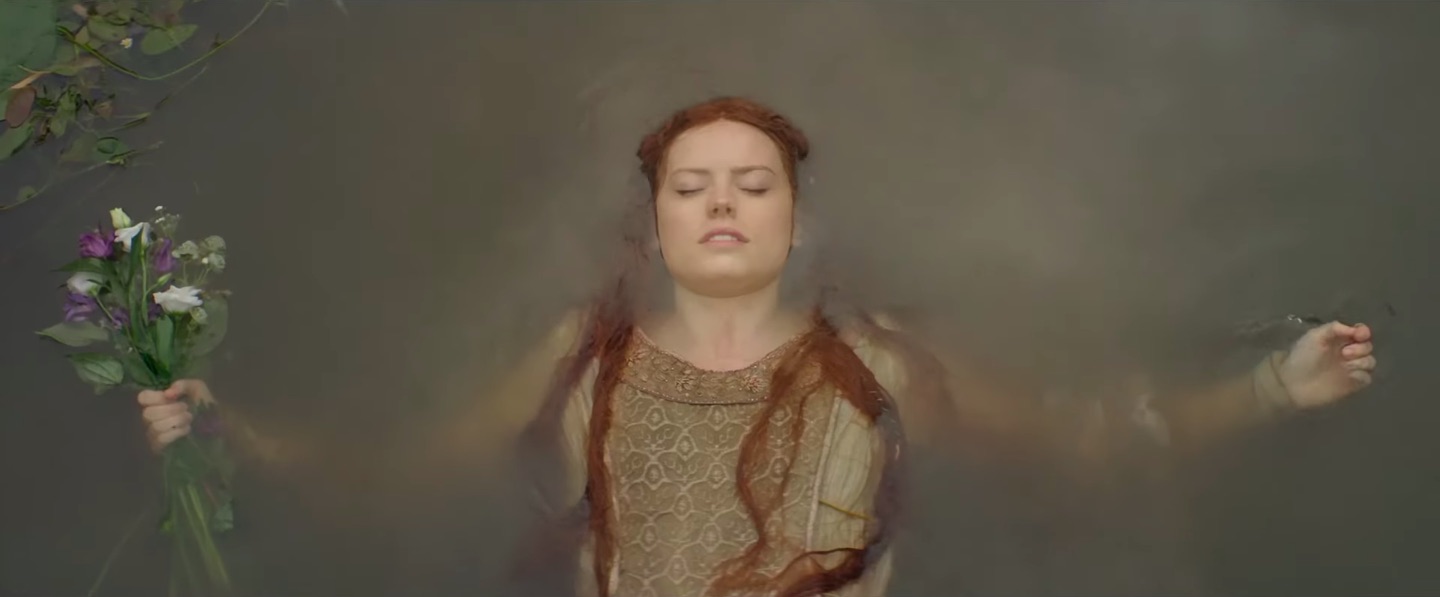
The film opens with a rendering of John Everett Millais’ 1850 painting as a visual representation of everything we know about Ophelia: She was Hamlet’s girlfriend, but his cruelty and obsession with his father’s death led to her madness and accidental drowning. In Hamlet, we never even see her fate. The Queen reports it in a mournful monologue. But Ridley’s voice-over tells us that there is much more to this story.
Next, we meet Ophelia as muddy little girl running around the castle after her older brother. She isn’t allowed to follow him into the library but he promises to teach her to read in private. Meanwhile, a young Hamlet is on his way to boarding school, leaving Queen Gertrude with an empty nest. She recognizes herself in young Ophelia and declares that she will “see to the raising” of this plucky young thing.
Years later, Ophelia has become a confidante to Gertrude, much to the jealousy of her other ladies in waiting. Gertrude asks Ophelia to read her erotica at bedtime and sends her into the woods to get more “medicine” from a mysterious witch who bears a striking resemblance to the Queen.
Klein’s story takes the openings provided by Willy’s lack of character development and runs with them, turning Ophelia into a whole and admirable female protagonist. She’s not flawless, but she is truly fleshed out, and you fervently root for her, despite thinking you know what becomes of her. She has that classic Disney princess backstory of a dead mother and an inattentive father, where she has to become a self-made woman who attracts the attention of a prince. She’s a cross between Belle and Cinderella, but with even more nuance and life.
Klein also cleverly adds several classic Shakespearean tropes, including potions that mimic death, extra scenes of people overhearing and misinterpreting pivotal information, witty banter as flirtation, and a woman successfully infiltrating an event dressed as a boy. There are also plenty of fairy tale moments such as a costume ball that looks like it was directed by Baz Luhrmann, and a scene that involves Ophelia donning a literal red riding hood to fetch the queen some more of those sweet CBDs from a witch’s woodland dispensary. This lady has potions for all kinds of ailments including aging, chronic pain, marital strife, unwanted advances from brothers-in-law, bad court theater, and making murder look like an accident. You’d better believe her wares also serve as foreshadowing for the drama that’s about to unfold at Elsinore Castle.
MacKay plays Hamlet sympathetically, which is crucial because he is a character who can so easily come off as a selfish dick. In this case, he has joined forces with his love in a clever plot to expose Claudius rather than to use Ophelia as a pawn in his game. Oh, and that play-within-a-play that he orchestrates isn’t just successful in catching the conscience of the king. It’s also a truly beautiful shadow play. Who knew Hamlet was so multi-faceted?
Tom Felton (Harry Potter) plays Laertes with effective earnestness but there’s not much more to him here than in the source material. Devon Terrell (Barry) gives a standout performance as Horatio, who is a true friend to both Hamlet and Ophelia. Owen is a suitable baddie despite an unfortunate hairdo. Everyone looks incredible in gorgeous period costumes amid some breathtaking scenery. The Czech-set film goes a long way toward transporting the viewer to another time and place. Anyone would feel glamorous eves-dropping behind such grand tapestries.
I do wish they’d kept some of the more famous lines, because one of the coolest things about reading the Bard for the first time is learning the source of idioms like “To thine own self be true”. It loses something when Polonius’ memorable speech to Laertes is summarized as “don’t borrow or lend money” and “you cannot hide your true self”. That said, I’m always a fan of films that make Shakespeare accessible to young audiences without feeling the need to set them in high school.
Ophelia is currently on VOD.
July 3, 2019
Categories: Filmpinions . Tags: claire mccarthy, clive owen, daisy ridley, devon terrell, george mackay, hamlet, Harry Potter, lisa klein, Mad Men, naomi watts, ophelia, shakespeare, star wars, tom felton, YA . Author: Baxter . Comments: Leave a comment