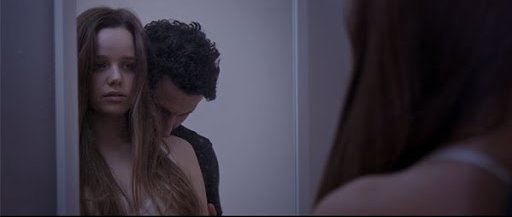
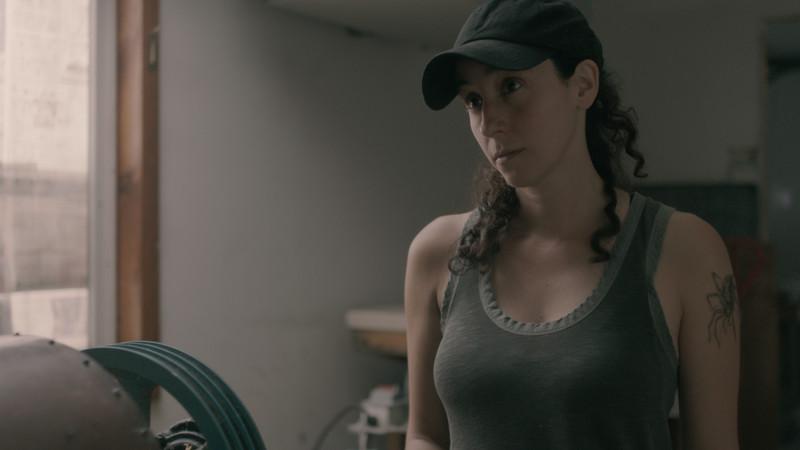
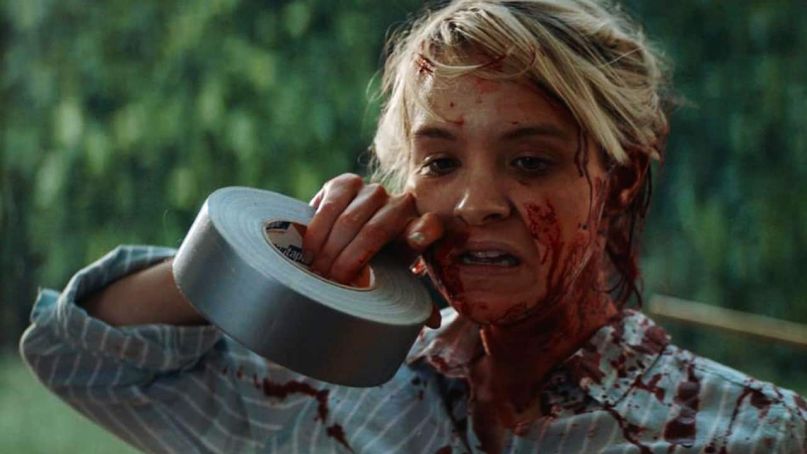
Most Americans probably don’t know that before Tipper Gore wreaked havoc on the United States music industry with her crusade against profanity in art, the UK had their own epidemic regarding the world of straight-to-video slasher films. Prano Bailey-Bond sets her directorial debut in a Thatcher-steeped 1980s Britain, when the BBFC (the British Board of Film Classification) demanded to run so-called Video Nasties through a rigorous screening process that resulted in mandatory edits and a viewer rating. Censor never namechecks the BBFC, but it’s clear that the film’s troubled protagonist, Enid (Niamh Algar), works for the organization. For her, it’s more than just a job – it’s a calling. That’s why she’s shocked when a brutal murder makes headlines for being linked to a film that she herself screened and rated. Soon, Enid is the victim of sinister phone calls and other harassment. Meanwhile, she is disturbed by a film that eerily resembles an incident from her childhood which resulted in the disappearance of her sister. Is Enid the victim of a sinister conspiracy, or is there something more internal at play?
Raffaello Degruttola wrote, directed, and stars in Transference: A Love Story, a romantic drama loosely based on his own experience with his father, who suffered from Bi-Polar Disorder. The story is told through the eyes of Katerina (Emilie Sofie Johannesen), a young Norwegian nurse new to the staff of a London hospital. Katerina is smitten after a handsome older nurse, Nik (Degruttola), consoles her through a hard day at work. She comes onto him and at first, he resists her advances. But once he caves, the two embark on a torrid affair that they elect to keep secret from colleagues. Katerina soon begins to suspect that Nik is also keeping a very big secret from her.
This is also a fish-out-of-water story for both Katerina and Nik, who are first generation immigrants to England. Katerina’s roommate, and many of their co-workers are also immigrants. Degruttola’s script spends a little time on how immigrants struggle more because of language barriers and prejudice. Katerina’s roommate is also very prudish and judgmental and there’s an implied rift between her and her family so Katerina really has no one to talk to about her struggles. Nik would prefer not to talk at all, if he can help it. In contrast, there is a lot of unnecessary voiceover from Katerina but it doesn’t tell us anything new. If anything, it further drives home the notion that Katerina doesn’t really want to know what’s going on with Nik. She prefers to remain frustrated in the dark rather than face an ugly truth.
Degruttola often relies on the score to embody the characters’ emotions. The music is habitually intense, and sometimes it feels like he’s telegraphing a plot development from a Lifetime movie that never comes to fruition. I kept expecting Nik to hit Katerina or to murder his pregnant ex-wife. Though this is not that kind of film, occasionally the music betrays Degruttola’s true intentions for his characters. It’s unfortunate because music for films can be so cost-prohibitive but it’s important to make sure the music is sending the message the director intended.
Transference is often boring or frustrating. Katerina and Nik are not fun Hollywood damaged. They like to ignore problems and keep things from each other, which often makes their interactions as terse as they are tense. They frequently storm away from one another with no resolution to their conflicts. I’m sure this is very true to life but it doesn’t make for a good time at the movies.
Degruttola’s feature debut is an authentic portrayal of the complications that arise when two people enter into a relationship before they’ve properly healed from their respective traumas. Transference is a difficult watch, but those who seek veracity in their romantic dramas, or wish to study a cautionary tale for therapeutic purposes, will find the film riveting and perhaps even refreshing.
It’s Oscar Season!! Join the Paid-in-Pukettes for lamenting snubs, ragging on Aaron Sorkin, loving on Lakeith, and worrying that people will get the wrong message from Nomadland. Stay for some very opinionated commentary on movies we didn’t see and equally opinionated commentary on the ones that we did see!
Plus!
Hot Props: Who will be the In Memoriam Hammer photo? Who will bring their mom as a date?
Fun Facts: Which Best Picture winner is the lowest rated on IMDb?
Hosts: Is the non-problematic host a myth?
And the funniest description of David Fincher’s Seven that you’ve ever heard!
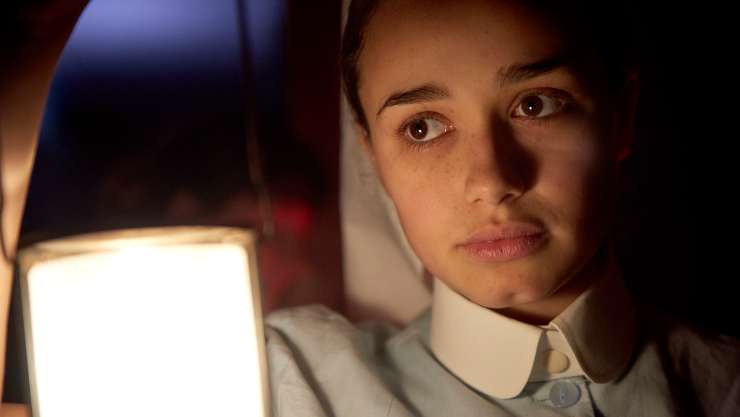
Corrina Faith’s debut feature, The Power, is a haunted hospital story with social justice overtones. Set during the real-life planned power outages in 1970s Britain, it follows a fledgling nurse called Val (Rose Williams, Changeland), on her first day at a hospital in the East London neighborhood where she grew up. But her fortune quickly turns when a vindictive supervisor assigns her to the night shift. Val soon becomes aware of a malevolent supernatural presence that may hold the key to a conspiracy within the staff to cover up abuse. It’s part classic ghost story, part intricate commentary on the myriad power dynamics at play in the healthcare system, even in a country with socialized medicine.
It’s a busy day at East London Royal Hospital, as the staff prepare to transport most of the patients to a nearby facility in anticipation of the scheduled overnight blackout. The only patients left behind are a handful of newborns and those on life support. When Val accidentally angers her new supervisor, Matron (Diveen Henry, Grow Your Own), she is sentenced to the night shift – which is especially problematic for Val because she has a fear of the dark brought on by a childhood trauma. Nevertheless, Val knows this is her one chance to prove her worth, so she stiffens her upper lip, pulls her skirt 3 inches below her knees, straightens her head piece, and prepares for a long night in a definitely haunted hospital. This dilapidated behemoth boasts pitch-black corners, creepy murals, and a utility closet that just won’t stay shut. As the night wears on, Val becomes increasingly certain that everyone is in danger, whilst her incredulous and condescending colleagues take her warnings as a sign of her mental deterioration…
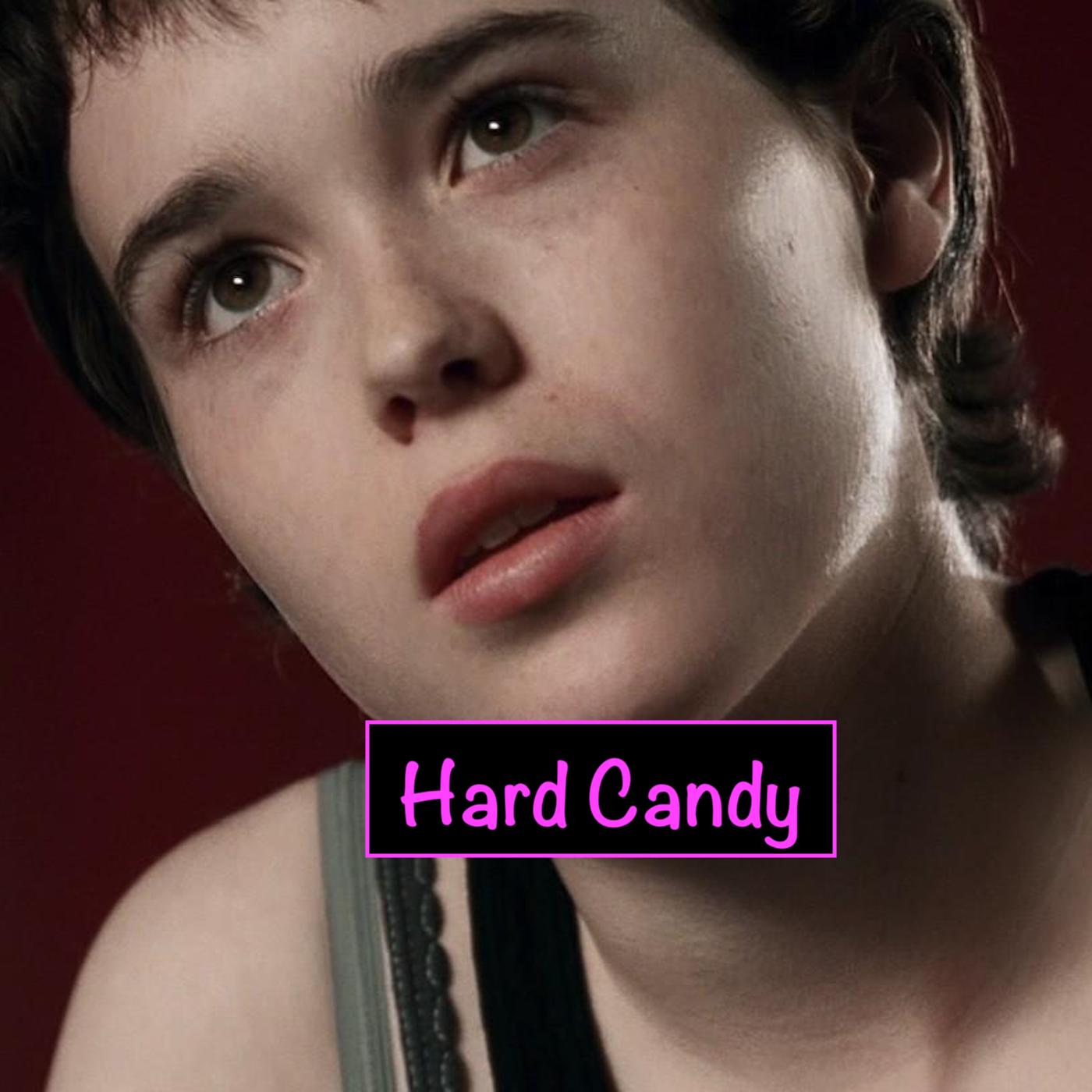
On today’s episode, we’re cutting our teeth on David Slade’s 2005 directorial debut, Hard Candy, starring Elliot Page in their breakthrough role. We discuss Elliot’s electric performance and the perplexing ways in which critics received this film at the time. (Looking at you, Roger Ebert!) We also learn about what castration really does to an erection and briefly touch on some famous predators and how their crimes have done little to effect their careers.
We keep it light on the Lunchtime Poll, revealing our early screen names and shouting out some cool people we met on the internet.
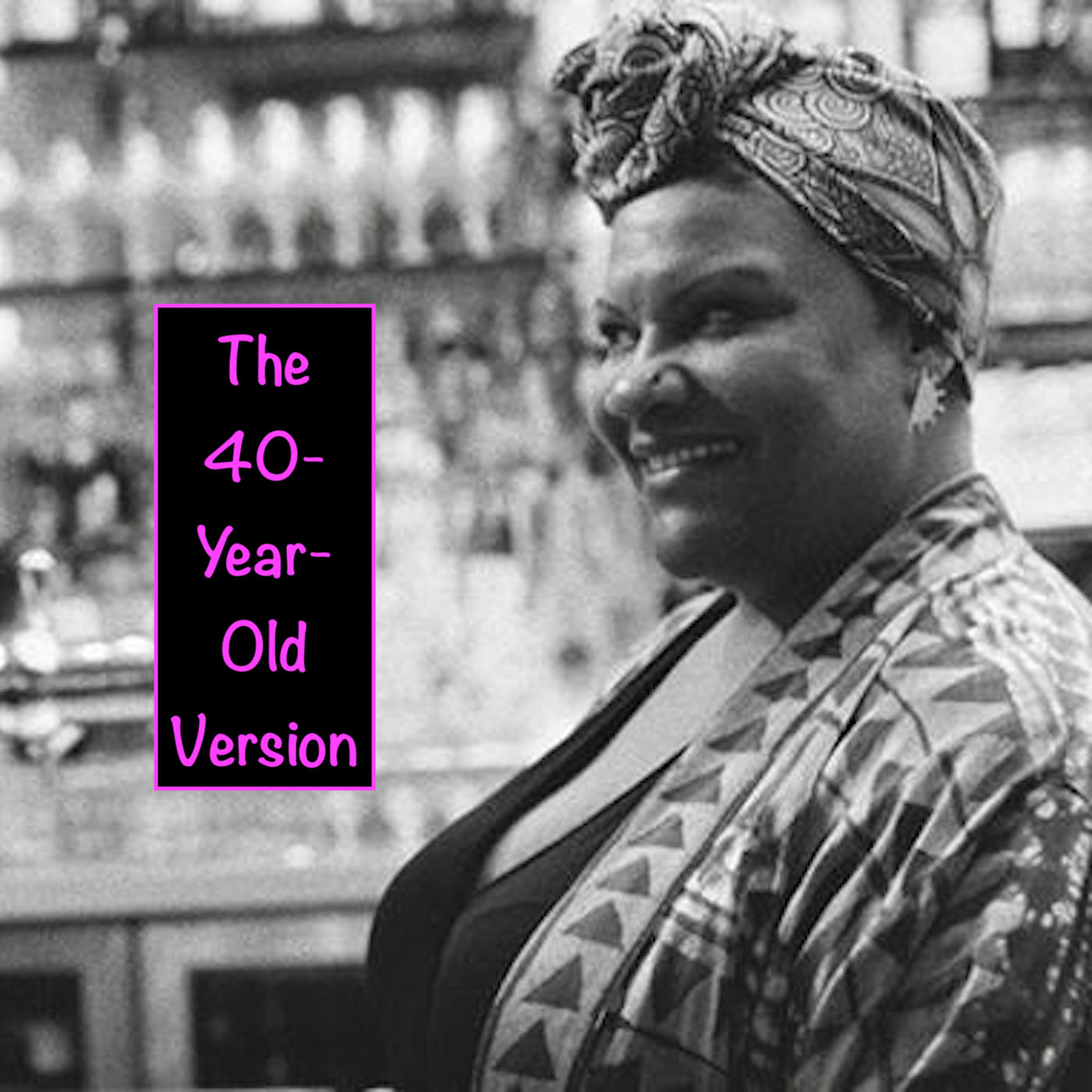
On today’s episode, we’re losing it over Radha Blank’s 2020 semi-autobiographical comedy, The 40-Year-Old Version, written, directed by, and starring Radha Blank. This film fills so many cinematic voids for us, and we love the way it pays tribute to the male auteurs who influenced Blank, whilst simultaneously subverting their genre. It’s all about reclaiming artistic spaces for women of color and of a certain age and we’re here for all of it. FYOV!
On the Lunchtime Poll, we reveal our hypothetical hip hop names, and the history of the “My name is ______ and I’m here to say” cliche.
The second half of Series 5 kicks off with Peter Jackson’s 1994 crime drama, Heavenly Creatures, which introduced two phenomenal actors at once: Kate Winslet and Melanie Lynskey. It’s based on the true story of two mid-century teenagers in New Zealand (Pauline Parker and Juliet Hulme) who, lost in their own an imaginary world, enact a murderous plot to stay together against their parents’ wishes.
It’s a very special episode-long Keggers with Kids segment, as we’re joined by 14-year-old Logan G, who shares their masterful powers of perception with us on the nature of the girls’ friendship and who is really “to blame” in this terrible case that rocked a nation.
On the Lunchtime Poll, we talk about Honora almost skipping dessert before she’s “moidered”, and we share what we hope we would have done if we had no tomorrow.
There’s a reason that Hollywood movies about the U.S. military can feel like propaganda. It’s because the Department of Defense routinely works with filmmakers to control how they’re depicted on screen. According to Wikipedia, “Directors looking to borrow Army material for their movies need to apply to the DoD, and submit their scripts for vetting. Ultimately, the DoD has a say in virtually every U.S.-made movie that use military resources in their production.” Talia Lugacy’s bold film, This is Not a War Story, points a middle finger at what a character in the film calls, “that ‘good war’ bullshit”.
Lugacy writes, directs, and stars in this effective verité-style drama about the insidiousness of the United States military and the myriad ways in which society fail veterans. Rosario Dawson executive produces Lugacy’s sophomore feature, which lays waste to Hollywood films like Saving Private Ryan and The Hurt Locker for glorifying war and soldiers without telling the whole story. It’s not enough that we dole out painkillers for their injuries and therapy for their PTSD. The civilians who thank vets for their service don’t stop to think what they might be thanking these people for.
Lugacy plays Isabelle, a marine with a limp and an estranged mother (Frances Fisher) to show for her service. She struggles every day with physical and mental anguish. Her brother blames her for her problems. She needs direction and empathy and she is getting none of that from her family. Fortunately, she finds a place to call home in the form of a group of artistic vets who turn their uniforms into paper and then use that paper to work through their issues. Some write poetry, some draw or paint. Some turn them into mixed media sculptures using other war souvenirs. Lugacy populates her film with real vets who each get a chance to tell their story and share their art on screen. It was produced over three years as an ongoing collaboration with the thriving community of veteran artists and papermakers.
Isabelle is immediately draw to Will (Sam Adagoke), a vet around her own age who recently lost a friend and fellow vet to suicide. Isabelle comes at Will with the intensity of Deadwood’s Calamity Jane, swearing up a storm, and wearing her big, raw heart on her sleeve. Will’s grief is more internal. He’s trying to find peace which at first prompts him to keep his distance from Isabelle. He’d been a mentor to Tim, and so he partly blames himself for his friend’s death. Will doubts his ability to help another lost soul.
Will confesses to Isabelle that he enjoys the paper-making process because it’s forgiving – if you mess up, you can always start over. It’s clear that Will doesn’t feel forgiven for much in his life. Isabelle and Will both perk up when making the paper. The tactile process is soothing to them, and being around other vets is validating, even when they’re not sharing their stories. Just knowing that they’re in a room full of people who are broken in a similar way is a kind of homecoming that they can’t experience in the rest of the world.
Exacerbated by the rejection of her dying mother, Isabelle relentlessly pursues Will’s friendship, following him from Brooklyn to a remote cabin upstate. There, they talk through their struggles, and find common ground. They hike through the woods and exorcise their demons around a campfire.
This is Not a War Story brings us the horrors of war without having to see the war itself. There are no flashback scenes. No shots of our protagonists sobbing over the bodies of their dead friends. Lugacy and Adagoke’s haunted performances convey that pain effectively enough. In a particularly crushing monologue, Will imagines confronting a well-meaning civilian about what they’re really thanking him for. Is it “for blowing up a school or a hospital?” The DoD would likely distance itself from a film that seeks to humanize the enemy or depict soldiers as pawns in the oil business. Will puts it beautifully when he says, “The American Dream is a nightmare for the rest of the world.”
The film also takes the opportunity to highlight other injustices brought on by capitalism and systematic racism. The line “poverty is the new slavery” really resonates in a time when the pandemic serves to further widen the class divide, as does Will’s observation that you would never find an army recruiter on the upper west side. Tim overdoses on a crowded subway car because no one will look at him long enough to see that he is dying.
The film’s opening follows Tim up and down the line, popping pills and napping on a bench as other passengers keep their distance. The song “Luang Prabang” by Dave Van Ronk plays like an internal monologue:
“And now the boys all envy me. I fought for Christian Democracy With nothing but air where my balls used to be Now I’m a fucking hero.
In Luang Prabang there is a spot Where the corpses of your brothers rot And every corpse is a patriot And every corpse is a hero.”
The film’s title could not be more apt. A war story glorifies battle and makes the protagonist a hero. But these soldiers don’t feel like heroes. They feel broken, cheated, used, and forgotten. What good is being a hero when you’re dead or wish you were? A war story paints a picture of bad guys vs. good guys. It’s a fabrication. This is not a war story because it tells the truth. Fuck that “good war” bullshit.
Brea Grant (A Ghost Story) wrote and stars in Lucky, a horror allegory that breeds Kafka-esque mystery with the home invasion genre. Natasha Kermani (Imitation Girl) directs this gripping polemic, which somehow manages to be simultaneously overt and enigmatic. It is certainly an indictment of the way society normalizes violence against women and routinely puts the onus on the victim. It’s for sure a delightful skewering of the fecklessness of the police department. I want to believe that it’s also a scathing takedown of white feminism. But if it turns out that we’re meant to wholeheartedly sympathize with the boot-straps touting self-help author/protagonist, that would mean that Lucky suffers from a bit of a perspective problem. Sadly, it’s that lack of clarity that keeps Lucky from being a home run. Instead, it’s just a pretty good hit.
The film opens on May (Grant) meeting with her agent (Leith M. Burke) about the failing sales of her book, “Go It Alone.” His voice falls on her muffled ears. She’s distracted and the news isn’t exactly good. In the parking garage, May notices that one of her fingernails is split and bloody. At home, she discovers a broken plate and shows her blasé husband, Ted (Dhruv Uday Singh), a comically large shard of glass that she found on the coffee table. He remains unmoved when May rouses him in the middle of the night to tell him there’s a masked man with a knife lurking in their backyard. Ted condescendingly responds that it’s only the man who comes every night and tries to kill them (more her than him, if he’s honest). They merely have to fight for their lives now. It’s not a big deal. Ted bludgeons the man with a golf club. The man bleeds out on their floor. May calls the cops, but Ted questions the point (fair). The body is already gone, just like it always is. The cops take some notes and tell May she’s lucky to have survived, BYEEEEEE. This is the most realistic thing that happens in the film…
Director Carlos Boellinger calls Clay’s Redemption is an “unapologetic midnight movie”. Indeed, it would be fun to end a late night with this neon-drenched action noir fantasy. Shot in the darkest corners of London, Boellinger’s debut feature evokes Blade Runner, The Matrix, and Cinemax’s American Gods with its lively tale of a Sleeve Walker (a sort of body-hopper) called Clay who helps a group of god-like immortals defeat a power-hungry demon. In exchange, he will earn his freedom and be settle into his final form.
Boellinger wrote the dialogue-light script with Ivo Alexander. A couple of paragraphs on a black screen set the scene for the story. There are 9 living gods who are fighting amongst themselves for the all the power, Highlander-style. Meanwhile, a demon hunts them to steal their power for its own. Sleeve Walkers are convicts forced into indentured servitude, swapping bodies whenever their old ones wear out. When the story kicks off, we meet Clay (Akie Kotabe, TVs The Man in the High Castle), strolling around town in his latest body rental. A couple of stylish immortals hire him for one last job. If he can manage to transport an important woman to safety, he can earn his freedom in a body to call his own. Of course, the enemies are powerful and lurk around every corner, and everyone wants to get their hands on the mysteriously mute Maya (played by UK musician, Nuuxs).
The best thing this film has going for it is the cinematography, also done by Boellinger. Clay’s Redemption was shot guerilla style around London, using only available light. This is clearly a low-budget project, but the seams are well hidden in the visuals. Boellinger has a real eye for composition akin to Nicolas Winding Refn’s stunning, but otherwise lackluster Only God Forgives. It doesn’t hurt that every performer looks like a supermodel. Among those who consulted on the look of the film were production designer Tony Noble (Moon) and designer Charli Cohen.
The lively score, composed by London-based duo TwoTwentyTwo, keeps the viewer engaged, but the film shines during the fight sequences. Kotabe steps out of his CIA IT guy
pigeon hole, into that of formidable leading action man. All-in-all, Clay’s Redemptionisn’t an instant classic, but it’s a good showcase for the talents of many involved. If you enjoy cool fight choreography in visually arresting locales, there’s something for you here.