Metrograph Presents: It Happens To Us: Abortion In American Film (CITIZEN RUTH)

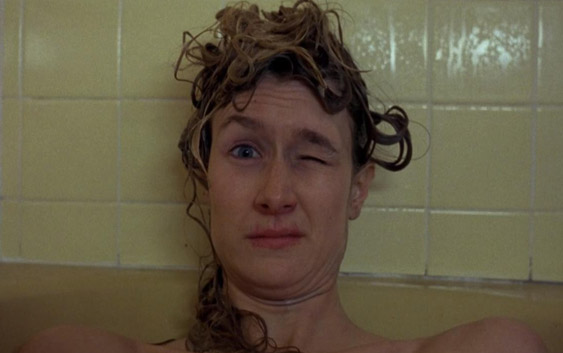
Alexander Payne’s 1996 directorial debut Citizen Ruth harkens back to a quaint time when Roe V. Wade seemed like a done deal and the public debate about whether or not a person should have agency over their own uterus was just that – a debate. Sure, there have always been plenty of folks who believe it their duty to shame pregnant people, lie to them about gestation milestones, and even literally stand between them and the abortion clinic. But back then, the law was generally on the side of the person who owned the body in question. As a forward-thinking individual, there’s not much I miss about 1996. But I do desperately miss the Me that believed abortion access was an inalienable right.

In Payne’s satirical comedy, Laura Dern plays Ruth Stoops, a chemical-huffing, unhoused young woman who finds herself at the center of the abortion debate when a judge offers to drop her drug charges if she terminates her pregnancy. Ruth has two children in state custody and two children living with her brother. When we first meet her, she’s having some very lackluster intercourse with a gross dude in exchange for a place to stay. He kicks her out the second he shoots his load of baby batter inside of her, despite their pre-coitus agreement. She is in less-than-ideal circumstances to bring another child into the world, even if she wanted to (she doesn’t). But, when a Christian fundamentalist group called the Soldiers of Christ cross her path in jail, they see Ruth as an opportunity to further their own anti-choice agenda.

Citizen Ruth is a delectable buffet of 90’s character actors, including Swoosie Kurtz, Kurtwood Smith, Alicia Witt, Mary Kay Place, and Diane Ladd. Dern as Ruth Stoops is the roast beef carving station of this entertaining spread. She’s in her comedic prime, screaming colorful profanities and emotionally swerving on a dime. In general, Dern is a criminally underrated physical comedian. Here, she hurtles her body through the scenes like a baby giraffe possessed by a strung-out Miss Piggy. Dern has said in interviews that she has never felt freer in a performance than she did playing Ruth. She sure looks like she’s having fun, and she’s a delight to watch as well. She finds the profound poetry in lines like, “Suck the shit out of my ass” and “You want to send a message? I ain’t no fuckin’ telegram, bitch!”. As the Soldiers of Christ would say, thank God for her. Without that holy acting talent, this movie would fall apart…

Read the rest on Hammer to Nail!

Film Review: The Pink Cloud


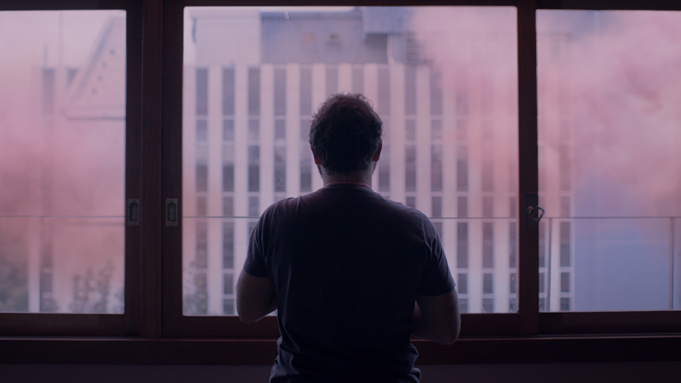
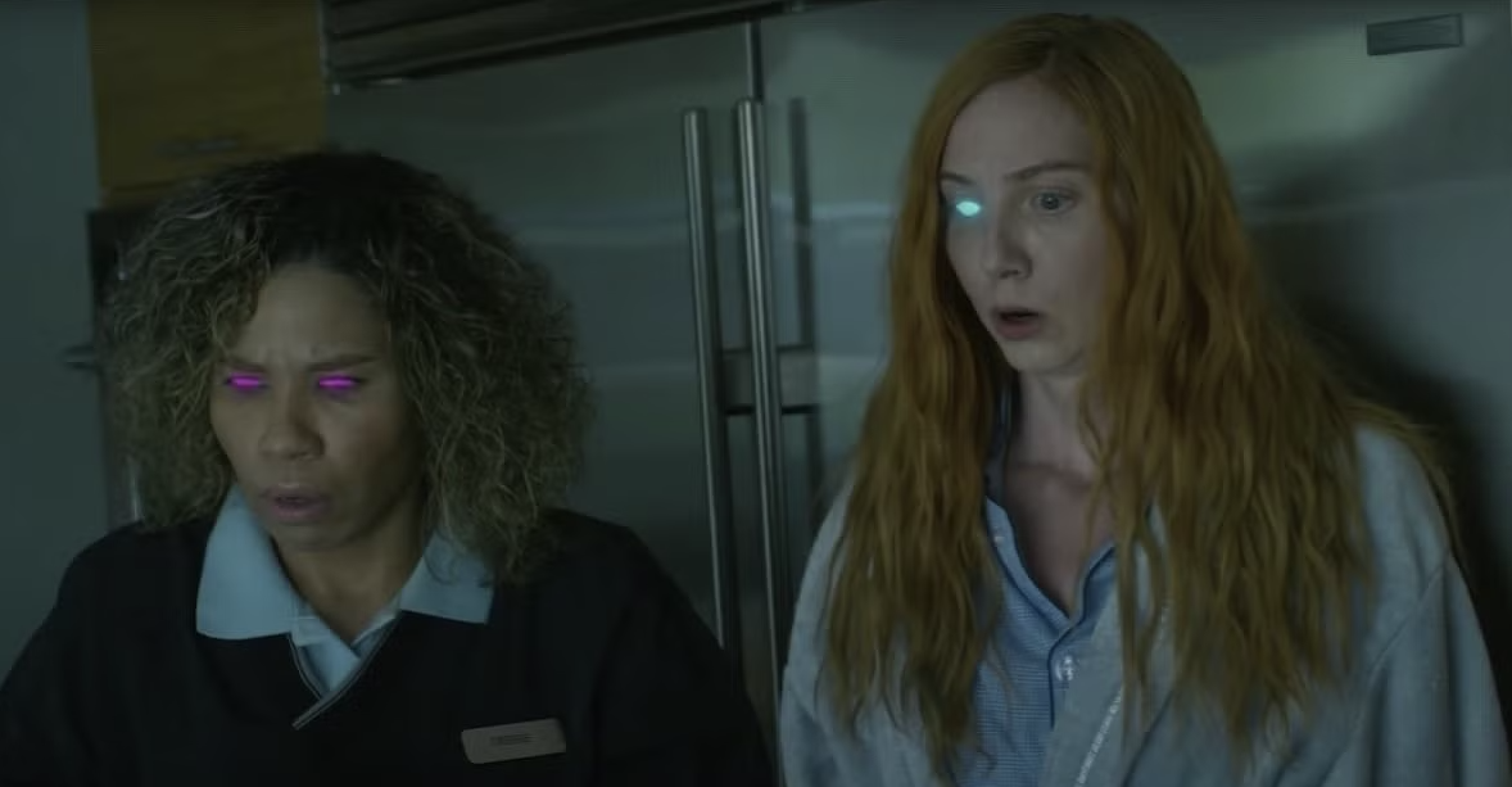
The pandemic has inspired loads of films about isolated people because isolation is where we’ve all been for a year and a half. Surprisingly, The Pink Cloud was filmed pre-COVID, but you wouldn’t know it by the way it poignantly captures the maddening nature of being stuck inside. This quiet Brazilian sci-fi feature posits: What if, when the deadly thing hit, you were immediately confined where you stood indefinitely. You’re at a slumber party with your fellow tweens and one single dad. You’re at the grocery store with strangers and your partner is at home, alone. You’re spending a leisurely morning with the person you picked up in a bar the night before, expecting them to leave soon. No walks around the block to cool off. No therapeutic trips to Trader Joe’s. These walls are now your entire world. 

That’s what happens to the protagonists of The Pink Cloud, a meditative, understated disaster film from writer/director Iuli Gerbase. In this case, the McGuffin is a toxic, pink cloud that inexplicably rolls in all across the globe and kills anyone who breaths it in within 10 seconds…

Read the rest on Hammer to Nail!

Film Review: WYRM

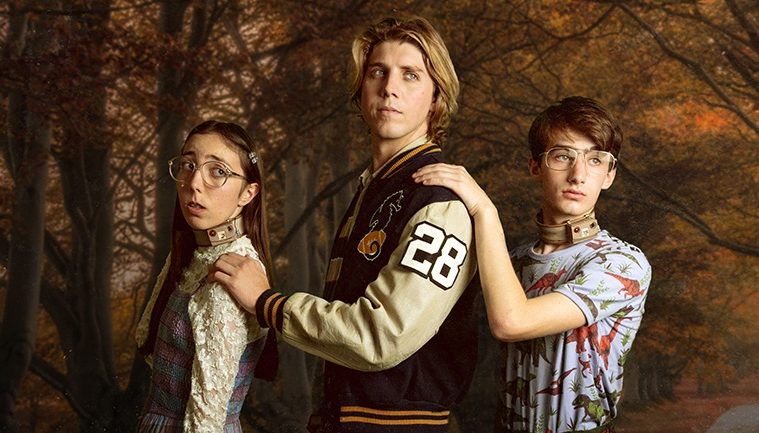
It’s difficult to impart a sense of Christopher Winterbauer’s feature debut, Wyrm without making it sound like a bit of a drag. The films’ own synopsis compares it to Yorgos Lanthimos (presumably The Lobster) and Todd Solondz, (presumably Welcome to the Dollhouse). The film also lends itself to comparisons to Napoleon Dynamite, but again, this is unfair. Winterbauer’s film, based on his 2017 short, isn’t nearly as nihilistic as Lanthimos or Solondz, and it’s much more nuanced than Jared Hess’ breakout smash. On its face, the script is about the mortifying awkwardness and quiet indignity of junior high sexuality, but underneath, it’s a poignant exploration of grief and the myriad ways it manifests. 

Wyrm (Theo Taplitz) is the unfortunately-monikered titular protagonist and his origin story is tragic. Born with a heart condition, he is the latest of bloomers, and literally the last kid in his 8th grade class to complete his Level 1 Sexuality Requirement. Until he’s kissed by a willing romantic partner, Wyrm must don a bulky, chafing collar around his neck, telegraphing his predicament to everyone he encounters. His twin sister, Myrcella (Azure Brandi), was once his closest confidant. But now that she’s “popped her collar,” she wants nothing to do with him and is even angling for her own room…

Read the rest on Hammer to Nail!

SFFILM Review: Censor

Most Americans probably don’t know that before Tipper Gore wreaked havoc on the United States music industry with her crusade against profanity in art, the UK had their own epidemic regarding the world of straight-to-video slasher films. Prano Bailey-Bond sets her directorial debut in a Thatcher-steeped 1980s Britain, when the BBFC (the British Board of Film Classification) demanded to run so-called Video Nasties through a rigorous screening process that resulted in mandatory edits and a viewer rating. Censor never namechecks the BBFC, but it’s clear that the film’s troubled protagonist, Enid (Niamh Algar), works for the organization. For her, it’s more than just a job – it’s a calling. That’s why she’s shocked when a brutal murder makes headlines for being linked to a film that she herself screened and rated. Soon, Enid is the victim of sinister phone calls and other harassment. Meanwhile, she is disturbed by a film that eerily resembles an incident from her childhood which resulted in the disappearance of her sister. Is Enid the victim of a sinister conspiracy, or is there something more internal at play? 

Read the rest at Hammer to Nail!

Film Review: The Power

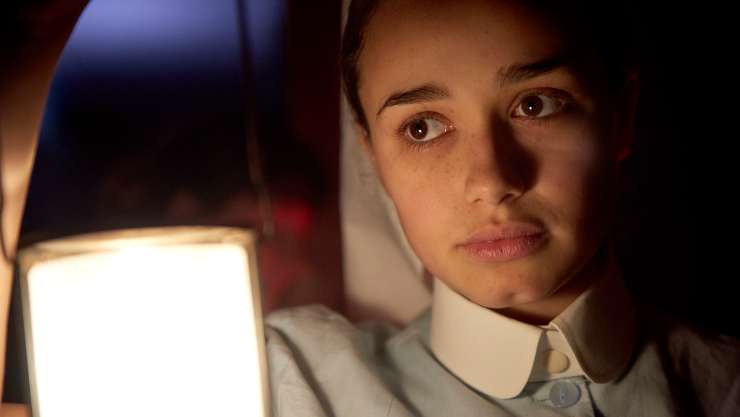
Corrina Faith’s debut feature, The Power, is a haunted hospital story with social justice overtones. Set during the real-life planned power outages in 1970s Britain, it follows a fledgling nurse called Val (Rose Williams, Changeland), on her first day at a hospital in the East London neighborhood where she grew up. But her fortune quickly turns when a vindictive supervisor assigns her to the night shift. Val soon becomes aware of a malevolent supernatural presence that may hold the key to a conspiracy within the staff to cover up abuse. It’s part classic ghost story, part intricate commentary on the myriad power dynamics at play in the healthcare system, even in a country with socialized medicine. 

It’s a busy day at East London Royal Hospital, as the staff prepare to transport most of the patients to a nearby facility in anticipation of the scheduled overnight blackout. The only patients left behind are a handful of newborns and those on life support. When Val accidentally angers her new supervisor, Matron (Diveen Henry, Grow Your Own), she is sentenced to the night shift – which is especially problematic for Val because she has a fear of the dark brought on by a childhood trauma. Nevertheless, Val knows this is her one chance to prove her worth, so she stiffens her upper lip, pulls her skirt 3 inches below her knees, straightens her head piece, and prepares for a long night in a definitely haunted hospital. This dilapidated behemoth boasts pitch-black corners, creepy murals, and a utility closet that just won’t stay shut. As the night wears on, Val becomes increasingly certain that everyone is in danger, whilst her incredulous and condescending colleagues take her warnings as a sign of her mental deterioration…

Read the rest at Hammer to Nail!

Film Review: Lucky (2020)

Brea Grant (A Ghost Story) wrote and stars in Lucky, a horror allegory that breeds Kafka-esque mystery with the home invasion genre. Natasha Kermani (Imitation Girl) directs this gripping polemic, which somehow manages to be simultaneously overt and enigmatic. It is certainly an indictment of the way society normalizes violence against women and routinely puts the onus on the victim. It’s for sure a delightful skewering of the fecklessness of the police department. I want to believe that it’s also a scathing takedown of white feminism. But if it turns out that we’re meant to wholeheartedly sympathize with the boot-straps touting self-help author/protagonist, that would mean that Lucky suffers from a bit of a perspective problem. Sadly, it’s that lack of clarity that keeps Lucky from being a home run. Instead, it’s just a pretty good hit. 

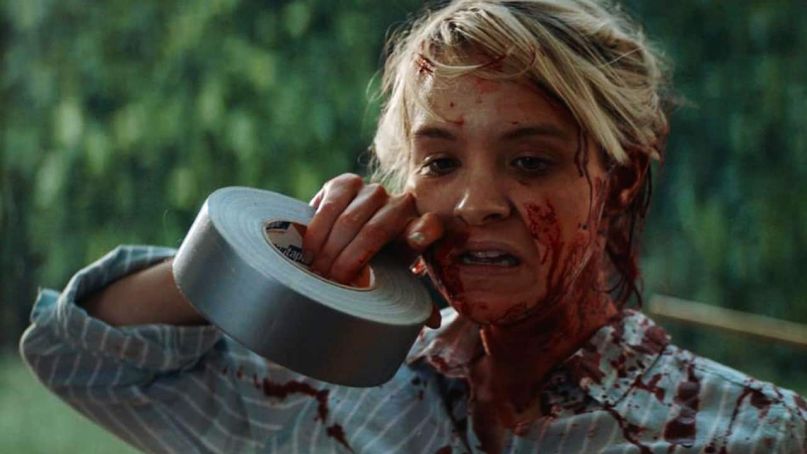
The film opens on May (Grant) meeting with her agent (Leith M. Burke) about the failing sales of her book, “Go It Alone.” His voice falls on her muffled ears. She’s distracted and the news isn’t exactly good. In the parking garage, May notices that one of her fingernails is split and bloody. At home, she discovers a broken plate and shows her blasé husband, Ted (Dhruv Uday Singh), a comically large shard of glass that she found on the coffee table. He remains unmoved when May rouses him in the middle of the night to tell him there’s a masked man with a knife lurking in their backyard. Ted condescendingly responds that it’s only the man who comes every night and tries to kill them (more her than him, if he’s honest). They merely have to fight for their lives now. It’s not a big deal. Ted bludgeons the man with a golf club. The man bleeds out on their floor. May calls the cops, but Ted questions the point (fair). The body is already gone, just like it always is. The cops take some notes and tell May she’s lucky to have survived, BYEEEEEE. This is the most realistic thing that happens in the film…

Read the rest at Hammer to Nail!

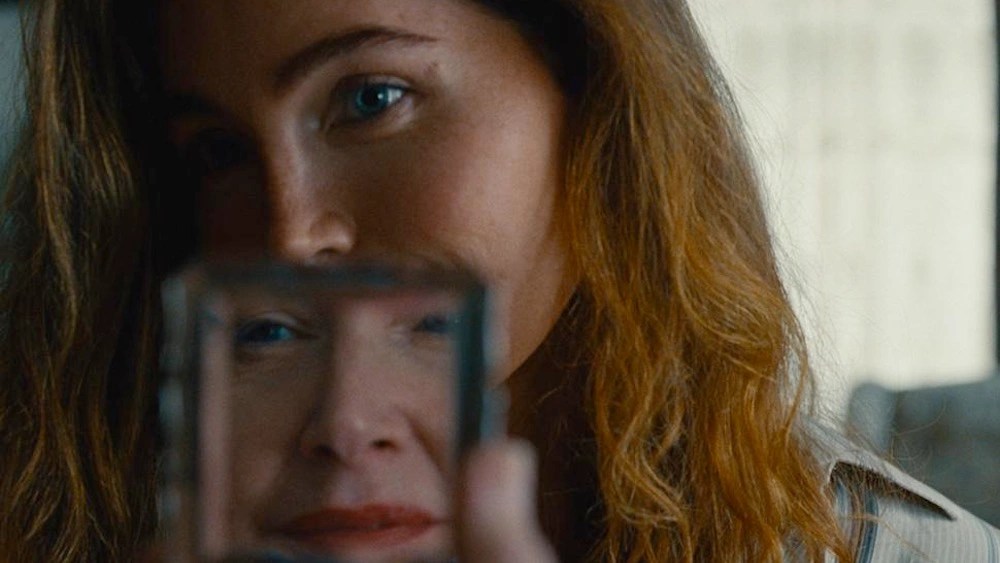
Film Review: Promising Young Woman

I can’t stop thinking about Batman. The protagonist/anti-hero of Emerald Fennell’s divisive debut feature, Promising Young Woman, has so much in common with Gotham’s most famous resident. Cassie Thomas (Carey Mulligan, An Education, Drive) is haunted by the loss of a loved one. Her anger regarding the violence of that loss consumes her to the point that her entire life revolves around taking elaborate, non-lethal retaliation against the portion of the population she deems responsible (mostly CIS, straight, white dudes). As such, her life has stalled. She is incapable of getting close to anyone. She leads a double life. By day she works at her friend’s coffee shop and dresses in youthful pastel florals. She pretends to be OK. But after dark, she dons her costume: rumpled black and white business suits and carefully smeared YouTube tutorial makeup. She hunts the bad guys with an elaborate ruse and then teaches them a harsh lesson.

Cassie has a pretty good system going, too. She feigns blackout drunkenness in order to capture the attention of “nice” guys who want to make sure she “gets home safe.” They inevitably bring her back to their place and wait for her to “pass out.” Once they’re holding the smoking underpants, she breaks character and launches into a lecture on consent. In the morning, she records her encounters in a color-coded journal wrapped in a scrunchie. Though she never explains the key, there are clues to cracking it. Some names are black, some are blue, and some are red. It has something to do with how they respond to her ruse. We never see a red encounter, but there’s no way she’s come out unscathed every time. There are so many names. Page after page of tally marks. Lest we forget the incident that led us here…

Read the rest at Hammer to Nail!

Film Review: Happiest Season

Talented multi-hyphenate Clea DuVall (The Intervention) has achieved nothing short of a miracle with her sophomore feature, Happiest Season. She has made me love a Christmas movie. If you know me, you understand just how grand a feat this is. I have literally said “Bah, Humbug” out loud on more than one occasion. I’m not a full-on Grinch, mind you. Because I have kids, I’ve had to find things to love about the holidays. But you’ll never catch me watching a Hallmark holiday movie marathon. I think A Christmas Story and It’s A Wonderful Life are outdated and overrated. I’d rather roast my own chestnuts than watch Love, Actually or A Christmas Prince. On the other hand, if you told me someone was playing a marathon of Clea DuVall’s queer holiday rom-com, Happiest Season, I would be there with bells on.

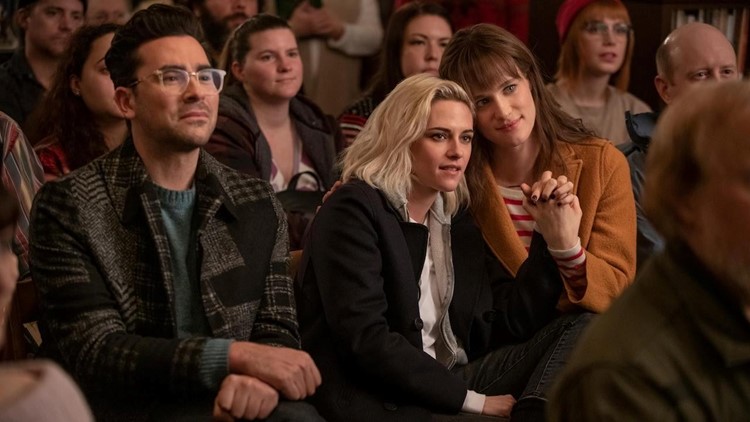
Happiest Season follows Abby (Kristen Stewart, Personal Shopper) and Harper (Mackenzie Davis, Tully), a fun, co-habitating couple who are nevertheless fresh enough in their relationship that they have unspoken plans to spend the looming holidays apart. Abby’s parents died when she was 19 and she’s pretty much ignored Christmas ever since. Harper’s parents live in an idyllic town 50 miles outside Pittsburg where her conservative family celebrates the holidays in a major way. In the heat of a romantic moment, Harper invites Abby to come home with her, only to backpedal the next morning. But Abby remains so moved by the invitation that she insists on following through…

Read the rest at Hammer to Nail!

Film Review: A Place Among the Dead

Fans of TV’s Buffy the Vampire Slayer will forever remember Juliette Landau as Drusilla, the willowy, unhinged cockney vampire who named the stars and played rough with her dollies. The thing about playing a vampire on screen is that, after a few decades, the performer is no longer able to reprise that role convincingly. No amount of Hollywood self-care truly stops the aging process (Paul Rudd, notwithstanding). But Landau comes as close as she can to revisiting Drusilla in her writing/directing debut, A Place Among the Dead. Landau plays Jules, a fictionalized version of herself, who becomes immersed in investigating a string of murders which may or may not have been committed by a vampire. Landau (and, thus, Jules) uses her Hollywood connections to collect testimonials from vampire-adjacent celebrities. These interviews punctuate the true crime documentary she’s crafting about the killer. A Place Among the Dead is an ultra-meta exploration on the ways in which pop culture glamorizes death and destruction whilst trading youth and beauty as currency. The daughter of actors Martin Landau and Barbara Bain, Landau seasons the brew with a dash of Old Hollywood pathos…

Read the rest at Hammer to Nail!

Film Review: The Mothman Legacy

Fans of Cryptozoology will find much to enjoy about Seth Breedlove’s latest documentary film, The Mothman Legacy. This film marks his second dive into the pervasive Mothman myth (Mothmyth? Mythman?). The first was 2017’s The Mothman of Point Pleasant, which focused on the accounts of a group of children on one fateful bus trip. Breedlove returns to the West Virginia town which remains the epicenter of Mothman sightings and mythology, and is also home to the world’s premiere museum on the subject. Breedlove interviews “eyewitnesses”, and the family behind the museum who have their own chilling encounter stories.

There are indeed many similarities between accounts, including height (it’s always said to be at least 6 feet tall), vast wingspan (between 10 and 20 feet), and glowing red eyes. It always leaves by shooting straight up into the air at a high speed. More troubling, every person who reports an encounter, also tells of a personal tragedy occurring weeks, or sometimes just days later. Is the Mothman a harbinger of doom, like the Banshee of Celtic lore? As one of the interviewees wisely states, “An absence of evidence doesn’t necessarily indicate evidence of absence.”…

Read the rest at Hammer to Nail!