SXSW Review: Sunset Strip

2012 SXSW FILM FESTIVAL SELECTION!
Unrated
94 minutes

****

You might not think Sharon Stone had much in common with Kelly Osbourne, Lemmy and Paris Hilton (other than relative fame). But you’d be wrong. The thing they have in common is the Sunset Strip, the road that stretches a mile and a half through West Hollywood and has been making history for over 100 years. Every inch of it has a story. As Mickey Rourke puts it, “Your dreams will start there and they will end there.” Hans Fjellestad’s documentary, “Sunset Strip,” is a thorough history of this street of dreams and nightmares, beginning with its origins as a trade route, up to present day where ambassadors from each era converge. The film shows you a fascinating, glamorous, decadent and tragic place, filled to the brim with amazing tales. If you have even a passing interest in movies or music, you will be absolutely riveted for the full 90 minutes.

The Sunset Strip has been a perfect microcosm of Hollywood since actors first pulled up a stool at Schwab’s Drug Store whilst “waiting for the gravy train.” So many legends walked those streets that it’s practically hallowed ground. Marilyn Monroe met Joe Dimaggio in the same airspace that Lemmy currently occupies at the Rainbow. Rock and Roll was born at the Whiskey A Go Go with Johnny Rivers. Later, the Who, Led Zeppelin and the Doors rocked that same tiny stage. River Phoenix spent his last night in the same building in which the Pussycat Dolls later revived burlesque. Comedy Gods were born at the Comedy Store, where Robin Williams, Andrew Dice Clay and Sam Kinison shared bowls full of cocaine snorted through $1,000 bills before going on. Buffalo Springfield wrote “For What It’s Worth” about the same protest, which also saw Peter Fonda arrested. I could go on, but it’s really more fun to see it for yourself.

Fjellestad employs a very casual interview style, piecing together the chronicle of the Strip through musings from the people who were there. Actors, comedians, musicians and business owners from every generation get a chance tell their part of it. The story flows naturally through the decades, packing each part with entertaining vignettes as well as a nice overview of what was going on then and how it reflected or reacted to what was going on in the rest of the country. It’s as if grandpa managed to sneak a history lesson into his awesome anecdotes.

Not every interview subject is equally enthralling. A too-serious Billy Corgan seems like he’s there only to promote his new music. The film opens with Fergie belting out “Barracuda” live on stage, like a stripper channeling Ann Wilson while Slash diddles around in background. It’s a decent enough performance, but it doesn’t feel like it has much to do with anything other than to prove that Fergie actually knows how to sing. But these moments are few and far between. Most of the interviewees are so compelling that it becomes immediately apparent why they got famous in the first place. They belong to the Strip and the Strip belongs to them. The rest of us are just visiting.

Originally posted on FilmThreat.com (now defunct).

SXSW Review: Lovely Molly

2012 SXSW FILM FESTIVAL SELECTION!
Unrated
95 minutes

**

What is it with demons and video cameras, anyway? The found footage horror movie is seriously overdone. Can we please stop? It’s not even that scary anymore.

To be fair, the director of “Lovely Molly” (Eduardo Sanchez) is the guy who started it all when he brought us “The Blair Witch Project” way back in 1999. In his latest film, he mixes home movies with video footage shot by videographers (both seen and unseen) as well as traditional narrative filming. The result feels like a “Greatest Hits” of camcorder horror. And some of those hits aren’t even all that great.

The film opens on Molly (Gretchen Lodge) not looking so lovely. She cries into the camera about the terrible things she’s done against her will. She holds a knife to her own throat, but claims that an unseen force won’t let her end her suffering.

The opening credits play over happier times: a video of Molly and her husband, Tim, on their wedding day. It’s not just the supernatural that loves video documentation. I don’t know if demons are drawn to camera happy people or if possession brings it out of them, but folks in these movies constantly film their lives. You can bet that, during an intense moment, someone is going to tell Molly to “stop fucking filming.” Between her own camera and some security footage from her work as a custodian in a mall, there’s barely a moment Molly isn’t on camera.

Despite all the terrible memories it conjures up, Molly and Tim are forced to live in Molly’s childhood home, a creaky old thing in the middle of nowhere that is absolutely riddled with terrible rooms. There is a haunted bedroom with a dark closet, a dank basement, a tiny attic, a shed with an ominous green chair and a spooky horse shrine in a crawl space. Because Molly and Tim keep the place sparsely decorated it looks more like a museum to Molly’s abusive past than a newlywed couple’s love nest.

Screenwriters Sanchez and Jamie Nash try to keep the audience guessing about whether an evil entity is actually stalking Molly, or if she’s merely a victim of drug abuse and mental instability caused by childhood trauma. But they tip their own hand several times with some pretty standard supernatural shenanigans. The plot that unfolds is essentially a possession paint-by-numbers.

When their alarm goes off in the middle of the night, Molly and Tim call the cops. Naturally, despite the fact that the couple definitely heard something banging around downstairs, the officer on the scene sees no sign of forced entry. He’s equally useless every time Molly calls him back to investigate the escalating bumps in the night. This guy obviously aced “Cliché Explanation 101” at the Academy because he blames both “the wind” and “some neighbor kids” on what’s been happening before leaving Molly to her own devices.

The writers do their best to address the typical plot holes about why people don’t just move the fuck out when they suspect that they may have supernatural roommates. They’re too poor for Tim to quit his job as a truck driver, which keeps him on the road. She can’t see a doctor about her blacking-out-and-waking-up-naked problem because they can’t afford health insurance. She refuses to stay with her sister because she doesn’t want to impose. It never occurs to them to sell the place or try to rent it out. Besides, it’s only a little ghost rape. I’m sure it won’t get any worse.

For a while, the plot is just one long list of excuses in between inaudible whispering, lights popping on by themselves, disembodied crying and the occasional sexual harassment of a priest. Eventually, blood starts to flow as Molly’s Equine Ghost Dad brings her deeper and deeper into the abyss. Terrible things happen for no other reason than to be shocking. I have to give Lodge credit for her performance, which is an absolutely balls-out one. I just wish she had been given something a little more worthy of her talent.

Originally posted on FilmThreat.com (now defunct).

Hotter With a Beard: Malcolm-Jamal Warner Edition

I’m currently in the middle of the second season of “Community”. I know the world already knew how awesome this show was, but I’m just now finding out. So that’s why I’m also just finding out about the hotness that has overtaken Theo Huxtable. He reached teen idol status on “The Cosby Show”, but I hadn’t yet discovered boys when I watched that show so I didn’t really get it. When I became aware of him post-puberty, he looked like this:

Facial hair, yes. But also a tragedy atop his head. And that was what he looked like in my brain until last night when he popped up on “Community” to play Shirley’s husband. I recognized him instantly (the sweater helped), but I also saw him in a whole new light. The hotness light. It’s like a real-life movie makeover. You knew he was hot the whole time, but you needed the haircut to really see it. The internet has already done a side-by-side comparison for me.

Amazing! I really hope it works out between him and Shirley because that’s a face I wouldn’t mind seeing more of. (No spoilers, please!) How about we see more right now.


Hiiiiiiiiiii!


Aaauuuggghhhhhh…

Film Threat Review: Tim & Eric’s Billion Dollar Movie

2012
Rated R
93 minutes

****

If I taught a film studies class, I would show “Tim and Eric’s Billion Dollar Movie” on the first day. This is a film that is worthy of study (inasmuch as any other film is, of course). Other than an identical cast, it has very little to do with the TV show that launched the careers of Eric Wareheim and Tim Heidecker. Instead, they embarked on a mission to reclaim the Genre Parody Film, a concept that was tarnished by endless “Scary Movie” sequels and their hideous offspring (“Date Movie”, et al). They took the concept, pioneered by such classics as “Airplane” and “Young Frankenstein,” and added a cerebral element akin to more sophisticated industry satires like “State and Main” and “The Player.”

The question is: Who will see this movie? Obviously pre-existing fans of “Tim and Eric Awesome Show, Great Job” will. There may also be a few unsuspecting Will Farrell fans in the audience who will have their minds either scarred for life or completely blown. I hope that’s not all. There’s a very real possibility that you’ll think “Tim and Eric’s Billion Dollar Movie” is the worst thing you’ve ever watched and you’ll never trust my endorsements again. On the other hand, if you happen to see the film and like it, chances are you’re someone I would want to have a beer with.

Tim and Eric set the tone for their “Billion Dollar Movie” by having an announcer named Chef Goldblum (an ingeniously cast Jeff Goldblum) orient you with the Shlaaaang Superseat for the Ultimate Film Watching Seating Experience. Like many of Tim and Eric’s fake products, it’s a device that attaches to you in several invasive ways and likely does more harm than good. Obviously, there’s no Superseat, but the commercial is effective in bringing you into the Tim and Eric world. If you thought it was a good idea to eat mushrooms before the movie, it’s at this point that you will begin to regret it.

In the mildly Meta plot, Tim and Eric receive a billion dollars from the Schlaaang Corporation to make “Diamond Jim,” a film about a Euro man-about-town. But they foolishly squander the money on real diamond props and a phony Johnny Depp (Ronnie Rodriguez). Their investors are an evil multinational corporation headed by a chilling Robert Loggia, and they are justifiably furious at the results. They want their money back… or else. Serendipitously, Tim and Eric catch a television spot, which sort of promises the sum of their debt in exchange for running a dilapidated mall.

Before they can go out for the job, they must de-douche themselves and become “real businessmen”. Never missing an opportunity to bare their doughy white torsos, the makeover montage involves a sensuous sponge bath to remove their fake tans. This is just the tip of the iceberg, so to speak, in terms of boundary pushing. If you thought they got a little gross on “Awesome Show,” your gross-out bar is about to get a lot higher.

They take their new personae as the heads of Dobis P.R. (a company that is literally inspired by what they see in the stars) and head to the Swallow Valley Mall and Pizza Court, a post-apocalyptic colony of ill-conceived shop owners and wild animals. Will Ferrell effortlessly owns his scenes as the man who hires Tim and Eric under the false promise of a billion dollars in compensation. John C. Reilly brings his weirdo aptitude to the table as Taquito, the terminally ill man-child who was raised by wolves and now lives in the mall fending them off.

Tim and Eric aren’t the first guys to push the cinematic envelope. Eccentric actor Crispin Glover spent years and a lot of his own money to make a series of Hollywood-divergent films. He then toured them around the country, showing them to fans, unsuspecting and otherwise. He also brought along a soapbox on which to rant about the myth of independent film and the lamentable lack of truly counterculture cinema. He argued that David Lynch never would have been able to make “Blue Velvet” today, at least not with the blessing of any studio. I appreciated the message, but his films felt messy and pretentious. It was hard to side with him when I didn’t enjoy the movies he was complaining about having trouble making.

Tim and Eric have proven Glover wrong. “Billion Dollar Movie” isn’t a mainstream film, but it definitely has a much better shot at infiltrating the mainstream audience with its beyond-the-pale ideas. Underneath their experimental humor lies a sharp commentary about the film industry and society’s deluded love affair with the entrepreneurial spirit. Say what you will about these guys, but they will never condescend to their audience. Instead, they take each film cliché and turn it on its ear. A dramatic drowning incident is comically extended as Jim Joe, their distraught Personal Guru (Zach Galifianakis) keeps falling into their shallow indoor pool. A partying-to-excess montage escalates with outrageous one-upmanship until Tim is literally getting his “fucking arm cut off” and Eric is putting “a bunch of shit up [his] holes.”

Heidecker and Wareheim’s biting satire is all wrapped in a pleasing package of great character actors like Ray Wise, in-their-element comedians like Will Forte, the usual collection of oddball non-actors and numerous quotable lines. If you take nothing else from the film, I can at least guarantee you the Poop Joke to End All Poop Jokes, inter-cut with a disgustingly inspired love scene.

Also notable is the film’s running time at 93 minutes. Unlike a lot of other billion dollar movies these days, Tim and Eric’s film is exactly as long as it needs to be. The story is well paced throughout. When they spend too long in a scene, it’s only for comedic effect. This is a very carefully orchestrated film. There were several times when I felt like I could have been standing in an art gallery, looking at an installation. If you find that theory preposterous, bare in mind that the Louvre is rife with boners.

Originally posted on FilmThreat.com.

Film Threat Review: The Muppets

2011
Rated PG
98 minutes

***

I can’t stress enough how badly I wanted to love “The Muppets.” Like many, I grew up watching “Sesame Street” and “The Muppet Show.” Over the years, I only found more reasons to love pretty much everything that came out of the astoundingly imaginative Jim Henson Studios. It seemed impossible not to. There was a Muppet for every personality. The positive messages of friendship, cooperation and determination were uplifting, without being saccharine. Disney bought Jim Henson Studios in 2004 and they are now attempting to reboot the franchise with “The Muppets.” This film, which marks the first time these characters have been on movie screens together in twelve years, poses the question, “Does the world still need the Muppets?” The answer is, “Yes… but not like this.”

James Bobin (“Flight of the Conchords,” “Da Ali G Show”) directs the reverent script by Jason Segel and Nicholas Stoller. Essentially a big-budget fan film (which Segel wrote himself into), it uses a new puppet, named Walter (Peter Linz), to introduce the Muppets to a new generation and to reminisce about them with the old one.

“The Muppets” is actually two movies. One, as you might have guessed, follows the Muppets as they put on one last show in order to save the Muppet Theatre as well as the Muppet name. The other is about a super nice, but somewhat clueless, small town boy named Gary (Segel), who is in a “poop-or-get-off-the-potty” situation with his equally chaste girlfriend of ten years (Amy Adams).

The Muppet movies always had human supporting characters but support was all they were there for. They didn’t need a story of their own because the Muppets were the draw. But if the humans must have their own subplot, the writers could at least make it interesting. After creating some very well realized characters in “Forgetting Sarah Marshall,” I’m profoundly disappointed in Segel for writing a plot that has all the depth of an Archie comic. Clueless boy is clueless. Long-suffering girl suffers because she doesn’t have a ring on that finger and is feeling neglected. Other than that, everything is peachy keen. It’s boring as hell when it’s not perpetuating gender stereotypes.

The element that connects these two stories is Walter, Gary’s felt brother from (presumably) the same mother. Gary and Walter are both Muppet Super Fans. But Walter feels a particular kinship with them. Thus, Gary invites Walter to tag along on his and Mary’s anniversary trip to Hollywood, so that Walter can make a pilgrimage to Muppet Studios and maybe find himself in the process. Meanwhile, Mary feels like the third wheel in her own relationship.

Gary and Mary’s story has very little to do with the familiar fuzzy faces that Walter, and the audience, have come to see. It’s Walter who discovers the evil plot to demolish Muppet Studios to get at the oil that flows underneath it. Walter is the one who suggests tracking down Kermit. And it is Walter who ultimately convinces Kermit to get the band back together. After they remodel the Muppet Theatre, Kermit rightly tells Walter that none of this would have happened without him. Gary and Mary barely do anything significant other than offer words of encouragement that could have come from anyone. The movie doesn’t need them, and neither does Walter.

Perhaps the filmmakers tip their hand in the form of the TV exec (Rashida Jones) that agrees to air the Muppet Telethon. Concerned that the Muppet name is no longer “market relevant,” she stipulates that they attach a star to the project. There must have been a real executive who made similar demands because there are probably more famous humans in the movie than there are Muppets. Every Muppet film has cameos, but they managed to fit the encounters neatly into the plot without feeling gimmicky. Here, they shotgun cameos like it’s Rush Week. Even in a movie called, “The Muppets,” they don’t trust the titular puppets to be the main attraction.

The music is another of the film’s many problems. With Bret McKenzie (“Flight of the Conchords”) behind them, the musical numbers should have been a high point. He manages to encapsulate contemplative Kermit with “Pictures in My Head,” and “Muppet or Man” recalls some of the best Conchords songs. However, McKenzie falls flat with the Mary and Piggy duet “Me Party,” which pegs the female leads as two-dimensional women who don’t know how to enjoy themselves without a boyfriend. While the opening number, “Life is a Happy Song,” has the catchiness of an instant classic, as an introduction to the film’s characters, it doesn’t tell us anything that we can’t glean from the poster.

The most cringe-worthy moments in the film belong to a character that is integral to the Muppet plot. An over-the-top villain can be a lot of fun. Unfortunately, as oil baron Tex Richman, Chris Cooper chews the scenery like it’s a pouch of Big League. One of his more annoying qualities is to say “maniacal laugh” in place of laughing maniacally. It was probably in the script, but because of this little character quirk, Cooper is completely upstaged by his puppet henchmen (Uncle Deadly and Bobo the Bear). Nearly every moment he is on screen is excruciating.

Particularly painful is Tex Richman’s solo number, “Let’s Talk About Me,” which makes Brian Doyle Murphy’s “Noah’s Arcade” rap in “Wayne’s World” sound like “Straight Outta Compton.” It’s embarrassing to watch in a “my dad is trying to look hip” kind of way. Chris Cooper, take note: Just because you’re in a Muppet movie does not mean you have to act like a Muppet. There’s something to be said for playing it straight in an insane world. Just ask Dabney Coleman.

But, as I said, “The Muppets” is really two movies. And one of those movies is quite good, albeit awfully similar to previous films. If you’re going to rehash a Muppet plot, it might as well be “The Muppets Take Manhattan.” Among the familiar elements: Kermit rallies the troops and goes against the odds to put on a show, whilst clumsily navigating his relationship with Miss Piggy. Fozzie tells endearingly bad jokes. Animal struggles with his violence issues. Dr. Teeth and the Electric Mayhem rock the roof off the joint. Statler and Waldorf complain about everything. The ensemble tear-jerks their way through “The Rainbow Connection.” The gang even stack themselves into a Muppet Man suit to con their way past an ironclad reception desk, for old-time’s sake. They may not be original, but these moments are a lot of fun.

On the other hand, it was always so disappointing when a TV show would pass off a clip show as a new episode by stringing them together with a flimsy through-line. Sure, they were compiling some of the best scenes of the series, but they were way better in their original context. When it was time to play the music and light the lights, I got chills. But, at the end of the day, it was just a clip show.

Originally posted on FilmThreat.com (now defunct).

Cheer Up, Sleepy Jean

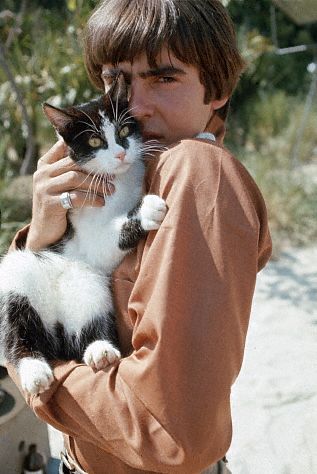
I don’t remember if I’ve ever written here about my love for the Monkees. If I have, it’s been a long time since I’ve brought it up. It’s not that I’ve forgotten about them. They are on every playlist and I’m always happy for them to pop up in my shuffle. But they had a hipster revival a couple of years ago and I felt like their relevance was well covered by more prolific people.

But now Davy Jones has died. He is the first Monkee to go. To me, that feels significant (other than the obvious, “a man is dead” significance). The Monkees are definitely the first manufactured boy band. But they are also, in many ways, an alternative to the Beatles. I’m not saying they are BETTER than the Beatles, or even as good. But to me, they are more important. If I had to choose to listen to one over the other, I would choose the Monkees. Maybe it’s because I like a little whimsy in my psychedelic 60’s pop. Maybe it’s because it’s like listening to several great artists at once. Neil Diamond and Carol King each wrote some of the group’s biggest hits. Mike Nesmith eventually convinced the Powers That Be to let him write some songs, and what he came up with was some of their best work.

Mike was the most musically inclined. Peter was the weird one. Micky was the voice and Davy was the face. They were never as good alone as they were together.

It’s not exactly a John Lennon situation. 66 is young by today’s standards, but it’s not like he was in his prime or anything. Was he even recording? He’d be the last Monkee that I’d want to hear a solo album from. This is like Ringo dying first in terms of its impact on actual production of music. Personality-wise, it’s like losing George first.

Davy is dead. That means the Monkees are also dead. Even though they’ve been gone for a while, it really feels real now. From now on, whenever I hear their music, it will be a little sadder than it was before. There will be a ghost in the song.

Hotter with a Beard: James McAvoy Edition

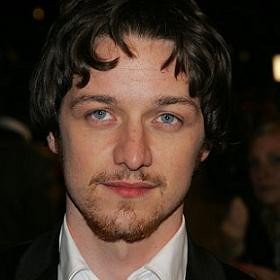
I’ve been a little busy lately. Too busy to keep up with my favorite celebrity gossip blogs. So I haven’t noticed any actors letting their follicles hang out. Fortunately, my friend Ahe has picked up the slack. Today, she drew my attention to a young Scottish gentleman by the name of James McAvoy. This guy has been running around, mostly babyfaced, since 1995. I first noticed him in “The Lion, The Witch and The Wardrobe”, when he wore a beard on his bottom half as the fawn, Mr. Tumnus.

Fawns are, by the far, the sexiest of the man/beast hybrids (whatwith their fancy-free lifestyles and perpetual boners). But despite his general Scottishness, human McAvoy did nothing for me. Even when he was pretending to be Patrick Stewart or giving it to Kiera Knightly in the library (with the candlestick) I remained unaffected. Part of it was his pathetic display of unkempt facial hair, which seemed to indicate that he could no more grow a beard than Mr. Bigglesworth or Orlando Bloom. But he was holding out on us! Observe:

This picture is from the film, “The Conspirator”.

We don’t know if he would ever elect to wear a beard in his normal, everyday life. But he should. He really should.

James McAvoy’s Beard, I salute you!

NFT Radar: A La Mode Pies

2011 was the Year of the Pie, with shops springing up all over Seattle. Our offerings were even featured on a Food Network special about the rise of the pie across the country. The people had spoken. Cake was dead. They wanted crust and fruit filling and mounds of cream. A la Mode gave competitors a big run for their money. While pie men came and went (R.I.P. Piecycle), they expanded, going from just an online retailer (with home delivery) to brick-and-mortar when they opened their café on Phinney. Now you don’t have to give 24-hours notice to enjoy their incredible desserts, which include crumbly French Apple, Mexican Chocolate Mousse, Bourbon Butterscotch and a Chocolate Caramel Pecan Tart that renders your fork useless with its gooeyness. See their website for more mind-blowing regular flavors and check with the café often for their rotating flavors. Sour Cherry was a recent gladiator in their grand pie arena. You can still order whole pies online for a very reasonable $25, but it’s a lot more fun to mix-and-match slices for the complete a la Mode experience. Don’t forget a quart of Bluebird ice cream from their freezer to fulfill your pie destiny.


Source.

My Seattle

One of the best things about my job at NFT is that people ask me for advice on where to go. If you’re curious about what I usually recommend, I’ve updated my Custom Map with some of my new favorite places, as well as the timeless classics. (Anyone can create an account and do this, BTW.)

See my list and map here.

NFT Feature: Road Dog’s Brewery Tour


Where we’re going, we need roads.

Seattle recently came in at number 19 on the Drunkest American Cities scale. Frankly, I’m surprised we didn’t rank higher. Maybe it’s just the crowd I run with, but I seem to know a lot of people who are pretty serious about their booze and consume it rather steadily. I’m not the champion I once was, but I can still put away a few microbrews. Luckily for me (and you!), Seattle is home to twenty-odd breweries and most of them are more than willing to let you freely sample their wares, so long as you visit them as part of the Road Dog’s Brewery Tour…

Read the rest at Not For Tourists.

  • Calendar

    • March 2026
      M T W T F S S
       1
      2345678
      9101112131415
      16171819202122
      23242526272829
      3031  
  • Search