Film Review: Revenge

1revenge-1

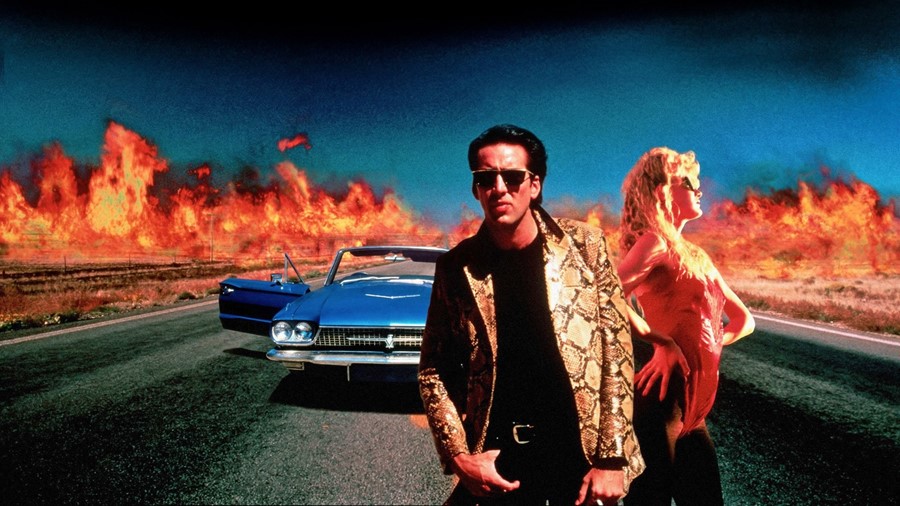
Rape revenge movies are practically a subgenre of horror, and they are (like most movies) typically directed by men. Not that men are incapable of making great films about women. But maybe it shouldn’t be just men telling stories about one of the most traumatic experiences a woman can have. Especially since society can’t even agree on the definition of “rape.”

French writer/director Coralie Fargeat is an insanely talented up-and-comer. She’s clearly capable of crafting a cinematic masterpiece and comes pretty close to achieving perfection with her debut film: the rape vengeance genre up-ender, Revenge. Fargeat has studied her predecessors and pinpointed all of their missteps. Films like I Spit On Your Grave and Last House on the Left spent way too much time on the violation part of the story…

Read the rest at Hammer to Nail!

Film Review: Her Composition

1comp

Her Composition is a feminist film that was made on the cusp of an ideological revolution. Though it was just released on V.O.D. in 2018, it was made in 2015. Back then, time wasn’t yet up. Films about the emotional Odysseys of women were all told by white men and didn’t pass the Bechdel test. That’s not to say Stephan Littger’s debut is a bad film. It’s actually quite lovely and ambitious. But it also feels a bit like a feminist time capsule.

Captivating up-and-coming actress Joslyn Jensen plays Malorie, a music PhD student who loses her scholarship to a man because her thesis piece doesn’t come from the heart. Desperate for money and inspiration, Malorie takes on the dossier of a high-end sex worker. She doesn’t seem to have a plan at the outset. She just knows she needs to shake things up. But she discovers self-assurance during her first encounter and soon, she’s got a “crazy wall” covered in quotes, snippets of written music, and meaningful insect corpses. There is no shortage of men saying and doing awful things to Malorie, but she also meets a few kind and lonely people. As she goes deeper into her titular composition, she begins to mentally and physically unravel. Before long, Malorie is racing her declining health to the finish line…

Read the rest at Hammer to Nail!

Film Review: Scary Mother

1scarfy

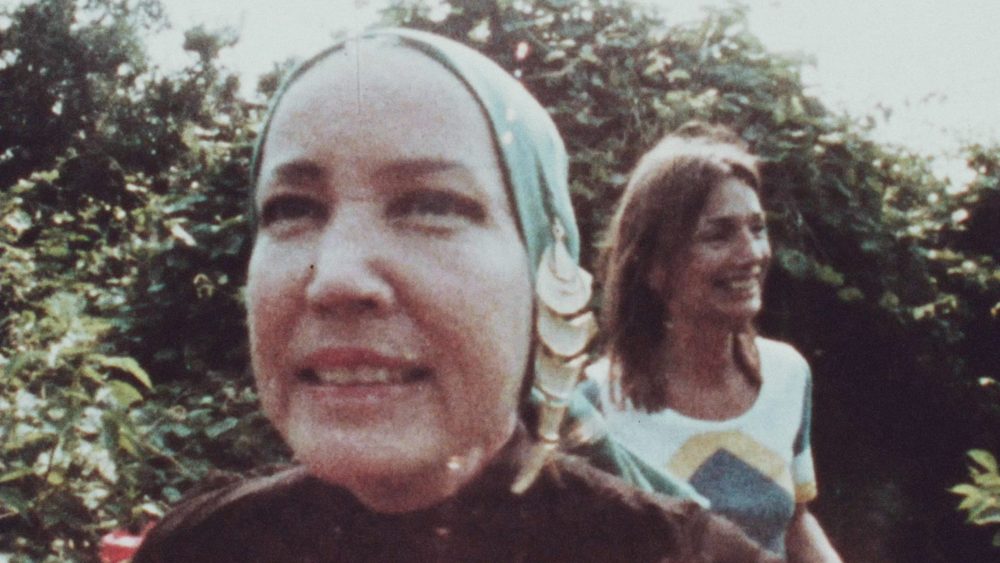
Scary Mother is a quietly riveting film that is richly layered with themes of identity, traditional gender roles, sacrifice, and hypocrisy filtered through the lens of a middle-aged mother of 3. At 26, first-time writer/director Ana Urushadze possesses remarkable insight into the psyche of a woman who spent the majority of her motherhood suppressing her artistic urges. But now that her children are more self-sufficient, Manana (Nato Murvanidze) has taken the opportunity to write her novel. But the writing process has caused her to neglect her “duties” as a stay-at-home mother. Her husband, Anri (Dimitri Tatishvili), is fed up and is desperate to return to the status quo.

Urushadze does an outstanding job of introducing her characters and setting the scene. As the film opens, Manana is checking in with her family after having spent many nights in literary exile. She dutifully clutches a laundry basket as she quietly tiptoes through their crowded tower block apartment in Tbilisi, Georgia. While he dresses for work, Anri reminds Manana how accommodating he has been, sleeping on the couch so she can work in peace. He complains about her unkempt appearance and how long she’s taking to write her book. This interaction informs the audience about Anri’s values and the emotional rift that exists between husband and wife. From what we see of her children, they are detached teenagers who are a bit thrown by the recent inaccessibility of their formerly omnipresent mother…

Read the rest at Hammer to Nail!

Film Review: Clara’s Ghost

a9c1f448b08fe27a1668890f9533388d_original

All that most moms* really want is to feel appreciated. Of course, everyone has a different metric for what that entails. But for the most part, it doesn’t mean gifts or grand gestures. It definitely doesn’t mean homemade coupons for foot massages. Just a simple “thank you” every once in a while, would suffice. They want someone to notice (and care) that they did your laundry or stayed up late cleaning the kitchen. After all, “Somebody has to do it.” But being a mom is practically the denotation of a “thankless job”. And when someone spends 20–odd years getting shit done for their family, the lack of appreciation can take its toll. That’s what happens to the titular matriarch in Bridey Elliott’s wonderful debut, a gothic black comedy called Clara’s Ghost.

Read the rest of the review at Hammer to Nail!

Film Review: Mr. Roosevelt

mrroosevelt_promostill_1-1-5_1-h_2017
Noël Wells’ feature debut is not expressly autobiographical, but there are certainly many parallels between the flailing comedian protagonist and the writer/director/star of the film. Wells was on one season of SNL, but really turned heads as Aziz Ansari’s season 1 paramour on Master of None. Her first film proves that though she’s a talented actress, she’s an even better writer and director. Those others were just holding her back…

Read the rest at Hammer to Nail!

Film Review: Driftwood

driftwood
Paul Taylor hates exposition so much; he created a film that has none whatsoever. Without dialogue, people can’t say unnatural things like, “You’re my brother,” and “you know how we robbed that bank together?” Instead, Taylor drops the audience right into a world that looks a lot like ours, but, as we soon come to realize, it has some fundamental differences. Mainly, this is a world in which young adults wash up on the beach like so much Driftwood. These beach people come partially dressed but entirely devoid of worldly knowledge. The first one we meet is a Young Woman (Joslyn Jensen). We never learn her name or if she even has one. Nor do we learn the name of the Old Man (Paul C. Kelly) who gathers her up and takes her to his home. It’s never clear where she’s from or why she needs someone to teach her how to eat, groom, and use the toilet. What she doesn’t need, however, is the patriarchal form his help takes, nor the increasingly iron fist with which he rules…

Read the rest at Hammer to Nail!

Film Review: Sammy Davis, Jr.: I Gotta Be Me

53_sammy-davis-jr-ie28099ve-gotta-be-me_1200x800
“Even if you win, you don’t win.”

That’s the lesson Sammy learned the day he got jumped by a racist fellow infantryman and won the fight. Nursing his well-deserved wounds, the man told Davis that he was “still a [n word].” That was the moment that Davis decided fighting wasn’t getting him anywhere. If he was going to change the hearts of white America, he had to try another tactic.

Samuel D. Pollard’s documentary about the career of Sammy Davis, Jr. is more than just a Hollywood biography. At a time when race relations have returned to the forefront of America’s consciousness, Sammy’s struggle rings true to a shameful degree. Despite his innumerable talents, he still faced plenty of discrimination on account of his skin color and later, his Jewish faith. But his unflappable spirit was also a beacon of hope for other marginalized people. As one interviewee puts it, his success, “made [African Americans] feel special and for a time feel equal”.

Read the rest at Hammer to Nail!

Film Review: Cassette

1cassette

Zach Taylor’s wistful documentary Cassette is an in-depth exploration of a recording format that lives on despite having been declared dead more than 20 years ago. It’s not just niche hipsters and nostalgic punk old timers that are keeping it alive.

It’s the concept of the “mix tape” in particular that endures. The mix-tape is an ideology. It’s the notion that we can curate what we hear and what we share with others. Lin-Manuel Miranda, whose work is undeniably cool but also inarguably mainstream, originally called his smash Broadway musical “the Hamilton Mix-Tape.”He later released a successful album of re-mixes and covers with that title. Taylor’s documentary is also a mix-tape. It’s a compilation of tributes to the format alongside more factual information about its history.

Read the rest at Hammer to Nail!

Hammer 2 Nail: The Reagan Show

113494976-0-768x512

“No wonder your president has to be an actor. He’s gotta look good on television!”-Doc Brown, Back to the Future

When asked if he thought his acting background was an advantage to doing the job of president, Ronald Reagan replied, “There are times I’ve wondered how you could do the job if you hadn’t been an actor”. It’s a telling statement from a president who spent two thirds of his time on public relations, logging more screen time up to that point than the combination of all other politicians since the advent of television. Sierra Pettengill (Town Hall) and Pacho Velez (Mankamana) created their documentary, The Reagan Show using news and behind-the-scenes footage from Reagan’s two-term presidency (1981-89). The result is equal parts amusing, upsetting, and apropos with regard to our current political poop show. Like with Trump, it was easy to make fun of Reagan when he didn’t have his finger on the nuke button.

The film has no narration, as none is needed. The footage speaks for itself. It’s a mostly chronological explanation as to why a man who was so ineffectual (if not downright detrimental) is considered by many to be “the Great Communicator”. No one can deny that he was charismatic. Like any actor, he knew how to smile, hit his mark, wave, and take direction. He was in his element at photo shoots, even coming up with a couple of ideas himself. POTUS was his meatiest role. But riding horses and inviting Mr. T to the Oval Office did nothing for the failing economy, the Cold War, or the threat of nuclear annihilation. As Ted Koppel so eloquently put it, “He’s a leader…but to lead us where…and into what?”

Read the rest on Hammer to Nail!

Lost in America

lost-03
It’s been over 30 years since Albert Brooks unleashed his on-point satire about the mental unraveling of dissatisfied yuppies in Regan-era America. And while Easy Rider (1969) the film that inspires them, is even further in the rearview today than it was in 1985, the sentiments of ignorance, delusion, and privilege remain tragically relevant in what will one day be known as (barf) Trump-era America. Fortunately, because it’s an Albert Brooks film, these hard truths are wrapped up in a hilarious package, now available as part of the Criterion collection.

After being passed over for a promotion at his high-paying advertising job, David (Brooks) urges his wife, Linda (Julie Hagerty) to quit her job and sell everything they own to “drop out of society” and tour the county in a decked-out Winnebago. The key to making this plan work is his oft-referenced “nest egg” – the liquidated lump sum of their assets that is meant to keep them afloat for the remainder of their years on this planet. It shouldn’t be a problem because the idea is to simplify. After a grand send-off from their friends, they set out from Los Angeles, planning to renew their wedding vows in Vegas as their first stop. David and Linda will never be the characters from Easy Rider. But it takes them losing everything to truly understand that…

Read the rest at Film International!