Film Threat Review: These Amazing Shadows

2011 SUNDANCE FILM FESTIVAL DOCUMENTARY PREMIERES SELECTION!
Unrated
90 minutes

***

The first time I met an archivist, I had little concept of what the job entailed. It seemed like they were basically librarians with less job prospects. Though there is some truth to that, “These Amazing Shadows,” depicts the brass ring of archivist jobs: Working for the National Film Registry. Archivists are passionate people. No one would work so hard for so little pay or job security if they didn’t love what they did. But if you consider yourself a lover of cinema, you know why they do what they do. Think of your favorite film. Chances are you consider it an indispensable part of film history. Now think of a future without it. “These Amazing Shadows” is an entertaining, though somewhat frivolous, look at what it takes to keep that from happening.

The National Film Registry is a department of the Library of Congress, which strives to preserve as many films as possible in their original format. It was created in 1988 as a response to protest by actors and filmmakers of Ted Turner’s colorization spree of black and white films. The registry initially named 1000 films for inclusion. Since then, they’ve nominated 25 films per year to be added to the list. The criteria are that they be “culturally, historically or aesthetically significant.” This can, of course, mean different things to different people and recommendations for the list are sometimes met with controversy. Inclusion on the list is a more prestigious award than an Oscar, because it means that the film stands the test of time.

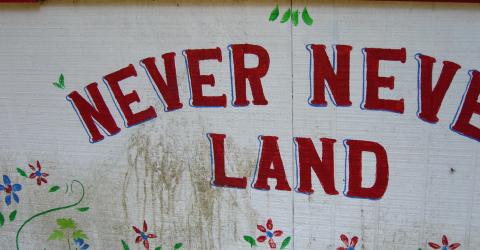
“These Amazing Shadows” is more a love letter to cinema than an informational documentary. There is much talk about the magic of movies and how they enrich our lives; how they hold a mirror to society and document our history. There are tons of clips from indispensable films including “Easy Rider,” “The Wizard of Oz,” “To Kill a Mockingbird” and “It’s a Wonderful Life.” You’re most certainly guaranteed to see a clip from one of your favorite movies and, as a result, much of “These Amazing Shadows” feels rather moving. But it often relies too much on the films themselves and doesn’t delve enough into the process of preservation. Sure, we get a peak inside “Nitrate Land”, the vast, climate controlled chamber that keeps our beloved films in pristine condition. We meet an archivist in “triage” as she literally tapes together the reels of a damaged film. We hear testimony from a couple of employees as they tell the story of getting their favorite movie on the list. But these are merely brief glimpses in between montages of famous films. Because of this, it often feels more like one of those commercials that studios put together to showcase their biggest titles. It would have been nice to, instead, follow a single film from nomination to preservation.

They also briefly touch on some of the more controversial inclusions such as the notoriously racist film, “The Birth of a Nation” and footage of the JFK assassination as well as films with cult significance like “The Rocky Horror Picture Show.” I wish that “These Amazing Shadows” had gone deeper with these topics. They bring up “Star Wars,” but only to talk about how it was instantly iconic. There is no mention of the fact that they sometimes can’t prevent the filmmakers themselves from attempting to ruin their original work.

Also missing is an explanation for why it is so important to preserve these films on celluloid. While I know that there is nothing so beautiful as an original 35mm reel of a favorite film, why work so hard to preserve such a fragile medium? Perhaps they should put some work into finding a more robust method of keeping these films alive. And what of films that are actually shot digitally? Are they out of the running or will the National Film Registry eventually have to update their vaults to accommodate them? After all, we fall in love with films because of the story, not the thing it’s printed on.

Originally published on FilmThreat.com (now defunct).

Film Threat Review: Uncle Kent

2011 SUNDANCE FILM FESTIVAL SPOTLIGHT SELECTION!
Unrated
72 minutes

****

Say what you will about Mumblecore. Though I usually enjoy it, chances are I’ll agree with you. It’s a challenging genre. Auteur, Joe Swanberg is known as one of its heavy hitters and his latest offering, “Uncle Kent,” is so textbook that it will someday become some film student’s homework. Shot with seemingly the worst camera he could find with no attempts to boost light or sound quality, “Uncle Kent” isn’t so much a narrative film as it is a fictionalized home movie. But because it depicts a pivotal debacle in a single forty-something’s sex life, it’s not the sort of thing you’d want to share with the neighbors.

The film starts out slow as the Kent in question (co-writer, Kent Osbourne) carries out his daily routine as a children’s show illustrator. He easily succumbs to the pitfalls of working from home including goofing off with friends, cat snuggling and pot smoking. These scenes are mundane because Kent’s life is mundane. Outside of the occasional party and an obsession with the website, Chatroulette, he has no social life to speak of. He claims to be fine with this, protesting to his happily married friend (Swanberg) that he enjoys the freedoms it affords him. For instance, instead of having a set dinnertime, he can eat whenever he gets hungry. That sounds so liberating.

Things start to get interesting when Kent invites a Chatroulette acquaintance, a journalist named Kate (Jennifer Prediger) in town on business, to stay with him for the weekend. Though she has a boyfriend, the sexual tension presents itself immediately. The frank conversation that is so easy to have in cyberspace ups the anty when they’re faced with it in person. She “accidentally” lets him see some naked pictures she took of herself on her camera. They demonstrate their individual masturbation techniques. They take pictures of their naughty bits for the benefit of other Chatrouletters. Though Kate is very game for this extreme flirtation, she always puts on the breaks whenever things seem like they will come to a head (no pun intended). As the weekend wears on, Kent becomes increasingly confused and frustrated.

Obviously, the only way to clear things up is to have a three-way with a young woman from Craigslist. In most movies (adult or otherwise), a three-way directs itself and the participants merely go with the flow. In real life, which “Uncle Kent” emulates perfectly, three-ways are full of fumbling and awkward moments. Things get even more awkward when Kent realizes this isn’t so much a three-way as it is two people having sex with one other person.

Though light on the action, “Uncle Kent” is a very rich film, full of quiet moments that speak volumes. Kent adds another piece of tape to the wad that is holding his car together. Lacking a proper guest room, Kent must inflate a mattress for Kate every night and deflate it every morning. In a tiny closet, Kent wedges himself between his bike and the litter box so that he can scoop up cat shit. He frequently documents his humdrum activities on a Flip camera for a reason probably unknown even to him. The whole thing feels painfully voyeuristic. Then again, with Facebook, many of us partake in voyeurism on a daily basis. We invite it. Voyeurism has become the new way to socialize. For people like Kent, who have little going for them outside so-called social networking, it suddenly seems rather pathetic.

However you feel about them, a Mumblecore movie will always leave you with something to talk about. Atypical plot devises aside, the characters are so credible and natural that you can’t help but project yourself into the story. These aren’t larger-than-life Hollywood models having fantastical experiences. Even a really good mainstream movie will never leave you with as many social and ethical topics as a Mumblecore movie. If you can’t relate to the characters directly, you can at least feel morally superior watching them do and say boneheaded things. And who doesn’t love that?

Originally published on FilmThreat.com (now defunct).